 Support l'X
 - Home
- Innovation
- Healthtech and Innovation At École Polytechnique
Healthtech and Innovation at École Polytechnique
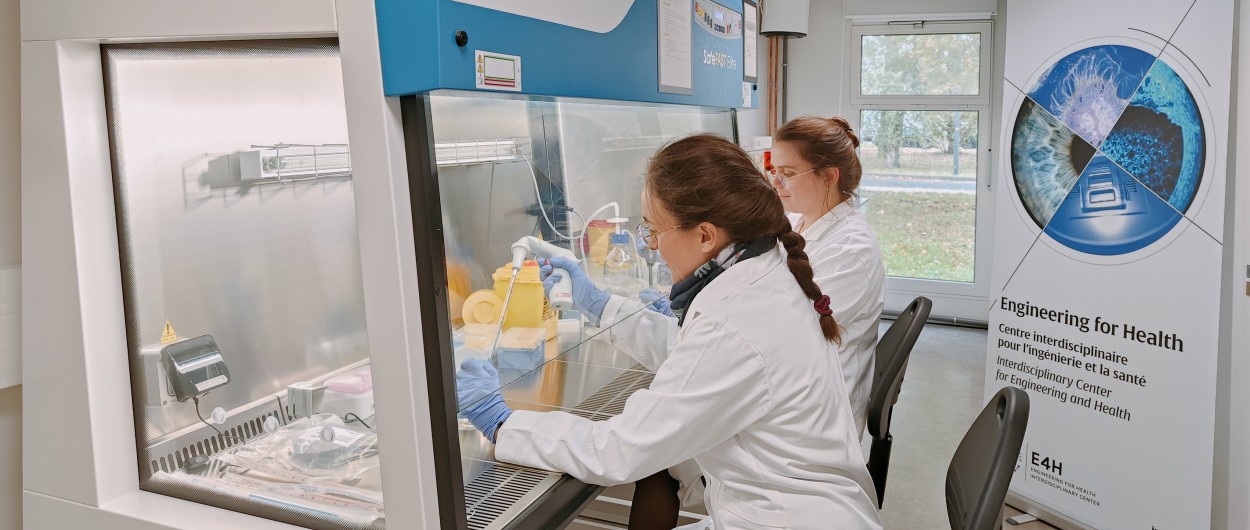 Peekcell Startup | X-UP Batch #16 | Pioneering women's cancer screening through advanced biomarker analysis and AI integration | IP Paris LivingLab
What is Healthtech?
Key dedinition
HealthTech refers to the integration of innovative technologies within the healthcare sector. Encompassing BioTech, MedTech, and E-Health, it aims to transform medical care, prevention, diagnostics, and treatment through technological disruption.
✔︎ BioTech: companies developing biotechnology-based solutions, such as novel drug therapies, vaccines, or gene editing.
✔︎ MedTech: medical technologies including connected medical devices, advanced imaging, and surgical robotics.
✔︎ E-Health: digital health solutions, including telemedicine platforms, mobile health apps, and healthcare data management.
The french HealthTech market
The french and european ecosystem
France has established itself as a leading power in European HealthTech, driven by a dynamic ecosystem that bridges startups, research laboratories, incubators, investors, and public institutions. The nation now boasts over 2,500 HealthTech startups and several hubs of excellence, such as the Paris-Saclay cluster.
French initiatives such as French Tech Health20, the France 2030 investment plan, and the Medicen competitiveness cluster are instrumental in strengthening the nation's industrial competitiveness and healthcare sovereignty.
This momentum is part of a broader ambition led by the European Union. Through programs such as Horizon Europe, the EIC Accelerator, and EIT Health, Europe is investing massively in health technologies to foster collaborative research and technology transfer, accelerate clinical trials, and bolster the continent's strategic autonomy in healthcare.
Economy & financing
In 2023, fundraising exceeded €2 billion, confirming the sector's strong appeal to investors. This momentum continued into 2024 with €2.6 billion raised (source: France Biotech).
HealthTech startup financing relies on a combination of public funding (Bpifrance, European Union), private investors, and strategic industrial partnerships. Following the seed stage, access to Series A and B funding is critical for scaling industrial production and driving international expansion.
Structural challenges to overcome, despite the sector's dynamism
✔︎ Regulation: while essential for patient safety, the regulatory framework remains complex and time-consuming for innovative startups.
✔︎ Market Access: entry is often hindered by lengthy reimbursement processes and rigorous evaluations by health authorities. Business models are evolving—incorporating SaaS subscriptions for e-health, pay-per-use models, public-private partnerships, and the monetization of anonymized data. Innovative economic models are key to startup sustainability.
✔︎ Health Data Utilization: although strategic for AI and personalized medicine, data valuation is constrained by strict legal and ethical requirements (GDPR, HDS, etc.).
These obstacles slow down the time-to-market for innovations and limit competitiveness against North American and Asian players.
To address these issues, public and European initiatives—such as EIT Health, France 2030, and the Health Data Hub—aim to simplify regulatory pathways, accelerate clinical trials, and encourage the secure use of data.
The Polytechnique HealthTech ecosystem
Incubation and Acceleration Programs
Polytechnique provides tailor-made support for DeepTech startups in the HealthTech sector via its X-UP accelerator and specialized incubation programs, guiding ventures from ideation to market entry.
The incubation programs Offer:
✔︎ Expert coaching: strategic guidance provided by technology and business specialists.
✔︎ DeepTech entrepreneurial workshops: hands-on sessions led by industry experts.
✔︎ Mentorship: dedicated support from leaders in technology and education.
✔︎ Specialized facilities: privileged access to state-of-the-art equipment, including the X-FAB prototyping space and the E4H IP Paris LivingLab dedicated to bioengineering.
✔︎ Elite Network: connection to a world-class academic, institutional, scientific, and entrepreneurial ecosystem (including 45 research laboratories across the IP Paris network).
✔︎ Funding Support: assistance in securing capital through Bpifrance, venture capital, and specialized investment funds via an extensive investor network.
✔︎ High-Impact Integration: immersion in an innovation ecosystem focused on societal and clinical impact.
DeepTech success stories
Numerous startups emerging from École Polytechnique and its X-UP accelerator testify to the dynamism and excellence of innovation and entrepreneurship within the HealthTech sector.
Artificial Intelligence (AI) is revolutionizing healthcare through predictive analysis, computer-aided diagnostics, and the personalization of treatment protocols.
Connected medical devices (sensors, wearables, implants) enable real-time patient monitoring and the large-scale collection of health data. These technologies drive the advancement of telemedicine and personalized preventative care.

Partnerships and strategic collaborations
The school collaborates with major public healthcare stakeholders (E4H, DMH, ARS Essonne, Assistance Publique – Hôpitaux de Paris, French Tech, etc.) and private partners (MedinTechs, HealthTech Investor Summit, Future4Care), fostering the emergence of innovative projects and facilitating technology transfer (IP Paris Innovation Lab).




Key terms in HealthTech
Telemedicine: remote medical care and consultation
Healthcare system Interoperability: the ability of tools and stakeholders to share and utilize health data in a consistent and secure manner
Regulatory frameworks: medical Device Regulation (MDR) – In Vitro Diagnostic Regulation (IVDR) – General Data Protection Regulation (GDPR) – Health Data Hosting (HDS)
Patient empowerment: the process through which patients become active participants in their own healthcare (patient autonomy)
Medical IoT (Connected Health Objects): connected devices used in the medical field to collect, transmit, and analyze health data
Quantified self (Health Self-Tracking): the practice of measuring and tracking personal health and activity data (sleep, heart rate, steps, calories) via connected objects or applications
Gene and cell therapy: medical treatments that use a patient's genes or cells to prevent, treat, or cure diseases
Medical nanotechnology: the use of nanomaterials or nanoscale devices to diagnose, treat, or target diseases with higher precision and fewer side effects
Biosensors: devices that detect and measure biological substances (such as proteins, enzymes, or antigens) to diagnose or monitor health in real time
3D Printing of Medical Devices: a technique for manufacturing customized prosthetics, implants, or medical instruments layer by layer, perfectly tailoring devices to patient needs
Digital therapeutics (DTx): evidence-based medical treatments delivered through software to prevent, manage, or treat diseases, often as a complement or alternative to traditional therapies
Take the next step
Join the École Polytechnique HealthTech ecosystem
✔︎ Discover our support programs and apply to the X-UP incubator to contribute to patient health and the well-being of caregivers!
✔︎ Contact the X-UP incubator team via our contact form.
✔︎ Stay informed by consulting HealthTech news and specialized sites such as France Biotech.