 Support l'X
 Chair in Mathematical Modelling and Biodiversity: when mathematics is used to understand life
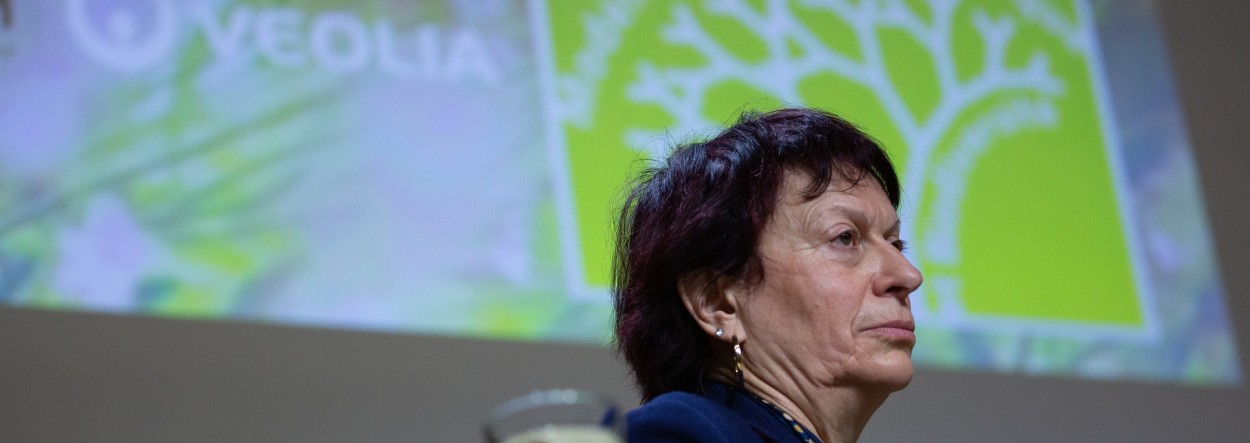 MMB Chair meeting at Veolia on 21 November 2025.
The MMB Chair aims to create synergy between applied mathematics and life sciences in order to better understand the complexity of ecosystems and population dynamics. Its work, which has resulted in more than 600 publications in renowned international scientific journals, addresses issues such as adaptive evolution, community dynamics, the resilience of biological systems and the construction of predictive scenarios for biodiversity.
Researchers from the Chair in the spotlight
Initially launched by a handful of researchers, the Chair now brings together nearly 150 members, involved to varying degrees, who meet regularly at workshops held every two months and at the annual Research School, which welcomes more than 70 participants each year to discuss major issues related to biodiversity. Today, the Chair has fully developed and operates as a true ‘wall-less’ research institute.
This national scientific momentum is driven at École Polytechnique by Sylvie Méléard, professor at École Polytechnique, director of research at the Centre for Applied Mathematics (CMAP*) and specialist in probability applied to ecology, who has developed innovative mathematical models to analyse adaptive dynamics and complex interactions within populations. In 2024, she was awarded the Irène Joliot-Curie Prize – Woman Scientist of the Year, highlighting her central role in promoting and structuring interdisciplinary research.
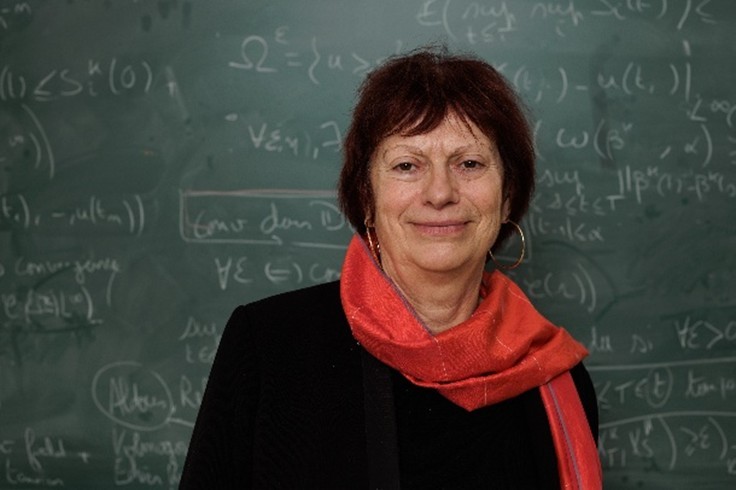
When we created the Chair in Mathematical Modelling and Biodiversity in 2009, it was in a resolutely innovative spirit, with the desire to bring together communities (Mathematics and Ecology) that had very little contact with each other around a common theme: Biodiversity. At that time, there were few initiatives in this direction. Over time, we have succeeded in building a dense and vibrant network of interactions between mathematics, ecology and biology.
Alongside her, Marie Doumic, co-head of the Chair and chief engineer at Ponts et Forêts, brings her expertise as head of the Inria MERGE (Mathematics for Evolution, Reproduction, Growth and Emergence) project team. Her contribution is essential in strengthening the Chair's interdisciplinary approach and supporting the development of its research and training projects.
Another example of the interdisciplinary excellence promoted by École Polytechnique is Jean-René Chazottes, a committed mathematician, specialist in dynamic systems and random processes, member of the Chair and affiliated with the Centre for Theoretical Physics (CPHT*). develops fundamental theoretical approaches applied to the study of population dynamics and ecological resilience phenomena. For Jean-René Chazottes, ‘mathematical modelling serves above all to understand how population dynamics and biodiversity work.’
Starting from what happens at the individual level – births, deaths, interactions between species – it reveals global phenomena such as species coexistence, ecosystem stability or, conversely, fragility, while highlighting the central role of chance and seemingly minor fluctuations. These models make it possible to explore situations that cannot be easily tested in reality, such as the impact of environmental disturbances or climate change, not to predict the future, but to identify critical thresholds.
Jean-René Chazottes regularly participates in the Chair's scientific exchanges, particularly through meetings and seminars, thereby helping to foster dialogue between mathematics and life sciences and to structure scientific collaborations at the national level.
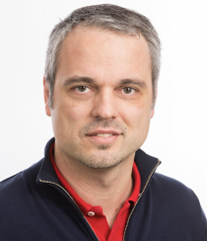
Mathematical modelling is also a tool for dialogue. It provides a common language that enables biologists, ecologists and mathematicians to work together and better understand the complexity of living organisms.
In addition, the MMB Chair places great importance on training and supporting young researchers. Since its creation, it has supported 16 theses and 15 postdoctoral fellowships, covering key topics such as evolution, extinction, multi-species interactions and stochastic population behaviour.
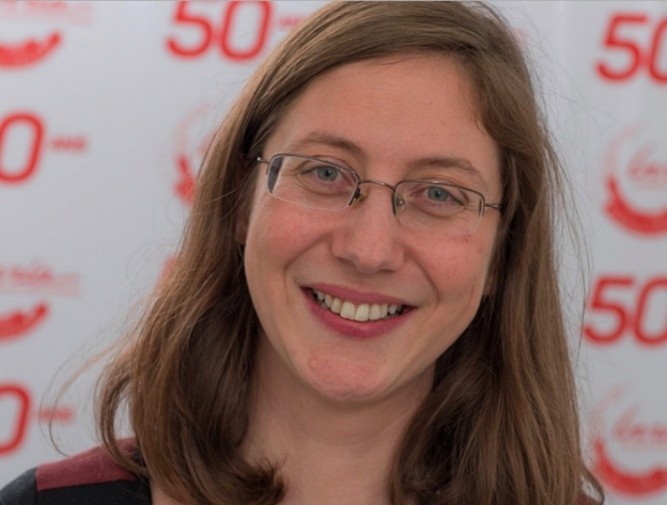
Among them is Adélie Erard, a doctoral student at the Applied Mathematics Laboratory at Paris 5, whose thesis is co-supervised by Raphaël Lachièze-Rey, a probabilist at Inria Paris, and Romain Lorrillière, an ecologist at the National Museum of Natural History, is studying the construction of powerful statistical tools for population studies that can be used by ecologists. Her thesis is supported by the MMB Chair.

The dialogue between mathematics and life sciences is very stimulating, as it allows me to work on questions that are both theoretical and firmly rooted in reality. This dual approach is very motivating.
Scientific meetings: a space for exchange and cross-fertilisation
In addition to the research projects supported by the Chair, scientific meetings are an essential pillar of the MMB Chair's work. Organised on a regular basis, they provide a forum for exchange at the national level, bringing together researchers and institutional and industrial partners.
In recent months, the Chair has organised several key events:
- On 13 October 2025, a meeting hosted at the Collège de France, illustrating the Chair's academic influence and institutional recognition;
- On 21 November 2025, a day of discussions organised in partnership with Veolia, highlighting the close links between fundamental research and operational challenges.
The momentum continued with the meeting on 26 January 2026, organised at the École Polytechnique in collaboration with EDF Lab. In keeping with the spirit of the Chair, these meetings are special opportunities for dialogue and cross-fertilisation, where participants compare their approaches and share their scientific advances.
The Chair's meetings have been held regularly for over fifteen years. Over this long period, understanding has grown, common challenges have become clearer, and a shared culture has been consolidated. We have learned to work together, to enrich our reasoning with very different approaches, and to step outside our disciplinary ‘comfort zone’. As a result, many collaborations have been formed, new ideas have emerged, and a genuine camaraderie has developed. It is both very fruitful and very warm.
The Chair also supports large-scale teaching programmes. As part of this, it organises an annual Spring School in Aussois, offering intensive training in mathematical tools and their applications to biodiversity, and bringing together an international audience of researchers and students. The next school will be held from 14 to 19 June 2026.
At the crossroads of mathematics and life sciences, the Chair in Mathematical Modelling and Biodiversity is now established as a unique interdisciplinary scientific community in France. Through the richness of its research, training activities and meetings, it actively contributes to a better understanding – and better preservation – of biodiversity in a rapidly changing world.
*CMAP: a joint research unit of the CNRS, Inria, École Polytechnique, Institut Polytechnique de Paris, 91120 Palaiseau, France
*CPHT: a joint research unit of the CNRS, École Polytechnique - Institut Polytechnique de Paris