 Support l'X
 École Polytechnique is stepping up its space ambitions with a new antenna
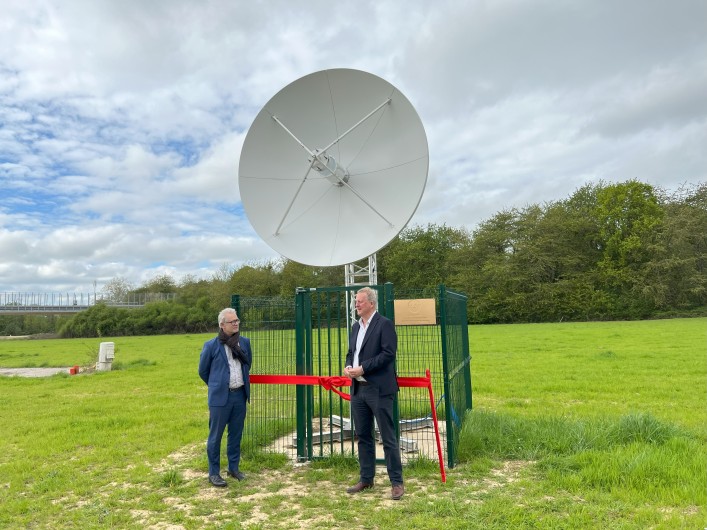
On April 15, 2026, the École Polytechnique Space Center (CSEP) reached a new milestone in the development of its infrastructure with the inauguration of SYLVIE (SYstem Link for VLEO Information Exchange), its new S-band antenna installed at the SIRTA site near the École Polytechnique campus.
The event brought together students, faculty, engineers, and partners around a shared goal: to equip the center with a tool that is educational, technical, and operational, directly connected to current space industry challenges.
A new facility critical for space projects
At the heart of this inauguration, SYLVIE represents a concrete step forward for the CSEP. This antenna will enable both the transmission and reception of data with satellites using the S-band (a frequency range in the GHz range).
On the one hand, this new “access” to space will serve as a platform for hands-on telecommunications work conducted as part of the Île-de-France Space Academy. It will offer students the opportunity to work under real-world conditions by handling equipment used in professional settings, providing a unique chance to strengthen their technical skills while exposing them to the sector’s demands.
On the other hand, SYLVIE will serve as the primary communication link for the CubeSat mission named IonSat, currently under development by the center’s students and engineers, with a launch scheduled for 2027. It thus constitutes an essential link in the establishment of a complete mission chain, from satellite design to the exploitation of its data.
The result of a collaborative effort
The installation of this antenna was made possible thanks to the efforts of many stakeholders: the Île-de-France Space Academy, which provided financial support for the project; Adrelys, which designed the antenna; SIRTA, which hosted it on its premises; and the various departments and laboratories at École Polytechnique, to all of whom the CSEP extends its warmest thanks.
The inauguration also featured several speeches, notably those by Pascal Chabert, a faculty member and researcher at École Polytechnique and Head of the Space Sciences and Space Challenges Chair, Nicolas Lequette, Technical Director of the CSEP, and Philippe Keckhut, Director of the Île-de-France Space Academy, who emphasized the importance of this type of infrastructure for training, innovation, and the development of space activities.
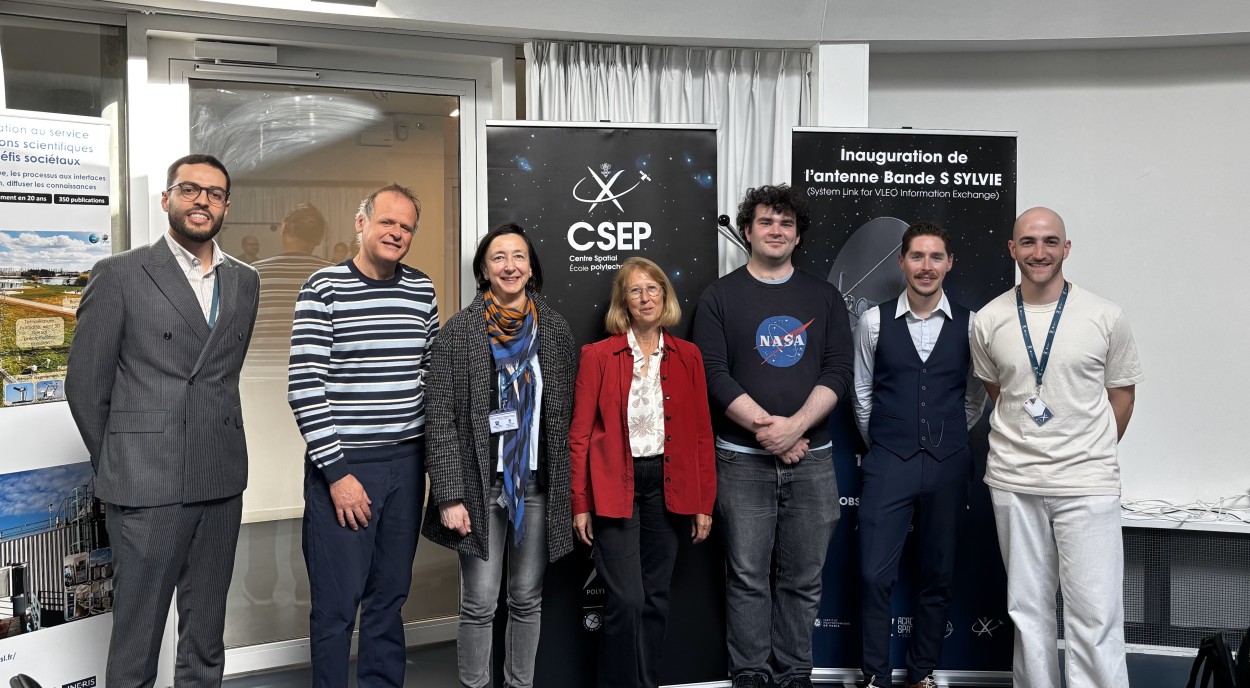
A highlight of the event was a live demonstration for the public. Tony Colin, who led the organization of this inauguration, conducted several interactive tests with the antenna. SYLVIE’s first transmissions were relayed via a geostationary satellite and could be received as far away as Brazil, providing a concrete demonstration of how the system works and its capabilities.
This inauguration thus marks much more than the commissioning of new equipment: it symbolizes a collective dynamic focused on innovation, the transfer of knowledge, and the development of tomorrow’s talent.