 Support l'X
 Four young scientists are launching their research project at École Polytechnique
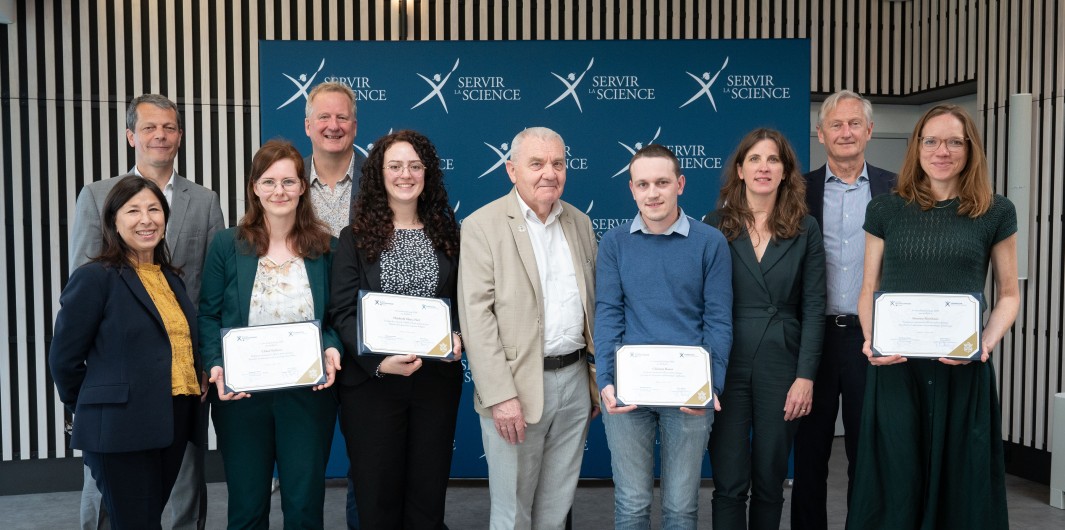 The winners and the jury of the Launching Packages
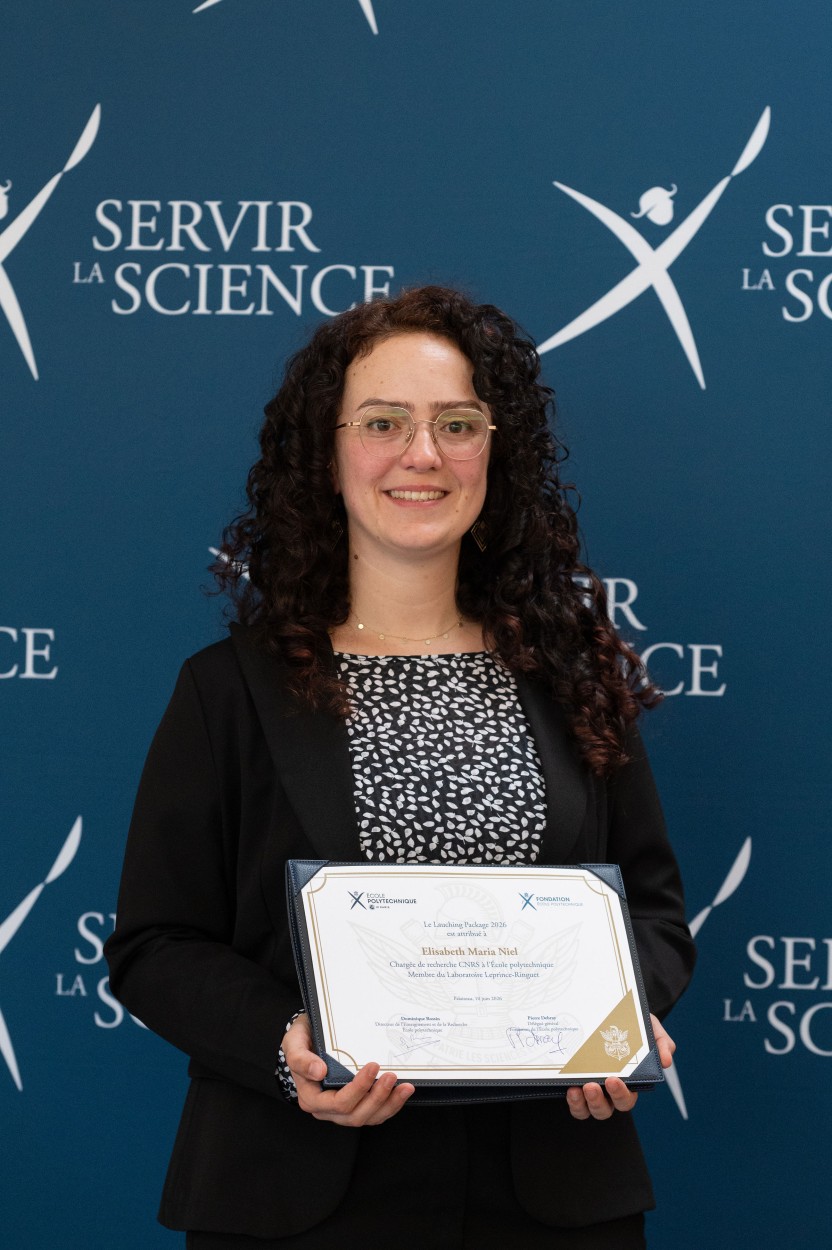
Elisabeth Maria Niel, Leprince-Ringuet Laboratory (LLR*)
Elisabeth Maria Niel is a member of the LHCb scientific collaboration, named after a large detector located at the LHC, CERN’s particle accelerator. The goal is to better understand matter and the fundamental forces.
Among the elementary particles of matter are quarks. These are never observed in isolation, but are always assembled into particles called hadrons, such as protons and neutrons, which make up the matter around us.
How are these particles formed through the process known as hadronisation ? This is the question driving the researcher’s project. To answer it, we need both a better understanding of the theory known as quantum chromodynamics and new observations, for which the LHCb detector is one of the world’s best tools.
This experiment continues today to collect data on elementary particles, but Elisabeth Maria Niel and her colleagues are already preparing the next upgrade to the detector, notably the new trackers (which track the paths of particles) that will use pixelated silicon sensors.
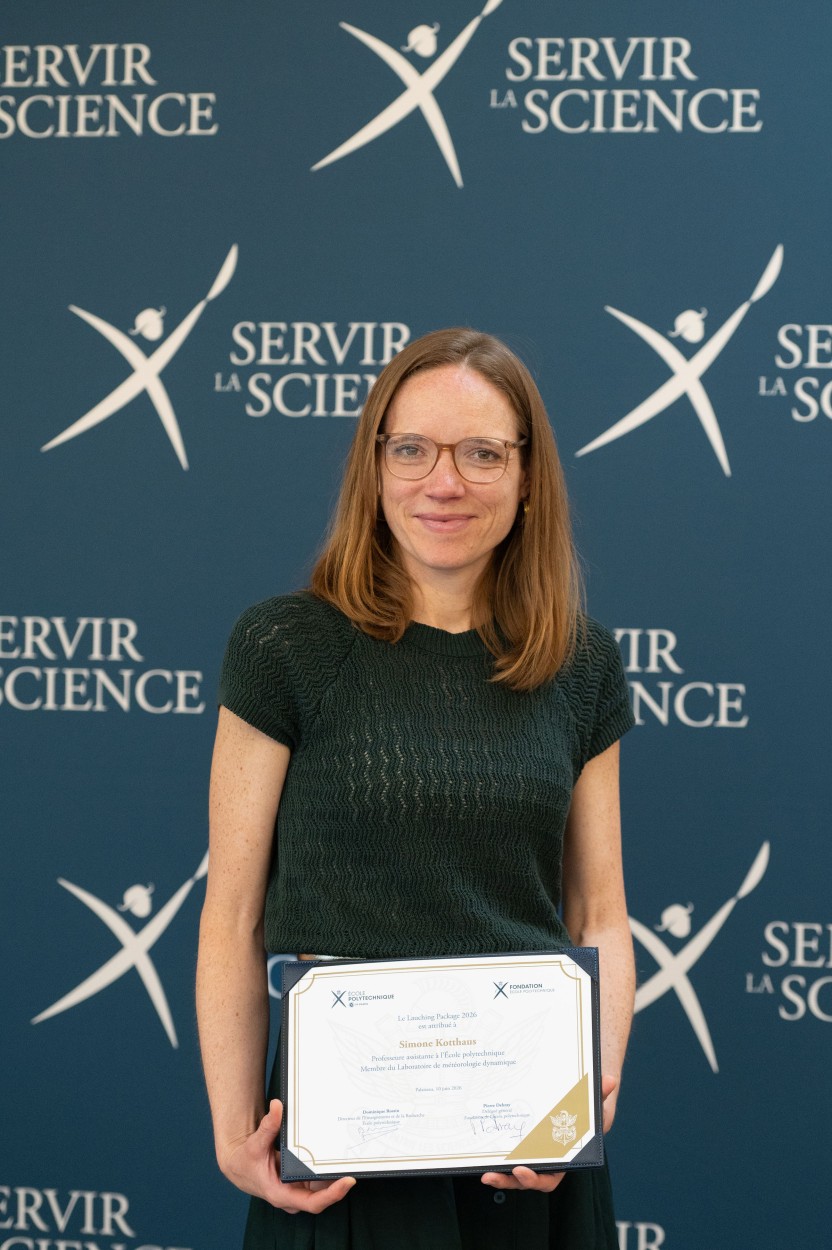
Simone Kotthaus, Dynamic Meteorology Laboratory (LMD*)
Simone Kotthaus’s project focuses on using meteorological observation data to better understand atmospheric physics in urban environments. Indeed, with climate change, cities are becoming veritable “hotspots”. Temperatures there are often higher than in rural areas, with differences that can reach, for example, +10°C in Paris at night during heat waves. The consequences for the environment and human health are very direct.
This overheating, particularly in built-up areas, is due to interactions between several processes: building materials that absorb a lot of radiation, a lack of vegetation and the absence of evapotranspiration mechanisms, heat generated by human activities, etc.
Atmospheric physics plays a very important role in understanding these interactions.
Simone Kotthaus is therefore working with new remote sensing techniques to gather information on atmospheric conditions above cities. The scope of this project is also interdisciplinary, linking the study of vegetation, hydrology, and soils, as well as community education.
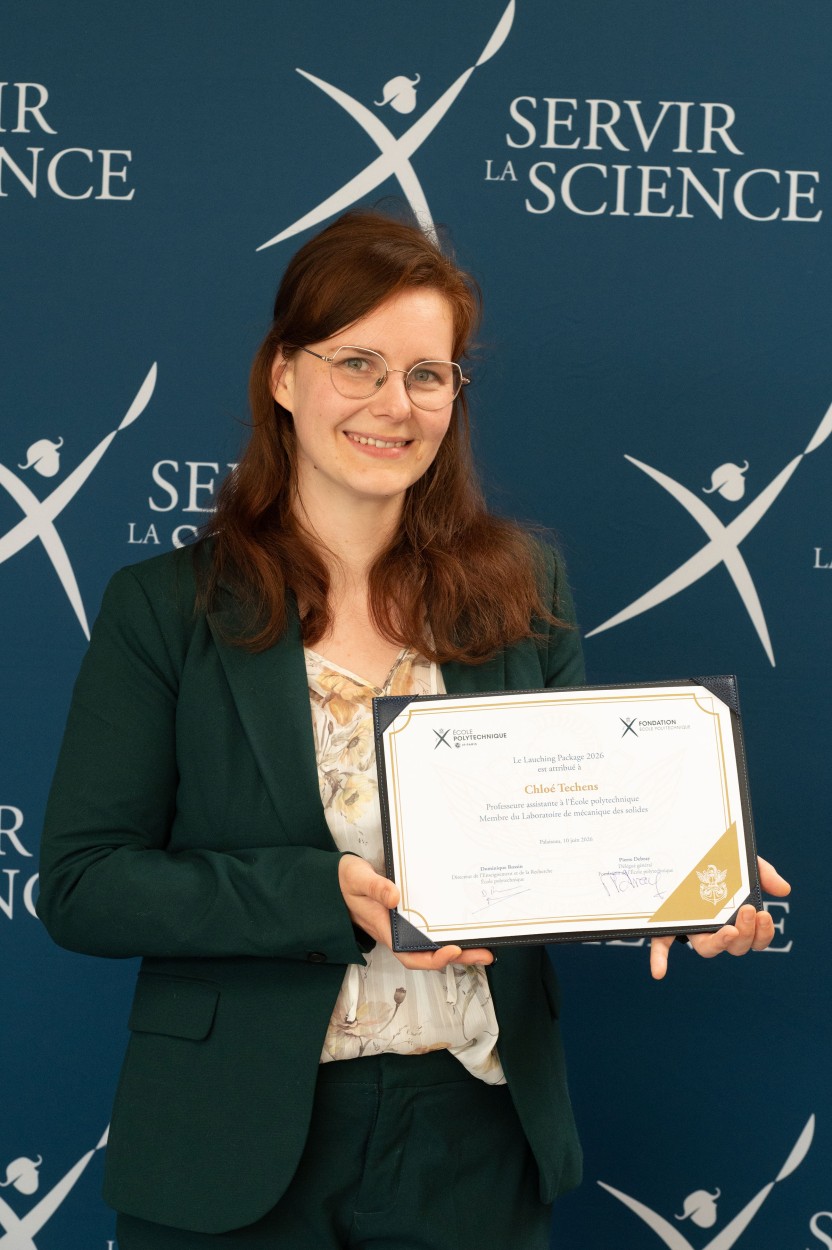
Chloé Techens, Solids Mechanics Laboratory (LMS*)
With a dual background in materials science and biomedical engineering, Chloé Techens is interested in the mechanical properties of biological tissues, and in particular how these properties are determined at the microscopic level and play a role in the development of certain diseases.
At the microscopic level, the cells in our bodies are embedded in an extracellular matrix to which they attach and within which they move. A balance is established between this matrix, which exerts forces on the cells, and the cells themselves, which reorganize the matrix fibers and alter its structure. When this balance is disrupted, diseases emerge.
This is the case, for example, with aneurysms: the extracellular matrix has softened, and the vessel wall swells under blood pressure until it breaks. Chloé Techens’ project focuses on thoracic aortic aneurysms, for which few warning signs are currently known.
Initially, the goal will be to establish an experimental model of the extracellular matrix using hydrogels, with microscopic monitoring over time to observe, in particular, changes in the microstructure.
In the long term, the project’s objective is to help develop tools that will enable the early detection of the disease.
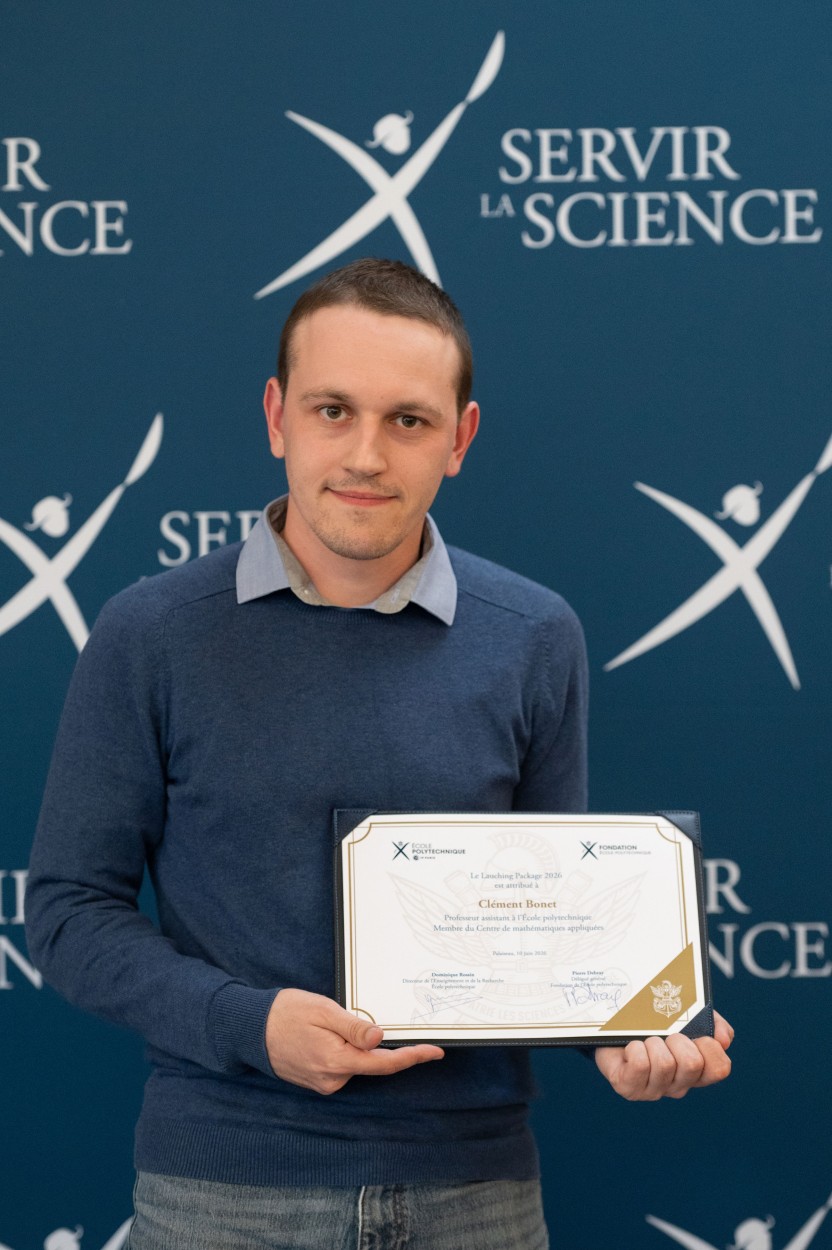
Clément Bonet, Center for Applied Mathematics (CMAP*)
In the field of probability, a key concept is the distribution, that is, the mathematical function that describes the probabilities of a quantity (which can be a number, but also an image, text, etc.).
In most cases, we only have partial information about this function. For example, in generative models designed to create images, the goal is to derive this probability distribution from a few training images in order to generate new ones.
In his project, Clément Bonet will focus on data with a known structure, which can be mathematically described by “manifolds” (a concept that generalizes the idea of a surface). For example, global-scale climate data has a structure linked to the geometry of the globe. Other examples include protein structures in biology or magnetoencephalography recordings.
In these scientific disciplines, the ability to correctly generate new examples of such data is essential for improving models, forecasts, or diagnoses.
The mathematical problem Clément Bonnet is addressing takes the form of a minimization problem in the space of probability measures. The goal of his project is to develop optimization methods for these spaces.
Learn more about the Launching Packages with the press release (in French).
*LLR: a joint research unit CNRS, École Polytechnique, Institut Polytechnique de Paris, 91120 Palaiseau, France
LMD: a joint research unit CNRS, ENS - PSL, Sorbonne Université, École Polytechnique, Institut Polytechnique de Paris, 91120 Palaiseau, France
LMS: a joint research unit CNRS, École Polytechnique, Institut Polytechnique de Paris, 91120 Palaiseau, France
CMAP: a joint research unit CNRS, Inria, École Polytechnique, Institut Polytechnique de Paris, 91120 Palaiseau, France