 Support l'X
 New study of air quality modelling in the Himalayan valleys
Although Bhutan is considered a pristine environment, its valleys tend to suffer from poor air quality, primarily due to domestic combustion. Before joining the CNRS, Bertrand Bessagnet, Research Director affiliated with École Polytechnique, initiated at the International Centre for Integrated Mountain Development (ICIMOD) a research program to investigate the role of household emissions in Bhutan. To analyze and forecast the air quality in order to ultimately find ways to mitigate air pollution in Bhutan, the ICIMOD and the Jigme Singye Wangchuck Law University of Bhutan have pursued their collaboration with Bertrand Bessagnet. The findings of their joint research study* using the cutting-edge CHIMERE chemistry-transport model have now been published in the Journal of the European Geosciences Union “Atmospheric Chemistry and Physics”.
The expert in air pollution modelling and atmospheric sciences Bertrand Bessagnet is a CNRS research at École Polytechnique’s Laboratory of Dynamic Meteorology of IPSL. As part of this laboratory’s research team, he is at the forefront of research on air quality using the cutting-edge CHIMERE model, as the latter has primarily been developed by researchers of this Dynamic Meteorology Laboratory, in collaboration with the Interuniversity Laboratory of Atmospheric Systems.
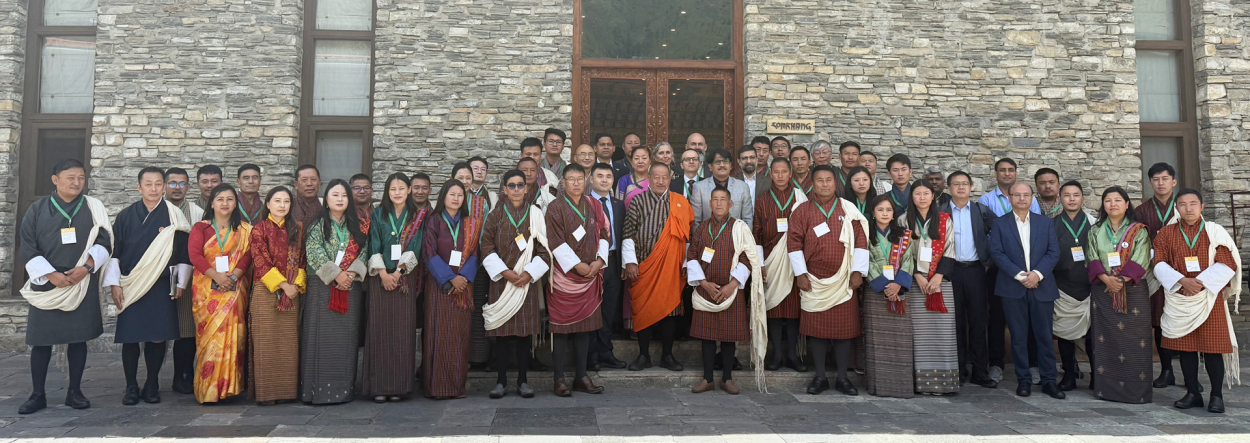
Invited as speaker to Thimphu, Bhutan, this summer, Bertrand Bessagnet had already presented some preliminary works during the workshop “Bridging air quality, health equity and clean energy”, organized by the International Centre for Integrated Mountain Development and the Jigme Singye Wangchuck Law University in Bhutan. During the two-day workshop, the participants addressed the impact of heating systems using wood as critical factor affecting indoor and outdoor air quality.
Representatives of Bhutan’s Ministry of Energy and Natural Resources and its Ministry of Health participated in the workshop alongside local representatives from the Haa and the Thimphu districts, international researchers and experts from different organizations focused on air pollution, health, and clean energy.
The objective was twofold: to increase awareness and understanding of the interlinkages between air pollution, health, inequality, energy, and poverty among government representatives, and to establish a working group dedicated to addressing air pollution, promoting inclusive health policies, and improving access to clean energy.
The research study has notably highlighted the significant impact of residential emissions - especially from cooking and heating – on the air quality. Given their role in air pollution in Bhutan, addressing this issue through targeted emission reduction measures is crucial. Supporting the modernization of heating systems, particularly in remote areas, offers a tangible solution for change.
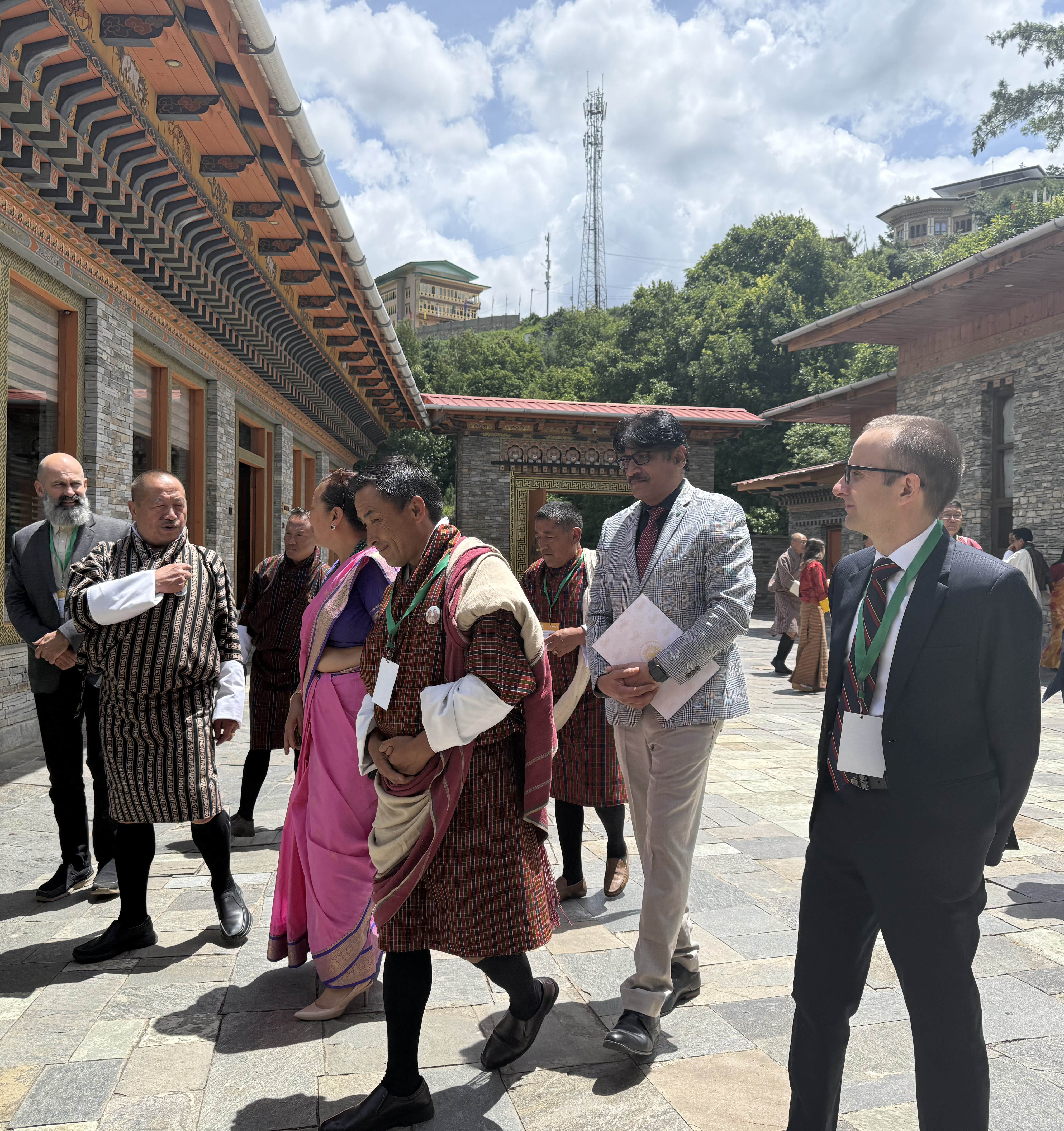
Bertrand Bessagnet (on the right) and representatives of the Bhutanese Government (second from left: His Excellency Lyonpo Gem Tshering, Minister of Energy and Natural Resources)
The Conservation of the environment – a main pillar of Bhutan’s guiding philosophy
Bhutan’s development is guided by the philosophy of Gross National Happiness (GNH) - a holistic approach that prioritizes the well-being of people and the planet over economic growth alone. The conservation of the environment is one of this guiding philosophy’s four main pillars. Sustainable and equitable socio-economic development, preservation and promotion of culture, and good governance constitute the other three pillars, ensuring that national progress is inclusive, responsible, and rooted in Bhutanese values.
A visionary environmentalist long before climate change became a global concern, His Majesty The 4th King, Jigme Singye Wangchuck, embedded environmental conservation into the heart of Bhutan’s national identity, giving rise to the GNH as Bhutan’s guiding philosophy in the early 1970s.
Named after him, the Jigme Singye Wangchuck Law University of Bhutan upholds Justice, Service and Wisdom as core values and aims to instil these qualities in students through their academic programs and research initiatives.
To access the case study "High resolution air quality simulation in the Himalayan valleys"
* with support from the UK Foreign, Commonwealth & Development Office as part of its CARA (Climate Action for a Resilient Asia) initiative
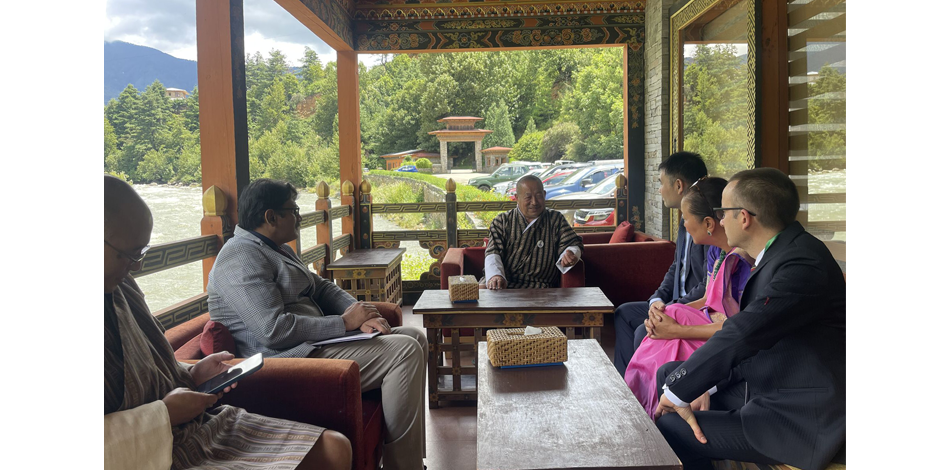 Bertrand Bessagnet (on the right) and representatives of the Bhutanese Government at Thimphu. At the center: His Excellency Lyonpo Gem Tshering, Minister and Natural Resources
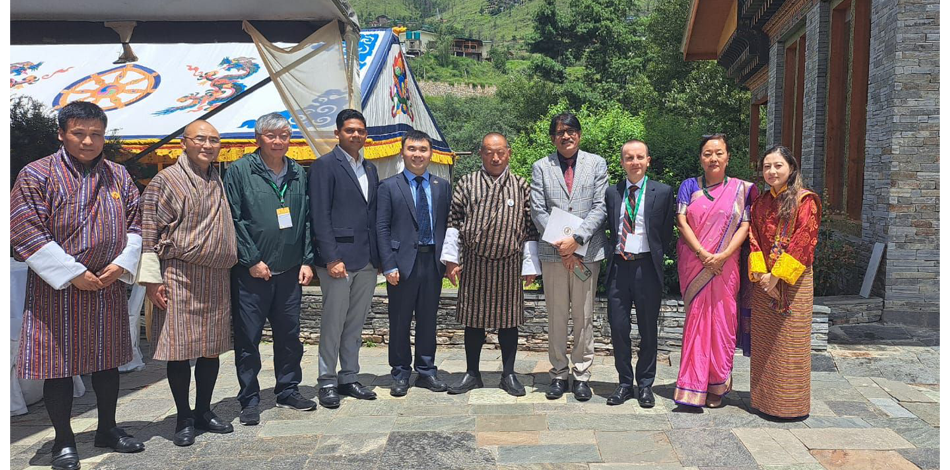 Representatives of the Bhutanese Government, local representatives from the Haa and the Thimphu districts, and Bertrand Bessagnet
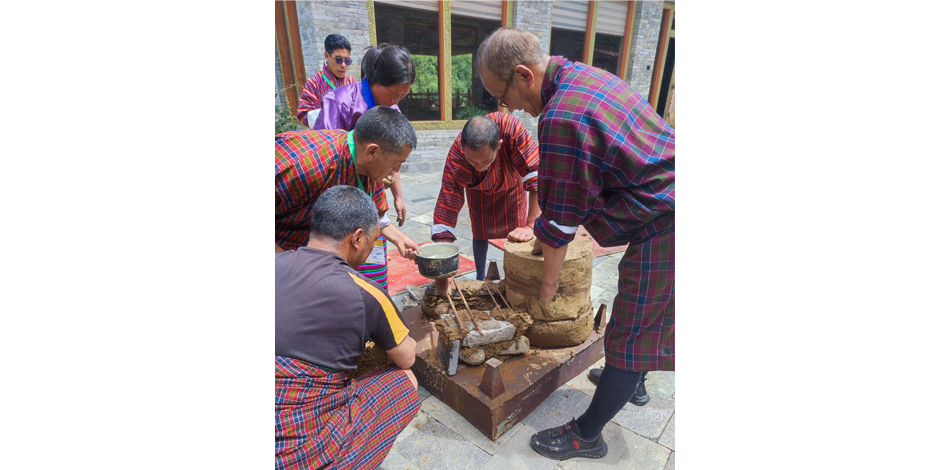 Workshop demonstration of how to build an efficient clay stove rocket stove
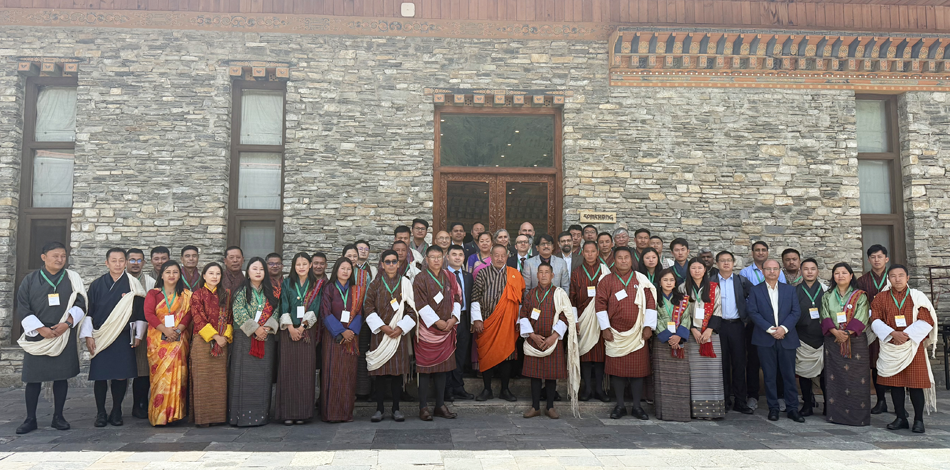 Participants in the workshop “Bridging air quality, health equity and clean energy” in Thimphu, Bhutan