 Support l'X
 ʽThe use of AI in the military must serve to defend our European democratic valuesʼ - Antoine Bordes at École Polytechnique
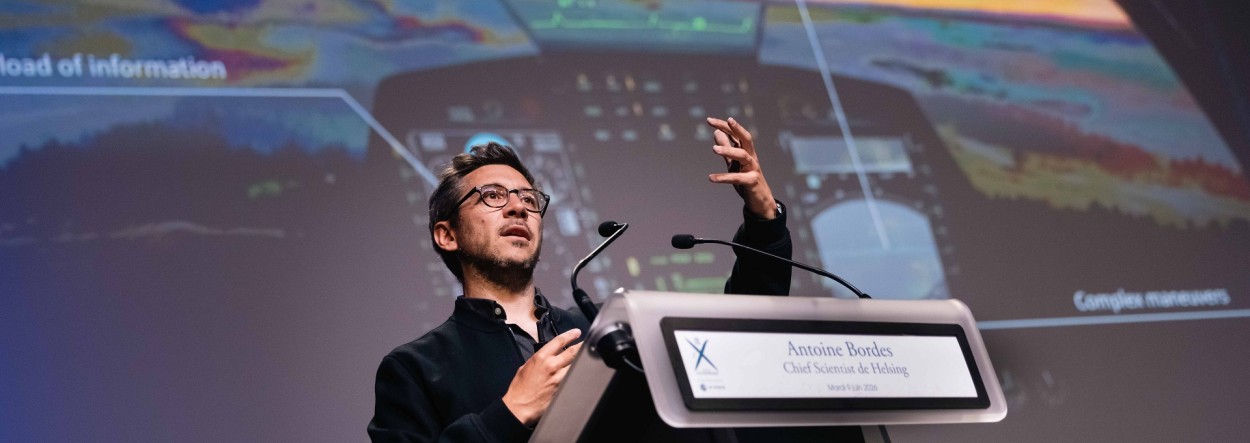 Antoine Bordes, Scientific Director at Helsing, at École Polytechnique © Jérémy Barande, École polytechnique
The current frenzied race in artificial intelligence (AI) is now evident in the military sphere. ʽWe are at a turning point for AI and defence,ʼ says Antoine Bordes, scientific director at Helsing, a European company specialising in artificial intelligence applications for the defence sector.
The international context has indeed encouraged the development of new technologies on the battlefield. Behind these rapid developments lie issues of sovereignty, as highlighted by Laura Chaubard, President and Director General of École Polytechnique, who introduced this conference. In her view, ʽEuropeans have every chance of succeeding in AI and defence AI, provided they commit to it fully and proactively.ʼ This is a view she shares with Antoine Bordes, an expert in artificial intelligence, who worked for nine years at Meta before turning his attention to these issues of sovereignty. Winner of a thesis prize from the DGA (Directorate General of Armaments), he is now putting his skills to work in the defence of European democracies.
AI: a decision-making tool
Speaking to first-year engineering students at the École Polytechnique, he answered his audience’s questions with sincerity. Data management and privacy, ethics, funding, decision-making, the excessive robotisation of the military…: there were numerous questions, demonstrating the interest sparked by the topics discussed and the ethical concerns they raise. ʽThe speed brought about by technology is dizzying, and we must be careful, explains Antoine Bordes. AI facilitates rapid data processing, comparisons, deductions, and so on, which is very useful in many sectors, including defence. But it is merely an aid; this tool should not be the one to make the decision to open fire. That must remain in human hands. As engineers, we can create interfaces that set limits and require the input of several military experts to validate a decision.ʼ
Drones, robots and AI-powered control systems are not intended to replace humans or relieve them of responsibility, he emphasised.
ʽIs an army without humans possible?ʼ asked a student. Even though technology allows for reduced exposure of military personnel, ʽit is difficult to imagine fighter jets piloted solely by AI,ʼ said Antoine Bordes. ʽIn the future, there will be fewer and fewer pilots in the air, but potentially more aircraft. Pilots will take a more backseat role, intervening only when necessary. We are moving towards the creation of hybrid fleets.ʼ
Engineers have a role to play
Trained at a military academy with a high-level scientific curriculum, Polytechnique students are doubly concerned by the development of AI and its military applications. ʽMoving from an American company, Meta, to a defence firm, Helsing, was a huge leap for me. Military issues seemed very distant to me. I asked myself the same questions as the engineers I interview today. What will be the applications of the technologies I am developing? I was driven by the same sense of responsibility. Working alongside the armed forces reinforces that feeling. My role as an engineer is to create the most reliable and secure system possible to help our military protect our democratic values.ʼ
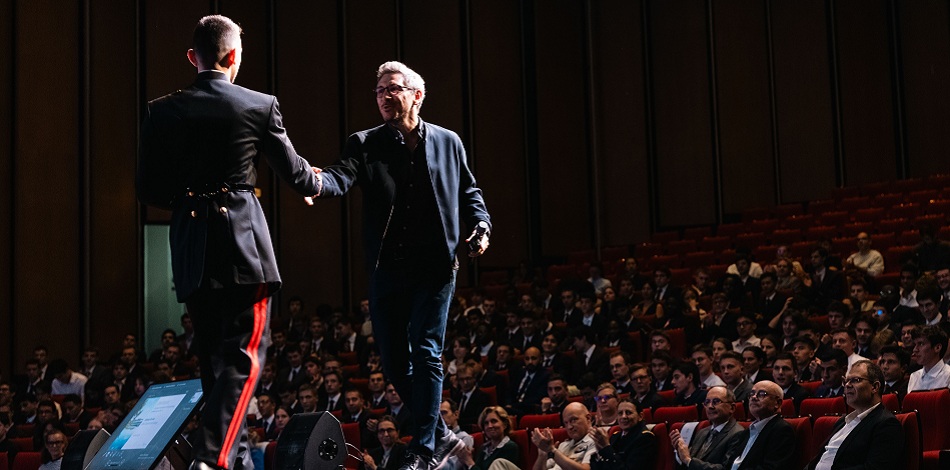
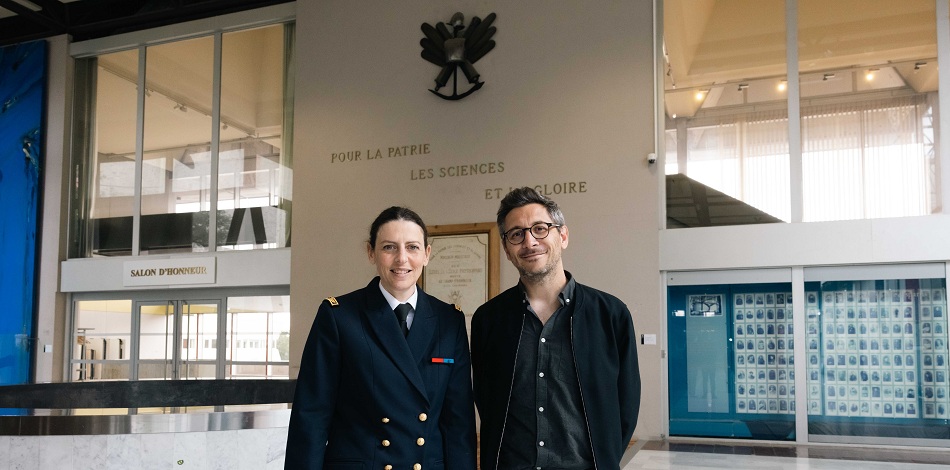 Laura Chaubard, President and Chief Executive Officer of École Polytechnique, and Antoine Bordes, Scientific Director at Helsing, at École Polytechnique © Jérémy Barande, École Polytechnique
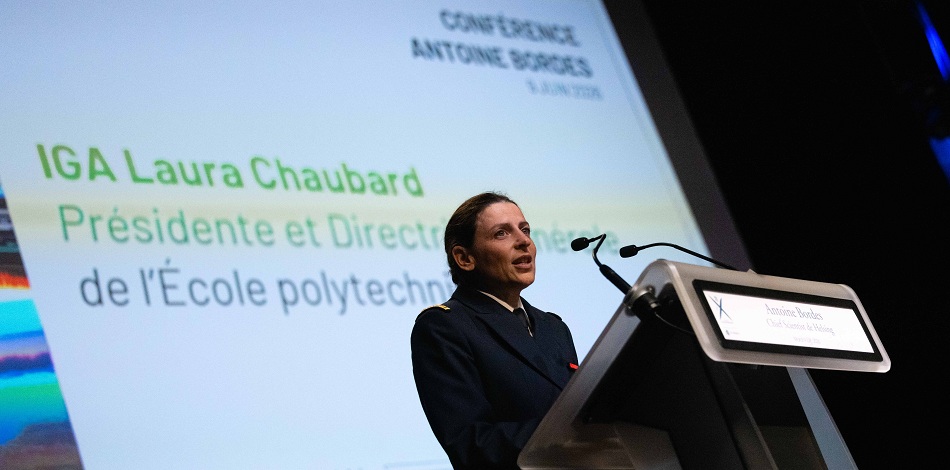 Laura Chaubard opened the conference © Jérémy Barande, École polytechnique
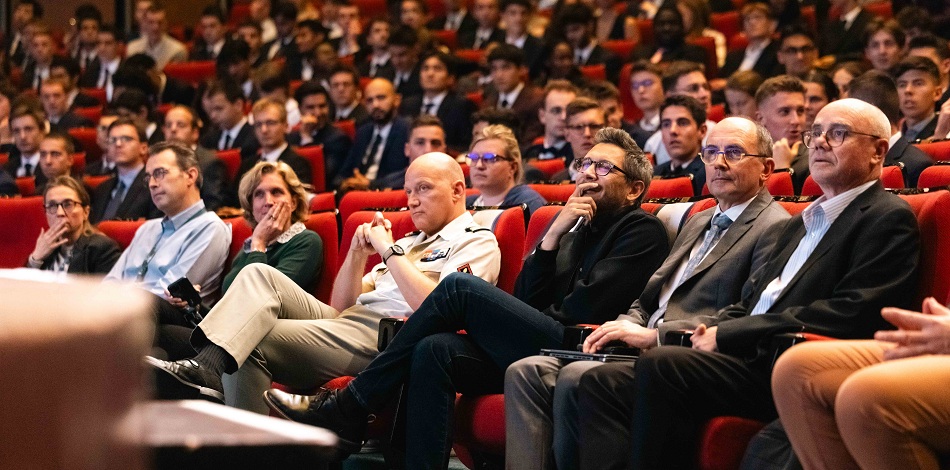 The management of École Polytechnique, with Antoine Bordes © Jérémy Barande, École polytechnique
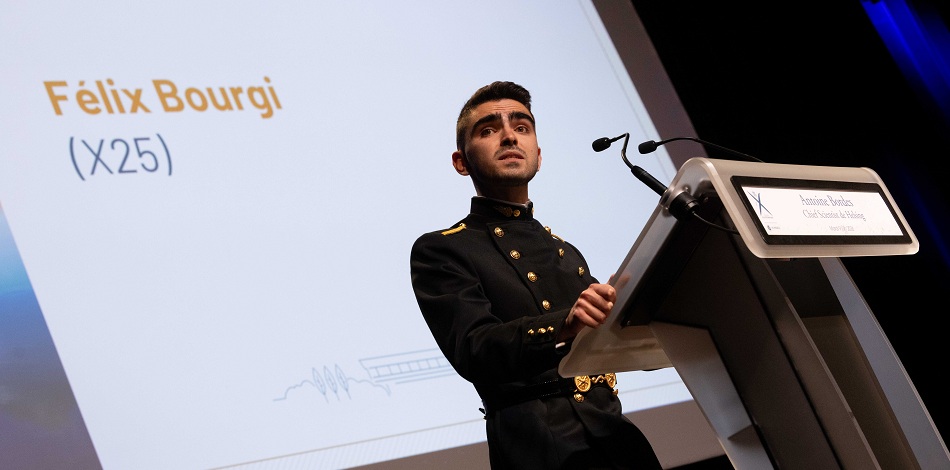 Polytechnique student Félix Bourgi traces the life of Antoine Bordes © Jérémy Barande, École polytechnique
 © Jérémy Barande, École polytechnique
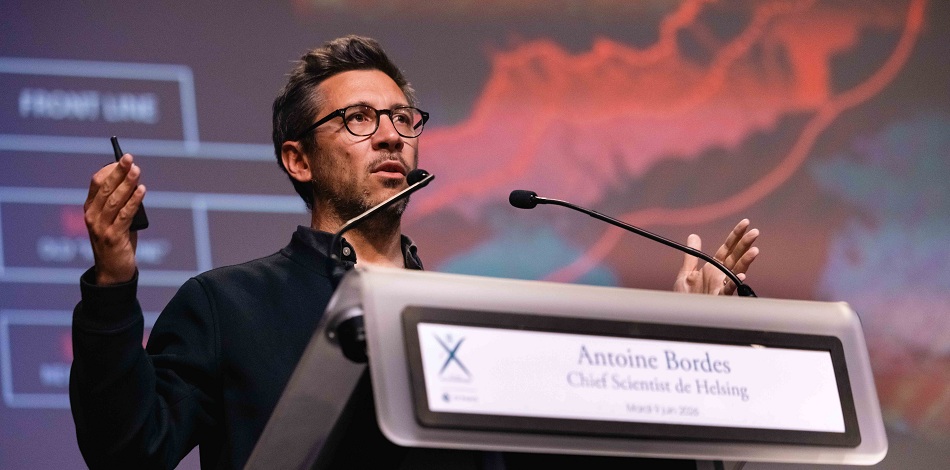 Antoine Bordes © Jérémy Barande, École polytechnique
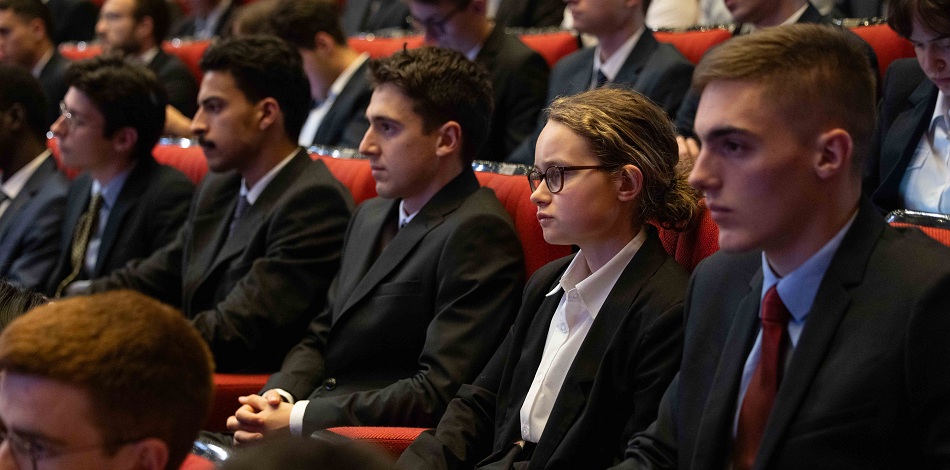 Polytechnic students from the X25 cohort © Jérémy Barande, École polytechnique
Building European sovereignty to protect our freedoms
Hence the need to develop these technologies in Europe independently, without relying on third countries. From funding to the board of directors, Helsing gives priority to players from the European continent. ʽOur technologies are developed with France, Germany and the United Kingdom. We trust these three democracies and their allies, although we reserve the right internally to choose the countries we wish to work with,ʼ he explains in response to a question from the audience.
The fear of being on the ʽwrong side of historyʼ was indeed raised by a student from the École Polytechnique. The question of our individual and collective responsibility in a world fraught with tension is never far away. ʽOf course, I would be delighted if our autonomous AI systems were not used. However, Europe is not an island; other powers are innovating in these fields. We cannot depend on countries that do not share our values. I’ll borrow a well-known expression: “If you’re not at the table, you’re on the menu.ˮ We were proud, for example, to help Ukraine defend its freedoms with our drones.ʼ
ʽOur equipment enables us to kit out soldiers in a way that reflects our values, but we are not the decision-makers. Technology plays a part, but everyone is responsible at their own level.ʼ The engineer is responsible for applying their technology; the soldier, for strategy on the battlefield. ʽBeing at the forefront of defence innovation earns us respect and thus helps protect our European democracies.ʼ