 Support l'X
- Home
- Education
- Academic and Research Departments
- PHYSICS DEPARTMENT
PHYSICS DEPARTMENT

Presentation
The teaching, such as courses, tutoring in small classes, experimental training, is taken in charge by confirmed scientists, with an established international reputation in their domains. The students are thus in direct contact with worldwide experts, who can answer questions going well beyond the immediate technical content of the courses. This practice differs significantly from many other places, where undergraduate courses are often given by young teachers, or teaching assistants.
News and Events
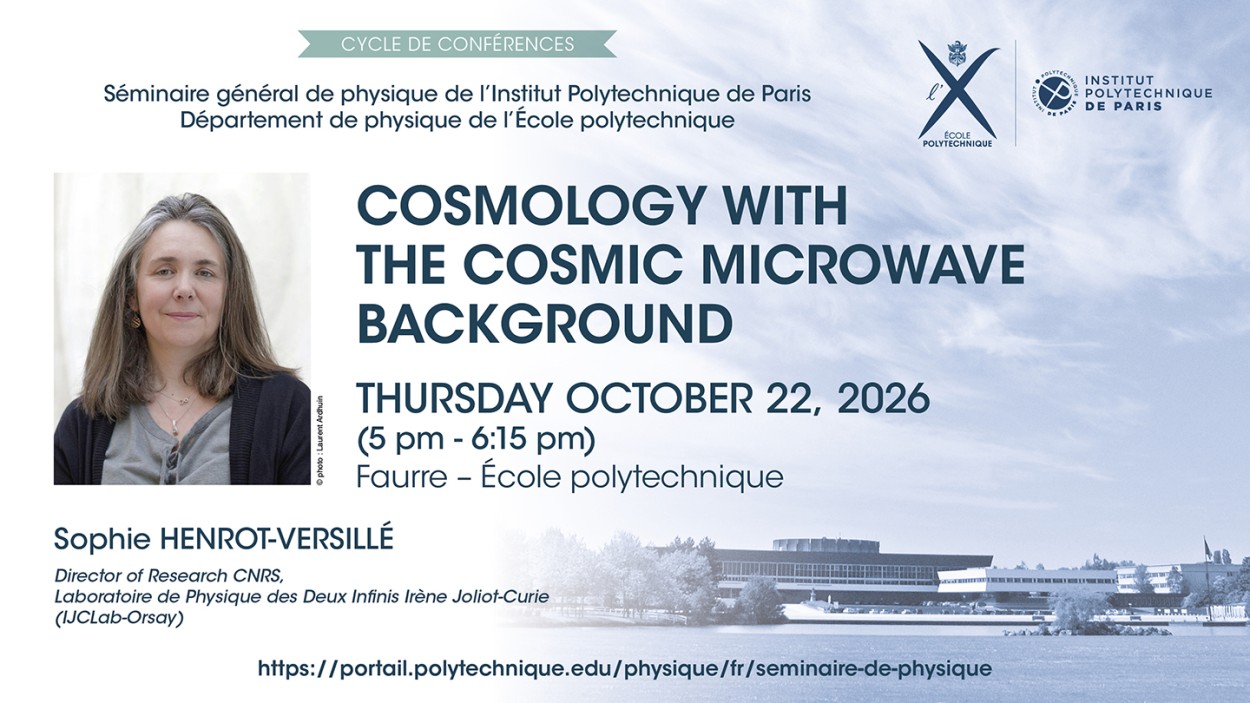
Jacqueline Bloch, Professor at École Polytechnique, Receives the CNRS Gold Medal
 This prestigious distinction recognizes a career dedicated to the study of quantum phenomena and the development of new experimental approaches in physics. Research Director at the CNRS at the Center for Nanoscience and Nanotechnology (C2N), a joint CNRS-Université Paris-Saclay research unit, Jacqueline Bloch is also a member of the French Academy of Sciences.
A lecturer at École Polytechnique since 2015, physicist Jacqueline Bloch has been awarded the 2026 CNRS Gold Medal for her work on polaritons and their applications in quantum physics.
The CNRS Gold Medal is awarded each year to a leading scientist whose work has made an outstanding contribution to the international recognition of French research. Jacqueline Bloch is being recognized for her pioneering research on polaritons, hybrid particles resulting from the coupling of light and matter.
Her research focuses in particular on the study of these quantum states within microcavities and on the collective phenomena they make it possible to observe. Her work has contributed to a better understanding of phenomena such as superfluidity and Bose–Einstein condensates, while opening up new prospects in fields including photonics and all-optical information processing.
Professor at École Polytechnique
Jacqueline Bloch has been a lecturer at École Polytechnique since 2015, where she contributes to the education and training of students alongside her research activities at the CNRS. She is also a CNRS Research Director at C2N, where she leads the “Nanophotonics and Quantum Systems” team, and has been a member of the French Academy of Sciences since 2019.
She joined the CNRS in 1994 after completing a PhD in physics and subsequently carried out research at Bell Laboratories in the United States before continuing her work in France. Her career has been recognized with several distinctions, including the CNRS Silver Medal in 2017 and the Ampère Prize from the French Academy of Sciences in 2019.
The 2026 CNRS Gold Medal thus recognizes a career devoted to research in quantum physics and to the dissemination of scientific knowledge, notably through her teaching activities at École Polytechnique. The award ceremony will take place on December 17, 2026, at the Maison de la Chimie in Paris.
Marc-Olivier Renou, Inria/X Junior Professor, Receives an ERC Starting Grant
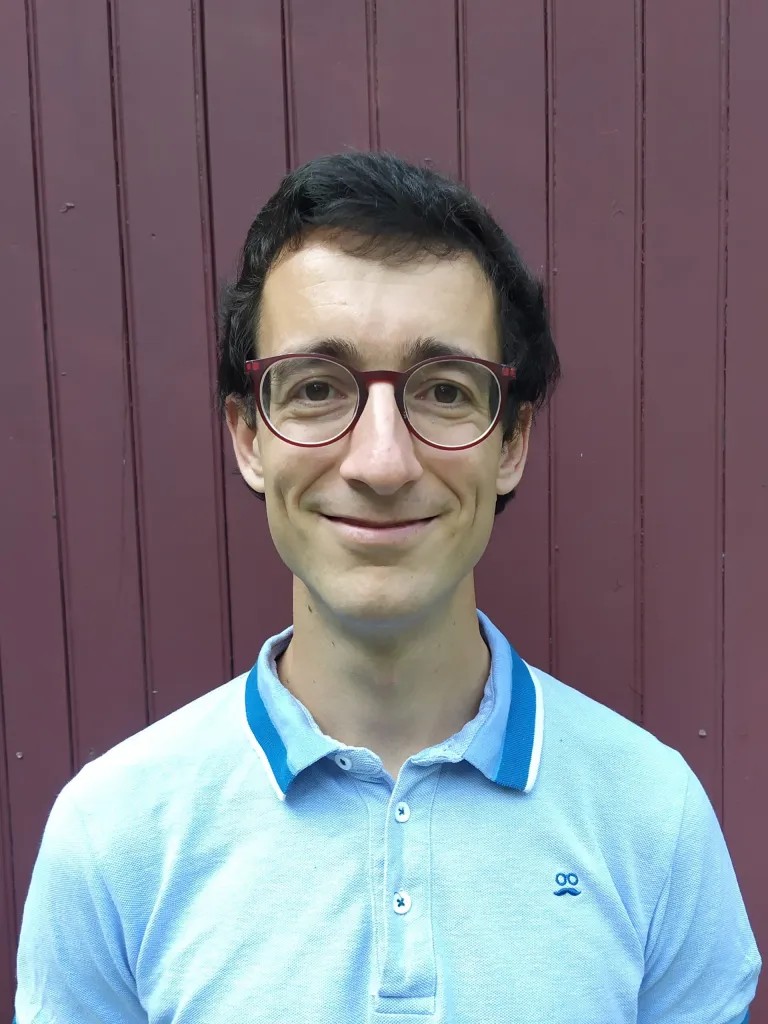 Marc-Olivier Renou, a theoretical physicist specializing in quantum information science, holds an Inria/X Junior Professorship at the Inria Center of Institut Polytechnique de Paris. He leads the Inria project team PhIQuS, which he co-founded with Titouan Carette and Filippo Vicentini, and is affiliated with the Center for Theoretical Physics (CPHT) and the Computer Science Laboratory of École Polytechnique (LIX). The PhIQuS team, which comprises around twenty members, works at the interface of physics, information theory, and quantum simulation. His research focuses in particular on quantum correlations, quantum networks, distributed quantum computing, and device-independent quantum information processing.
The Project
Through his QINF project (Fundamental Laws Ruling Quantum Information: Bits, Qubits and Fermionic Bits in Networks), Marc-Olivier Renou is exploring a new frontier of quantum information: fermionic bits, or “febits.”
Current developments in quantum computing rely primarily on qubits, units of information encoded in quantum systems such as photons or ions. QINF aims to investigate another way of carrying quantum information by leveraging the fundamental properties of fermions, a family of particles that includes electrons.
Fermions differ from bosons, such as photons, through the statistical laws governing their collective behavior. In particular, two identical fermions cannot simultaneously occupy the same quantum state, according to the Pauli exclusion principle. This property is mathematically described by so-called anticommutation rules.
By encoding information in the presence or absence of a fermion, the QINF project aims to determine whether these “febits” can enable information to be transmitted or processed in quantum networks in ways that cannot be reproduced using traditional qubits. Initial theoretical results already indicate that, in certain networks, fermions can perform tasks that cannot be reproduced using bosons [1].
This approach is notably inspired by Bell’s theorem: just as certain quantum experiments cannot be explained by a classical theory based on bits, QINF seeks to demonstrate that certain fermionic behaviors cannot be reproduced by the standard quantum information theory based on qubits.
The project will also investigate more broadly how quantum physics can contribute to communication networks and distributed computing, particularly in areas such as information routing, communication channel allocation, and resource distribution.
[1] M. Moradi et al., “Fermions are fundamentally more nonlocal than Bosons,” arXiv:2606.12363 (2026).
École Polytechnique Team wins the 18th International Physicists’ Tournament!
The École Polytechnique team, composed of Jade Godard, Hadrien Frappier, Mathieu Hazebrouck, Tristan Tirdea, Antoine Valentin, and Joris Van der Lee (X24), coached by Guilhem Gallot (Department of Physics, LOB), brilliantly won the 18th International Physicists’ Tournament (IPT), held from May 25 to 30, 2026, in the state of Oklahoma, USA.
After a particularly competitive tournament, the École Polytechnique students came out on top, ahead of Team IPT (Russia) and the Swiss team. This new victory adds to École Polytechnique’s already impressive track record in this leading international competition.
The IPT nevertheless remains a constantly evolving challenge. Each edition features a new set of open-ended physics problems, which teams must analyze, model, and defend before an international jury.
This achievement once again highlights the talent and commitment of École Polytechnique students, as well as the strength of research- and project-based learning within the Department of Physics.
The broadcast of the grand final is available here:
Two outstanding awards for members of the department
The Plasma Physics Laboratory (LPP) is in the spotlight with two distinctions awarded to members of the department.
Lina Hadid awarded the 2026 SF2A Early Career Researcher Prize
Lina Hadid, CNRS Research Scientist, has received the 2026 Early Career Researcher Prize awarded by the French Society of Astronomy and Astrophysics (SF2A) (https://sf2a.eu/website2023/).
This distinction recognizes Lina’s work on space plasmas, particularly in planetary science, as well as her strong involvement as Principal Investigator (PI) of instruments (plasma spectrometers) developed at LPP and flown on international space missions led by ESA and JAXA.
👉 More information: https://sf2a.eu/website2023/wp-content/uploads/2026/04/Texte_prix_JC_2026.pdf
Alejandro Alvarez-Laguna awarded the CNRS Bronze Medal
Alejandro Alvarez-Laguna, also a CNRS Research Scientist, has been awarded the CNRS Bronze Medal.
His research at LPP focuses on theoretical approaches and numerical simulations applied to space propulsion. It is also part of the COMHET joint laboratory, in partnership with Safran, dedicated to electric propulsion.
👉 More information: https://www.insis.cnrs.fr/fr/cnrsinfo/portrait-dalejandro-alvarez-laguna-medaille-de-bronze-du-cnrs-2026
Access and contact
Mailing address
Département Enseignement-Recherche de Physique
Ecole Polytechnique
91128 Palaiseau
Bâtiment 5
The Secretariat is located on the 2nd floor
Room 05.30.78 « Département de Physique »
Main department contacts:
Chair of the Physics Department:
Laurent Sanchez-Palencia laurent.sanchez-palencia@polytechnique.edu
Secretariat:
Sylvie Pottier : sylvie.pottier@polytechnique.edu
Jessy Verin : jessy.verin@polytechnique.edu
Jean Souphanplixa : jean.souphanplixa@polytechnique.edu

