 Support l'X
 The BME Seed Grant Programme: a biomedical engineering adventure that ends on a high note
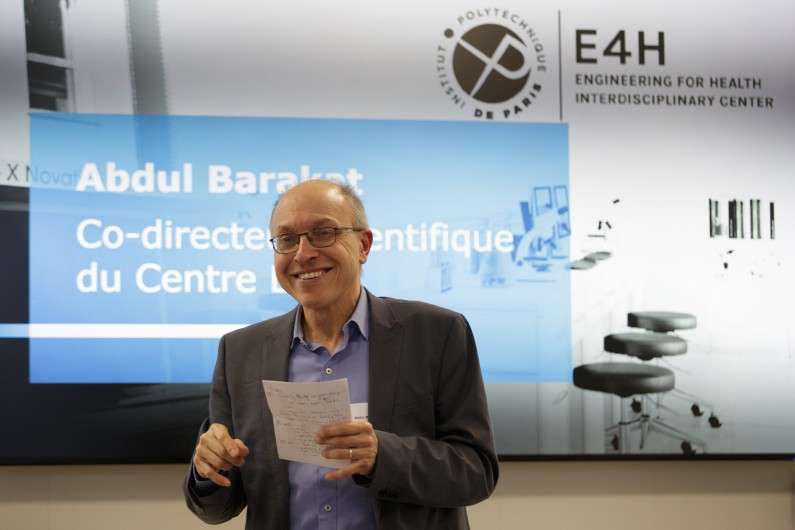 Abdul Barakat, co-director of the E4H Interdisciplinary Centre and leader of the BME Seed Grant Programme project.
Thanks to his internationally recognised expertise in arterial fluid mechanics and mass transport, vascular cell engineering and endovascular devices, Abdul Barakat, Director of Research at the CNRS at the Hydrodynamics Laboratory (LadHyX*) and Co-Director of the E4H Interdisciplinary Centre, has played a decisive role in the development of biomedical engineering at École Polytechnique and within its ecosystem.
In particular, he initiated the ‘Cardiovascular Cell Engineering’ Chair, supported by the AXA Research Fund since 2010, which finances research projects to study the role of mechanical and biological actions in cardiovascular diseases. He also spearheaded the BME Seed Grant programme, supported by the Bettencourt Schueller Foundation and École Polytechnique and its Foundation, launched in late 2018 to encourage collaboration between researchers and physicians and train a new generation of biomedical engineering specialists, which is now coming to an end.
For seven years, this sponsorship programme, a pioneering initiative that paved the way for the creation of the E4H Centre, served as a major springboard for young scientists and supported 11 research projects carried out by researcher-doctor pairs.
Inspiring testimonials highlighted at the E4H Annual Forum
Several research projects supported by the BME Seed Grant programme were highlighted at the 4th annual E4H Centre Forum, held on 20 November. This event, which brings together researchers and students in life sciences and health from the Institut Polytechnique de Paris, doctors, industrialists and entrepreneurs every year, was introduced by Thierry Coulhon and moderated by Jean-Louis Mergny and Abdul Barakat, co-scientific directors of the E4H Centre.
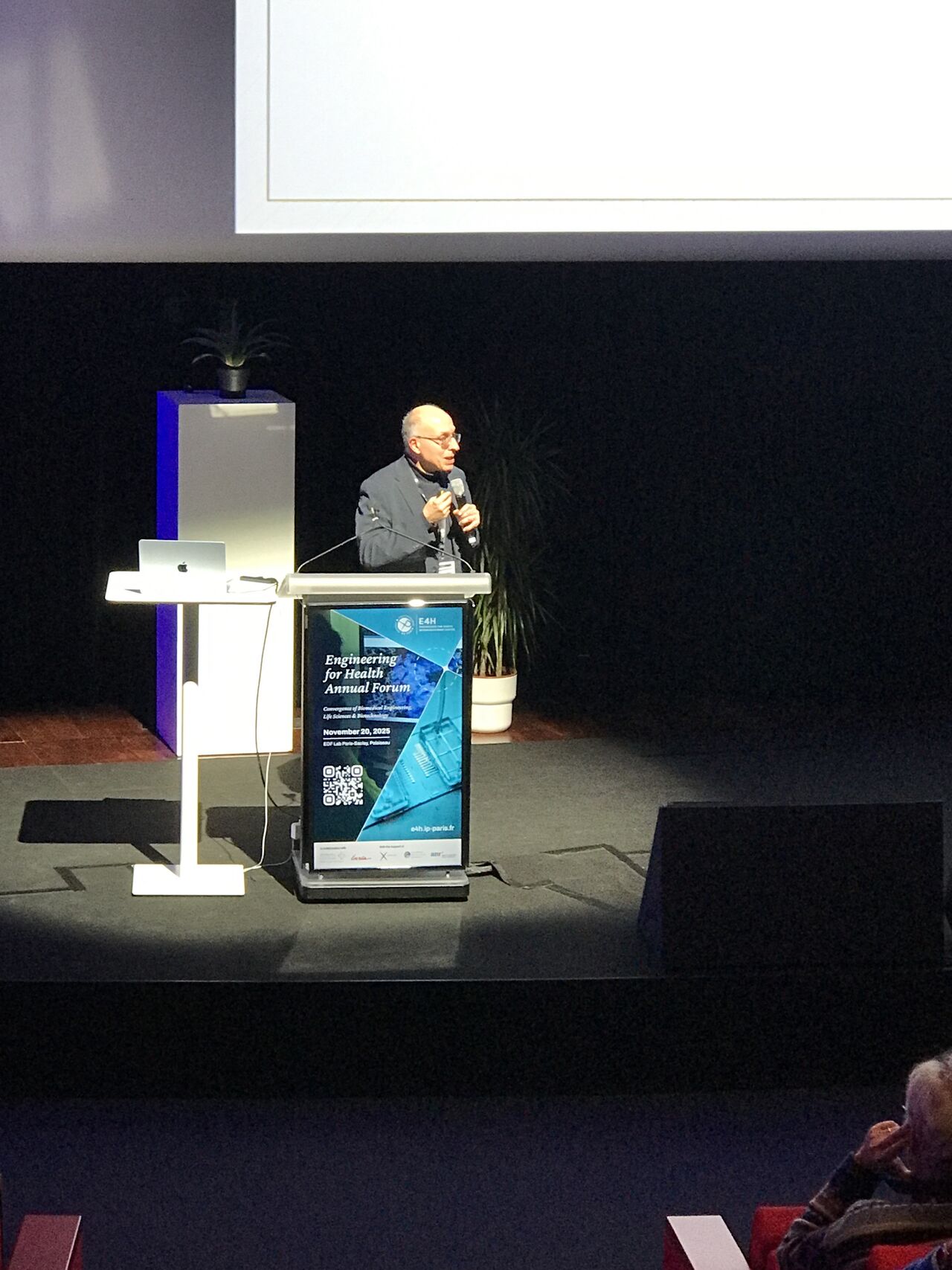 The annual E4H Forum, hosted by Jean-Louis Mergny and Abdul Barrakat, co-founders of the E4H Centre.
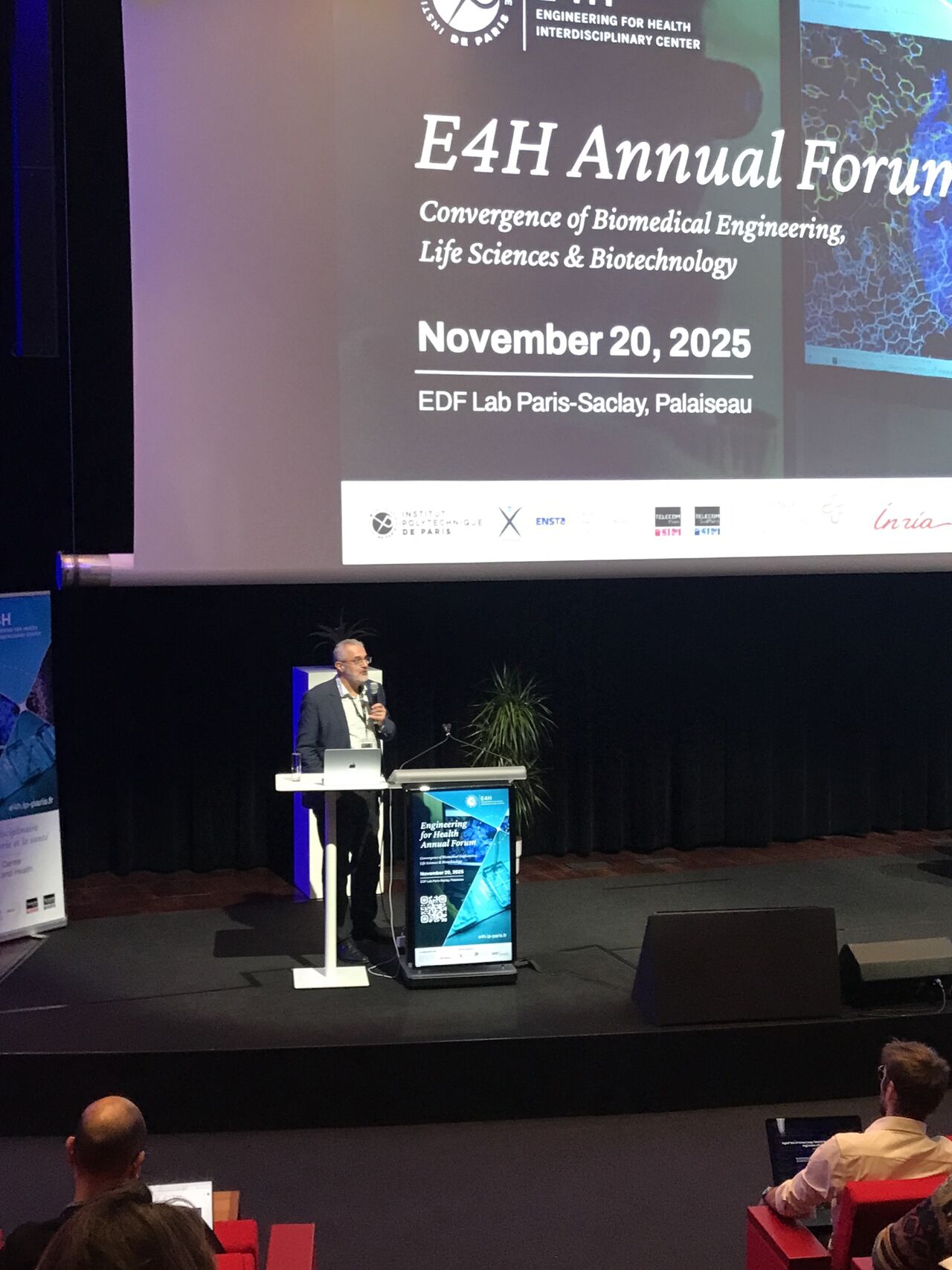 The annual E4H Forum, hosted by Jean-Louis Mergny and Abdul Barrakat, co-founders of the E4H Centre.
The session dedicated to the BME Seed Grant sponsorship programme was introduced by Céline Poucin, Director of Scientific Sponsorship at the Bettencourt Schueller Foundation, who reviewed the origins of the programme and its mission: to support scientific excellence in the life sciences while training future leaders in research and medicine.
The testimonials presented during the session highlighted the direct impact of the programme on career paths. Claire Leclech, a researcher at LadhyX whose work focuses on the diagnosis of laminopathies, noted that the grant enabled her to finance her post-doctorate and gain the experience necessary to write scientific projects, thereby securing her position as a CNRS researcher at École Polytechnique.
For her part, Rose Bulteau, formerly a research engineer and then a doctoral student under the supervision of Clément Campillo, a lecturer and researcher at Lambe at the University of Evry Val d'Essonne, explained that the grant had financed her engineering contract and subsequently enabled her to begin a thesis on oocyte morphogenesis and the identification of new biomarkers for medically assisted reproduction.
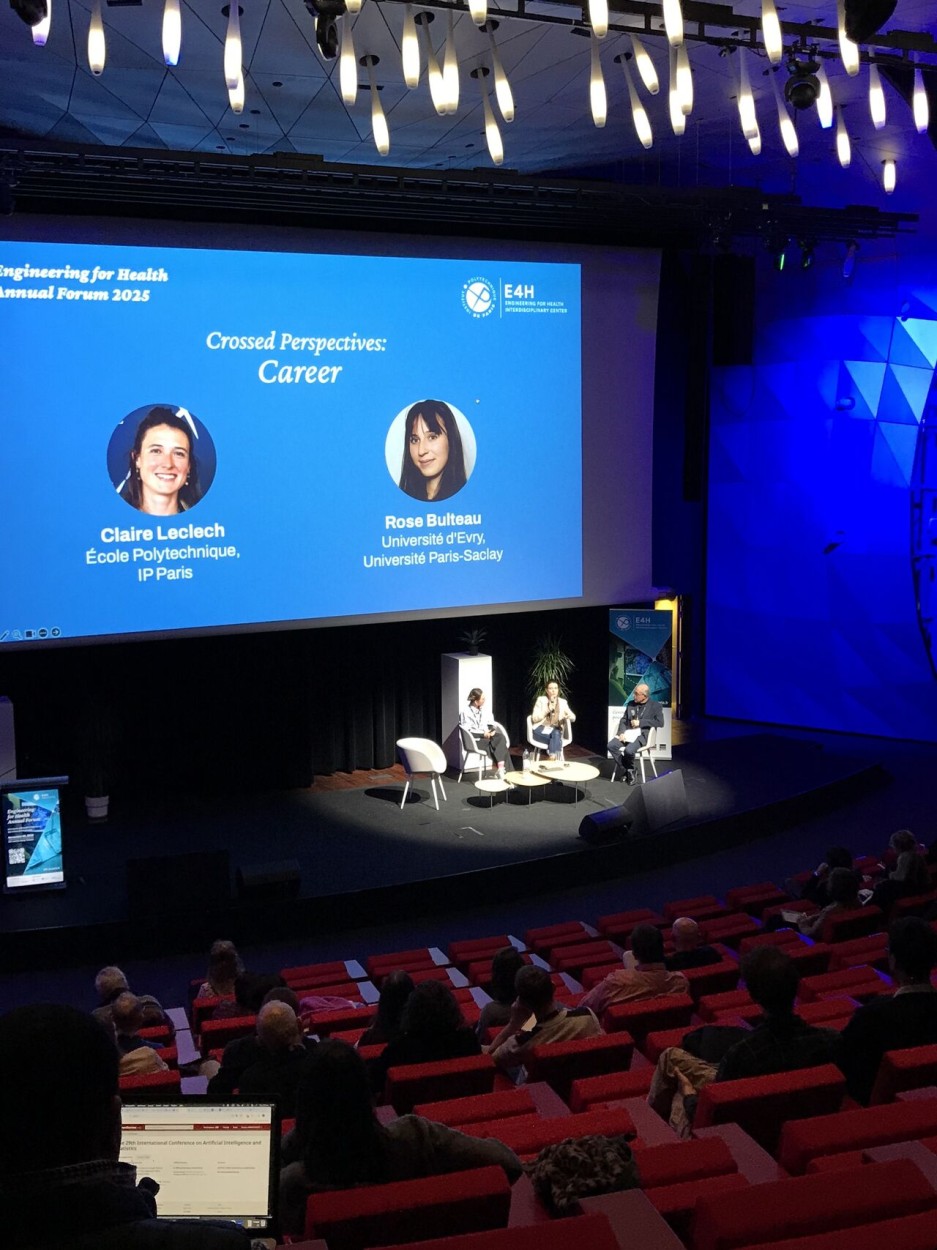
A catalyst for innovation at the crossroads of fundamental and clinical research
The session also highlighted the entrepreneurial potential of certain projects, such as that of Cédric Bouzigues, a researcher at the Laboratory of Optics and Biosciences (LOB**), whose work focuses on the ultra-sensitive detection of molecules in biological samples. It serves as a reminder that this programme was much more than just support for fundamental research. It positioned itself as a true catalyst for innovation, bringing together engineers, biologists and doctors to devise technologies capable of responding to emerging health challenges.
Several additional projects were presented, illustrating the diversity and scope of this interdisciplinary approach. The work of Benoit Schneider, a researcher at the Laboratory of Structural Cell Biology (BIOC***), on Charcot's disease (ALS), has shed light on new therapeutic avenues for neurodegenerative diseases. The work of Willy Supatto, a researcher at LOB, devoted to cardiac imaging, demonstrated the potential of advanced optical approaches for better understanding complex biological mechanisms.
These contributions demonstrate the richness of the ecosystem created by the programme, where engineering, biology, physics and medicine come together to generate high-impact scientific advances.
A lasting legacy for biomedical research
At the close of the session, it was clear that the BME Seed Grant sponsorship programme had fully achieved its mission: to support scientific innovation at École Polytechnique and its ecosystem, train young talent and strengthen interdisciplinarity between medicine and engineering. Beyond the projects it has supported and the careers it has helped shape, the programme leaves behind a true scientific and institutional legacy.
Thanks to him, the E4H Centre was able to emerge, take shape and get off the ground; a major step forward for the ecosystem initiated by this programme.
Although the programme ends today, its impact will continue to shape collaborations, inspire new approaches and fuel advances that will shape biomedical research for years to come.
To learn more about the BME Seed Grant Programme and discover the 11 projects supported, visit: https://www.ip-paris.fr/actualites/bme-seed-grant-program-lexperience-de-linterdisciplinarite-en-ingenierie-biomedicale
Ladhyx*: a joint research unit of the CNRS, École Polytechnique, Institut Polytechnique de Paris, 91120 Palaiseau, France
LOB**: a joint research unit of the CNRS, Inserm, École Polytechnique, Institut Polytechnique de Paris, 91120 Palaiseau, France
BIOC***: a joint research unit of the CNRS, École Polytechnique, Institut Polytechnique de Paris, 91120 Palaiseau, France