 Support l'X
 Catherine Vautrin, French minister for the Armed forces, at École Polytechnique on Quantum Technology
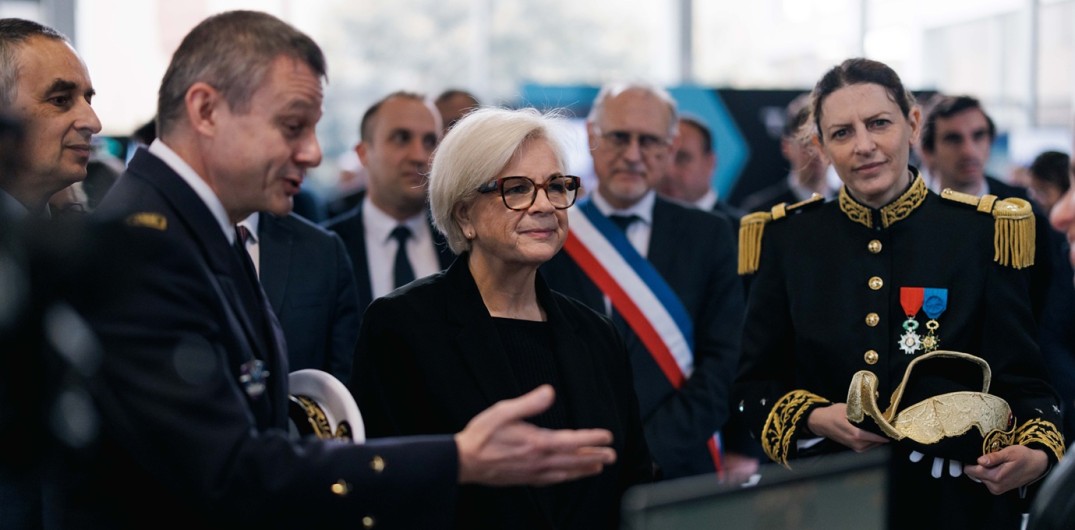
On April 17, Catherine Vautrin, French Minister of the Armed Forces and Veterans, visited École Polytechnique as part of the Defense Quantum Forum, which brings together the quantum community to address defense and sovereignty issues under the auspices of the Defense Innovation Agency (AID).
On this occasion, she presided over a military ceremony and reviewed the X24 and X25 graduating classes, addressing them to remind them of the significance of their School’s historic ties to the Nation and the Armed Forces.
"Everywhere, competition among the major powers is taking on a brutality that many thought was a thing of the past, with force once again becoming the norm. In this context, France is naturally playing its full part in maintaining the balance of peace, defending its interests, defending its partners, and defending its values. It does so thanks to a unique defense capability, the result of a long history rooted in a military, industrial, and scientific model that is deeply intertwined with our conception of France," the minister noted.
“École Polytechnique is one of the most accomplished examples of this model, as it occupies a unique place in our Republic (…) due to its history, (…) its mission, [and] above all because of what it has contributed and will continue to contribute to France,” emphasized Catherine Vautrin.
“The Republic is counting on you to meet the great challenges of this century. Defense challenges, of course, but also those related to energy, health, food, reindustrialization, climate change, AI, and quantum technology. In the days to come, when the same battle will ultimately be fought—the battle for our freedom of choice, our strategic independence, and our ability to remain masters of our own destiny. Ultimately, the question of France’s greatness,” said the minister.
“I have no doubt that you will live up to the legacy of your School and carry on the work your predecessors have built. You, in turn, will be the architects of the world to come. So remain true to your School’s fine motto: ‘For the Nation, for Sciences, and for Glory,’” she concluded.
MEETING QUANTUM RESEARCHERS
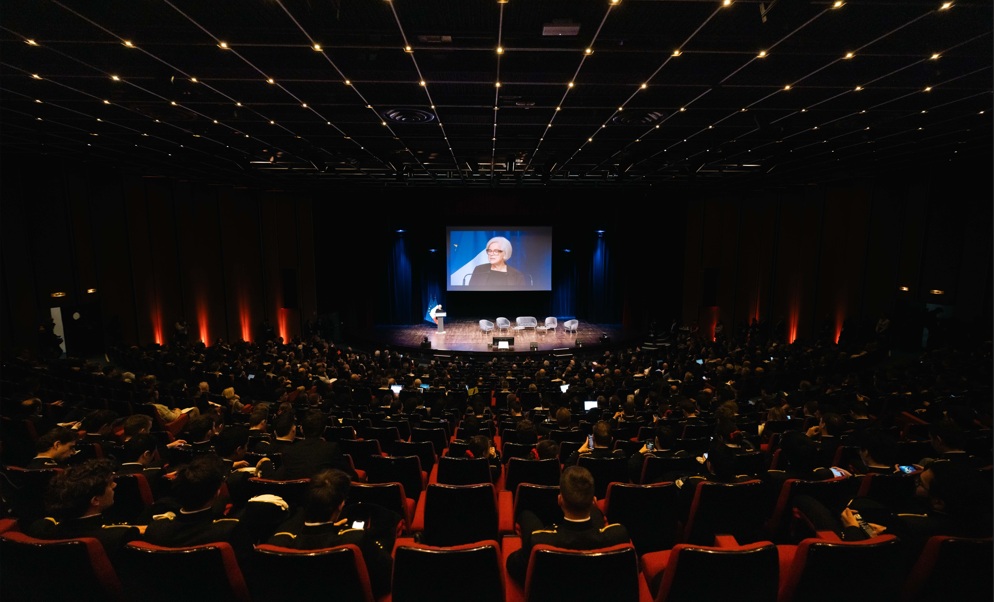
Accompanied by Laura Chaubard, Director General of École Polytechnique, and Patrick Aufort, Director of the Defense Innovation Agency, Catherine Vautrin visited the Defense Quantum Forum and then spoke to event attendees and École Polytechnique students in attendance about the challenges of quantum technology for national sovereignty and defense, emphasizing the government’s commitment to accelerating progress in this field.
“Quantum technology in defense is a major challenge for our armed forces. The quantum revolution will profoundly transform military capabilities in the areas of sensors, computing, and secure communications. In a context where technological leadership directly determines operational superiority, quantum technology is a top strategic priority for the 21st century and for defense, and its applications are numerous,” explained Catherine Vautrin.
Noting that the Ministry of the Armed Forces has been supporting research in these fields for over 20 years, the minister pointed out that the government had just tripled the budget allocation for quantum technologies, bringing it to 320 million euros as part of the update to the 2024–2030 Military Programming Law.
The minister then spoke with several researchers from École Polytechnique laboratories whose work focuses on quantum technologies and their applications.
Landry Bretheau, co-director of the Quantum Circuits and Matter Lab (QCXM)—affiliated with the Laboratory of Condensed Matter Physics (PMC*) and dedicated to exploring the quantum properties of electronic circuits and matter—focused his presentation on the creation of hybrid quantum systems with potential applications for quantum computing, quantum communication and detection.
The presentation by Hamed Merdji, co-director of the QUATUM team at the Laboratory of Applied Optics (LOA***), focused on quantum sensors and their potential civilian applications; the presentation by Thomas Ayral at the Center for Theoretical Physics (CPHT**) addressed the combination of classical and quantum computing for materials modeling.
Fabien Cadiz, a researcher at the PMC, presented his experimental setup for generating “quantum compasses” designed to serve as detectors for very weak electromagnetic signals. A small scientific experiment on quantum dots, conducted by Clément Livache, a researcher at the PMC, rounded out this overview of the work being carried out in the School’s laboratories.
While the current and future prospects for quantum technologies are extremely promising, fundamental research is crucial to ensuring that these prospects are fully realized. With this in mind, École Polytechnique is actively involved in the French Quantum Plan, which was launched in early 2021.
In collaboration with the Institut Polytechnique de Paris and in partnership with Paris-Saclay University, this research is part of Quantum Saclay, the center that brings together quantum research, education, and innovation initiatives on the Saclay campus.
*PMC: a joint research unit of the CNRS, École Polytechnique, and the Institut Polytechnique de Paris
**CPHT: a joint research unit of the CNRS, École Polytechnique, and the Institut Polytechnique de Paris
***LOA: a joint research unit of the CNRS, École Polytechnique, the Institut Polytechnique de Paris, and ENSTA Paris
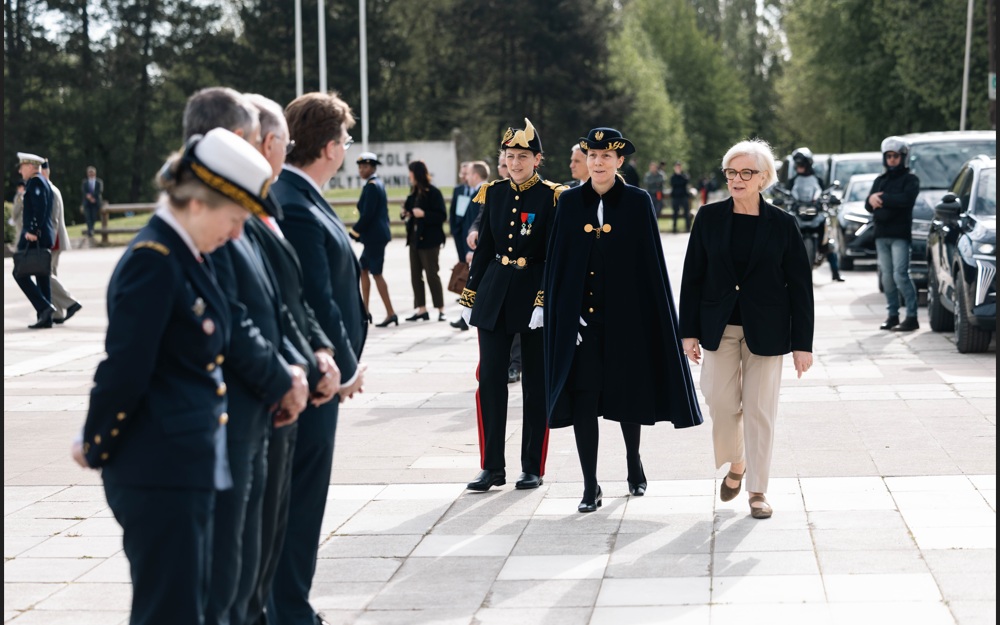 Accueil de Catherine Vautrin, ministre des Armées, à l’École polytechnique
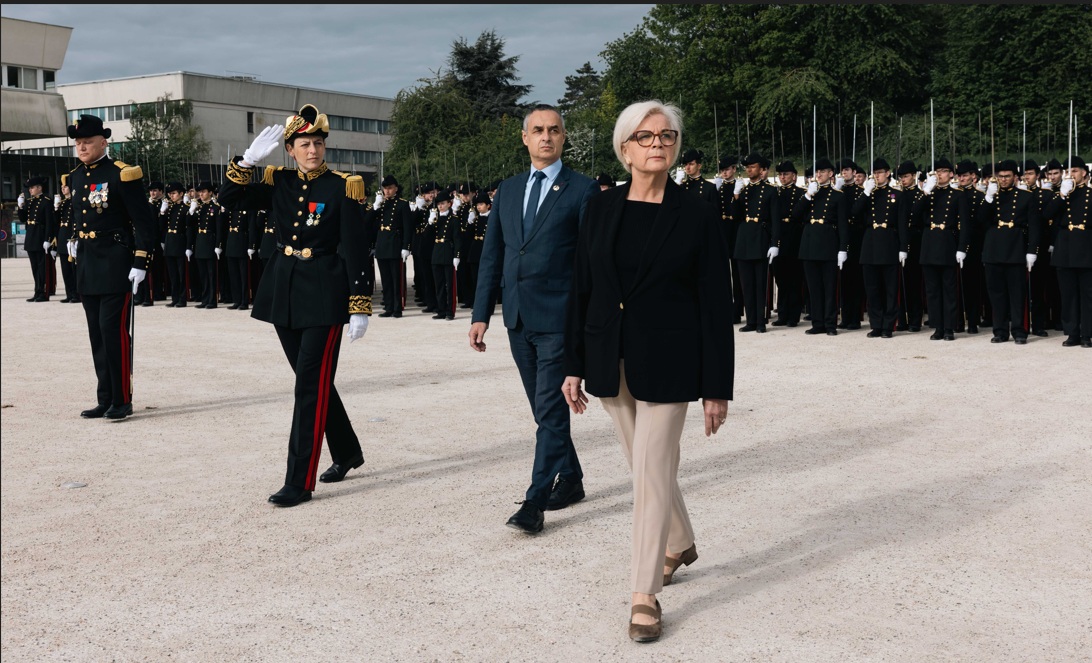 La ministre passe en revue les promotions X24 et X25
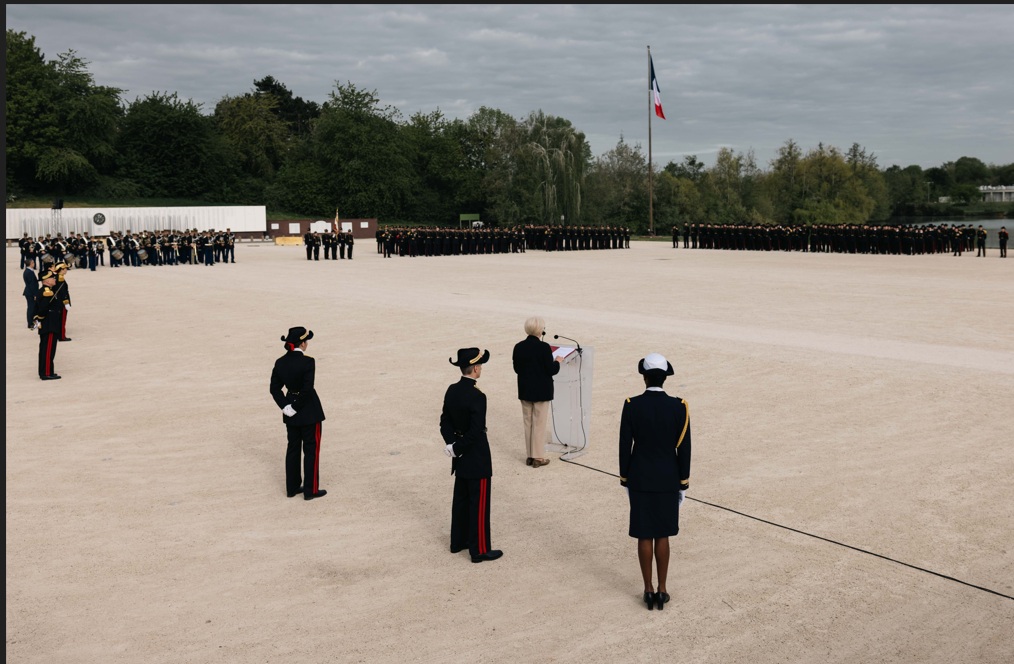 Ordre du jour de la ministre des Armées
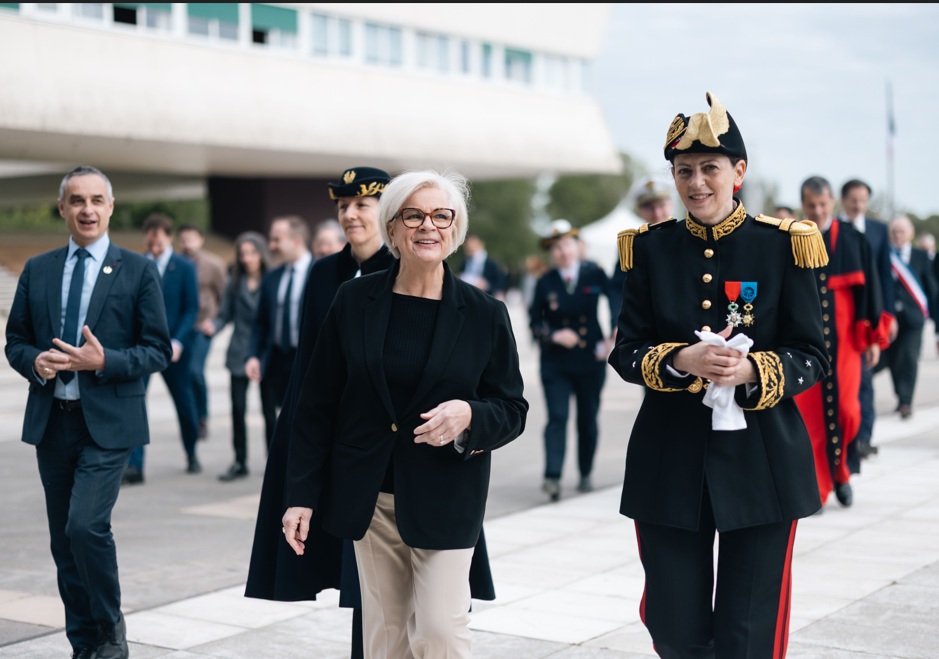 La ministre des Armées et la Directrice générale de l'École polytechnique
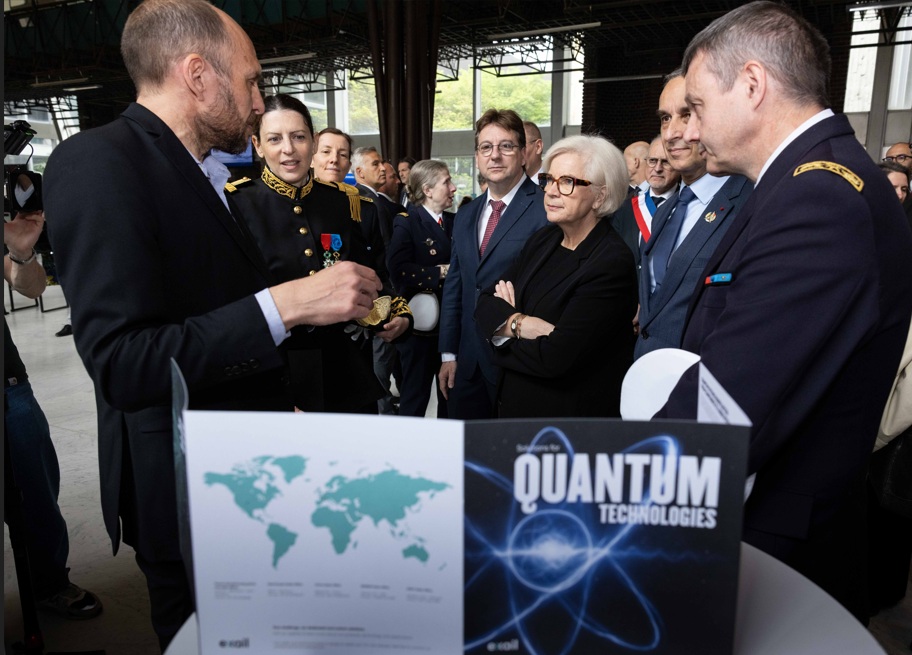 Catherine Vautrin visite le Forum Quantique Défense
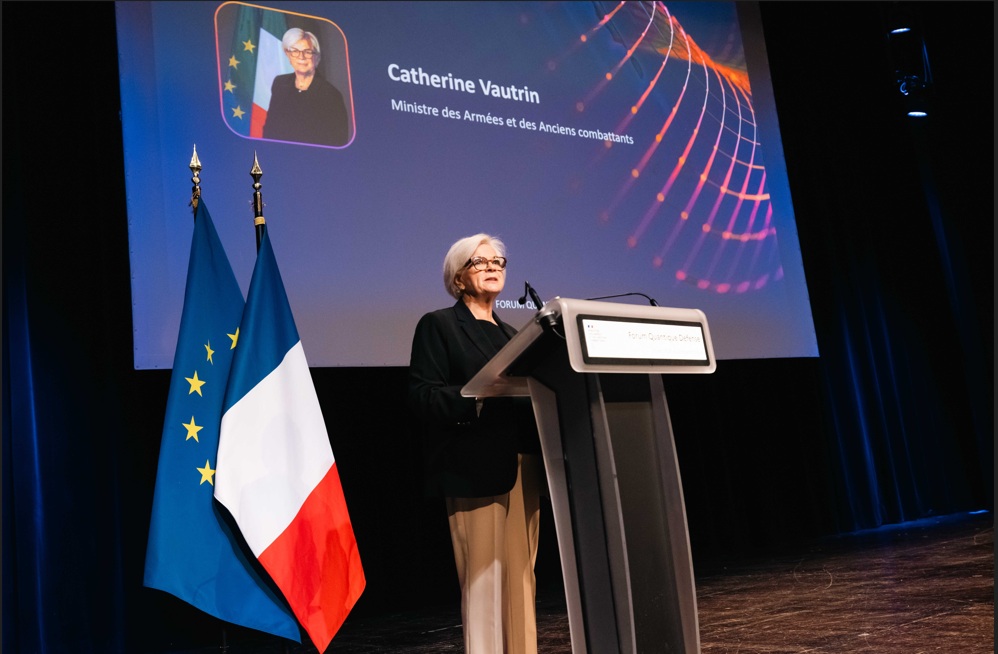 Allocution de la ministre des Armées au Forum Quantique Défense
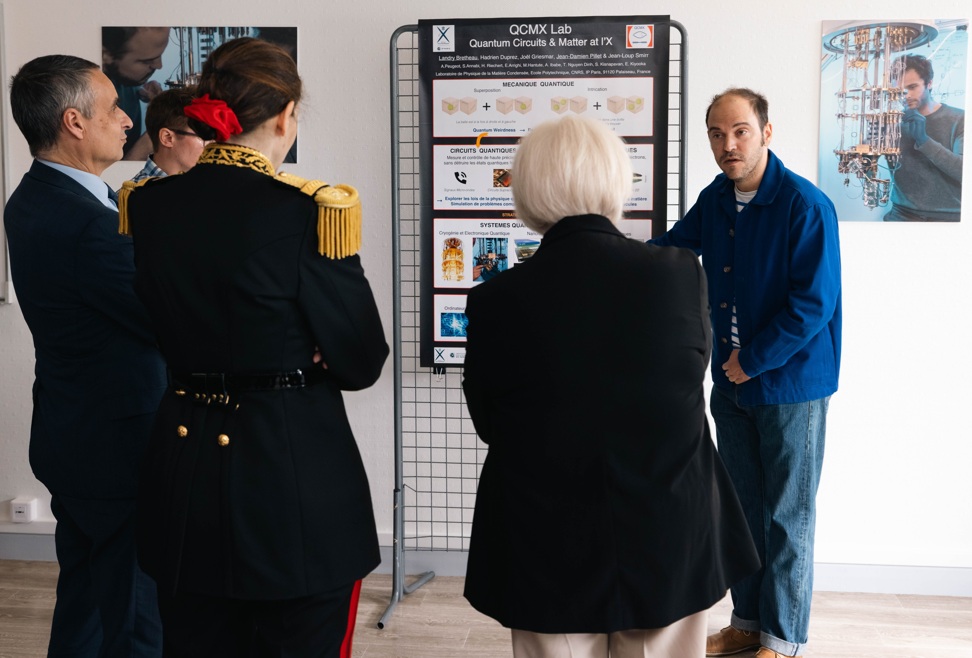 Présentation de Landry Brethreau, co-directeur du QCMX
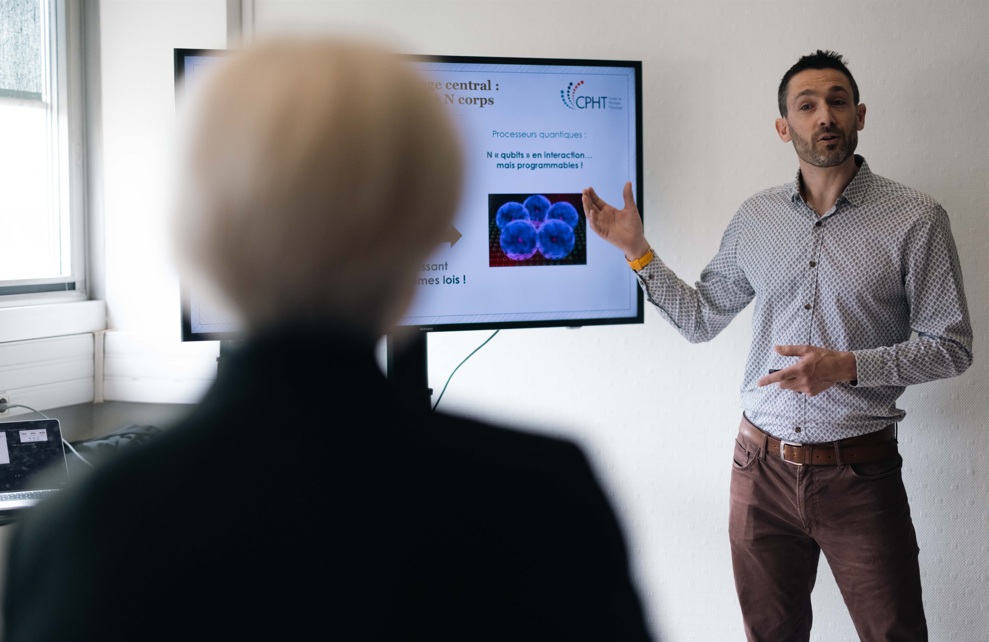 Présentation de Thomas Ayral, chercheur quantique au CPHT
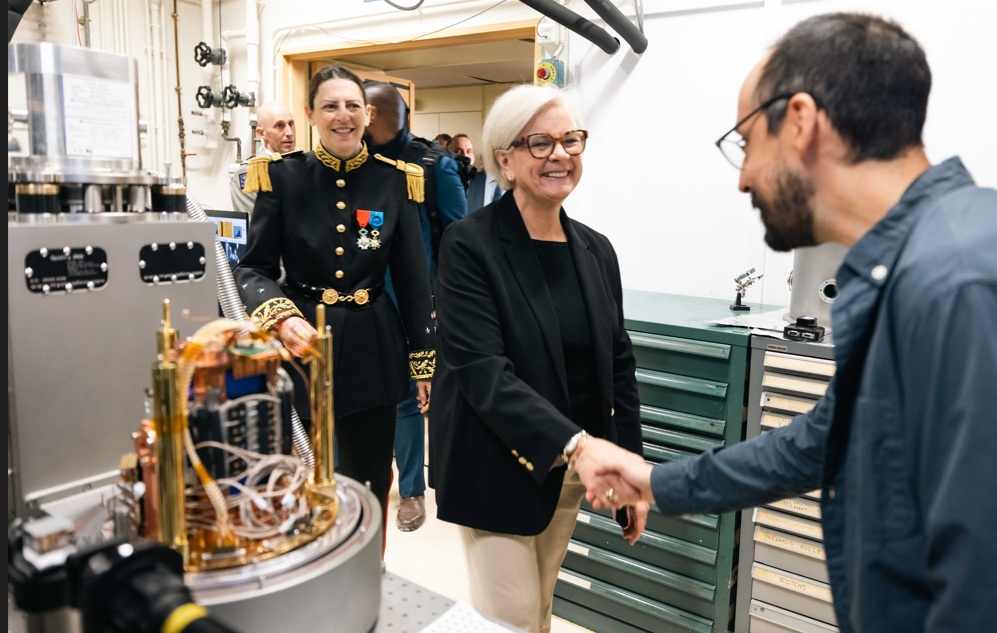 La ministre des Armées accueillie par Fabien Cadiz
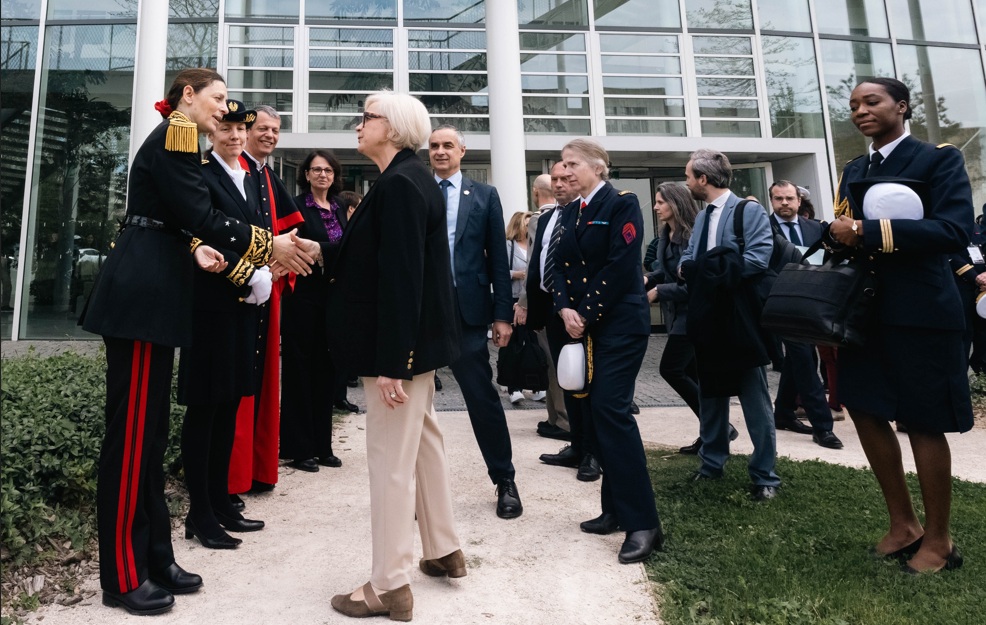 Départ de la ministre des Armées