 Support l'X
Data centers in the Face of Climate Change
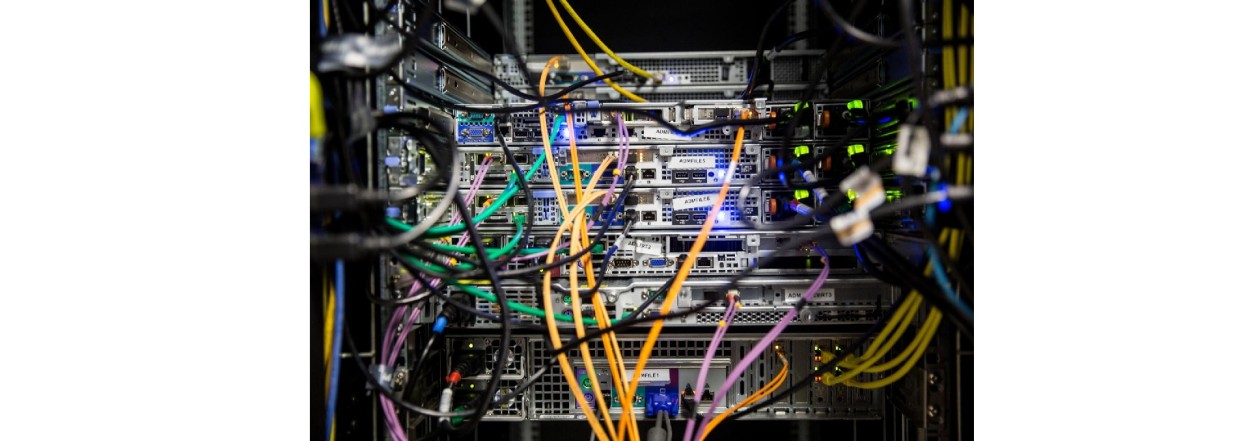 Serveurs informatiques dans un data center
Energy-Intensive Infrastructure on the Rise
In early 2026, in France alone, the French Agency for Ecological Transition (ADEME) identified 352 active data centers. The total electricity consumption of these “server farms” reaches 10 terawatt-hours (TWh) per year, equivalent to the electricity consumed by 9 to 10 metropolitan areas with more than 100,000 residents over the course of a year. Globally, the International Energy Agency estimates that electricity demand from data centers in 2025 has risen by 17 percent, and by as much as 50 percent for those dedicated to artificial intelligence. Behind the apparent immateriality of the digital world lies infrastructure that is particularly energy-intensive, and whose global growth poses major challenges for the ecological transition.
It is in this context that the Energy4Climate (E4C) Center analyzes the interactions between climate, energy consumption, and data centers. This research project, which models the environmental impact of these infrastructures, is funded by the École Polytechnique Foundation, notably through the sponsorship of Revaia, recently joined by Akteo, which has also chosen to support this initiative.
Focus on Cooling
In addition to the energy consumed to perform computing operations (cloud storage, intensive computing, etc.), data centers require cooling systems. “The energy consumption of these systems depends on the outdoor temperature and the cooling technologies used. And climate change adds an additional constraint,” explains Philippe Drobinski, director of E4C and professor at École Polytechnique.
Rather than analyzing specific data centers, the researchers are modeling the physical systems of four widely used cooling technologies: mechanical air cooling (air conditioning), free cooling (using outside air), evaporative cooling, and chilled water. They then analyze these systems’ sensitivity to climate using data from climate models. This data is combined with data on local electricity mixes, which provide hourly information on the carbon content of the electricity.
A Global Map and Outlook
Their goal is to create a global map showing the efficiency and carbon emissions of data centers based on their cooling technology and the region where they are located. The researchers began the study using current climate data and will soon replicate it using future climate scenarios. They will also address water consumption, another critical issue. This map will provide robust scientific data and projections through 2050, taking into account not only climate scenarios but also possible scenarios for the evolution of the electrical grid.
“Data centers also raise other issues regarding noise, pollution, conflicts over electricity use, and local warming. We could therefore take the study even further, including by examining regulations,” emphasizes Philippe Drobinski. “That is the strength of the E4C Center: an approach that examines the interactions between climate and energy, from individual components to entire systems.”