Support l'X
 GreenTech's reality check: Less hype, more hardware | École polytechnique's X-UP Incubator
 GreenTech isn't running out of steam; it's mutating !
A pullback in capital, not in ambition
The data is clear and unequivocal. In 2023, french cleanTech raised a record €4.38 billion across 181 deals, a historic peak. In 2024, that figure dropped back to €2.4 billion over 150 deals, bringing the ecosystem back down to 2021 levels. This downward trend continued into early 2025, according to the annual review by France Invest, greenUnivers, and EY. Industry professionals are blunt in their assessment: the industrial, and therefore capital-intensive, nature of cleanTech, combined with longer exit horizons than in the digital sector, makes fundraising harder in the current environment of market contraction.
Translation: investors are reluctant to wait a decade for a return on an advanced materials patent or a decarbonized vessel prototype. The promise is there, but the timing does not align with their fund cycles.
This decline is real. Yet, it would be naive to view it as a sign of waning interest in the green transition. Because behind the aggregate figures lies a fundamental shift and it is a far more interesting one
The real shift: investors are rediscovering hardware
The real trend of 2025 is not the dip in greenTech fundraising; it is the rebirth of hard tech. After a decade dominated by digital applications, marketplaces, and SaaS, capital is returning to what can be touched, manufactured, and built.
Industrial and manufacturing technologies saw a +90% surge in fundraising in France in 2025, according to the KPMG tech insights study. Meanwhile, energy and environmental transition technologies grew by +23%, reaching €1.14 billion. Over the same period, finTech dropped by 21% and mobility plummeted by 64%.
This is no coincidence. It reflects a strategic reallocation of capital toward technologies with high barriers to entry and defensive value solutions that cannot be easily replicated by a competitor in a few months of agile sprinting. Put simply: the market is now paying a premium for technical complexity.
On a national scale, the deepTech plan led by Bpifrance currently lists 2,589 active deeptech startups in France, 600 of which are in the greenTech vertical alone. In 2025, 410 new deepTech startups were launched compared to 207 when the plan was introduced in 2019. Paris has firmly established itself as the world’s third-largest deeptech hub, trailing only the United States
BlueNose Technologies : Aerodynamics
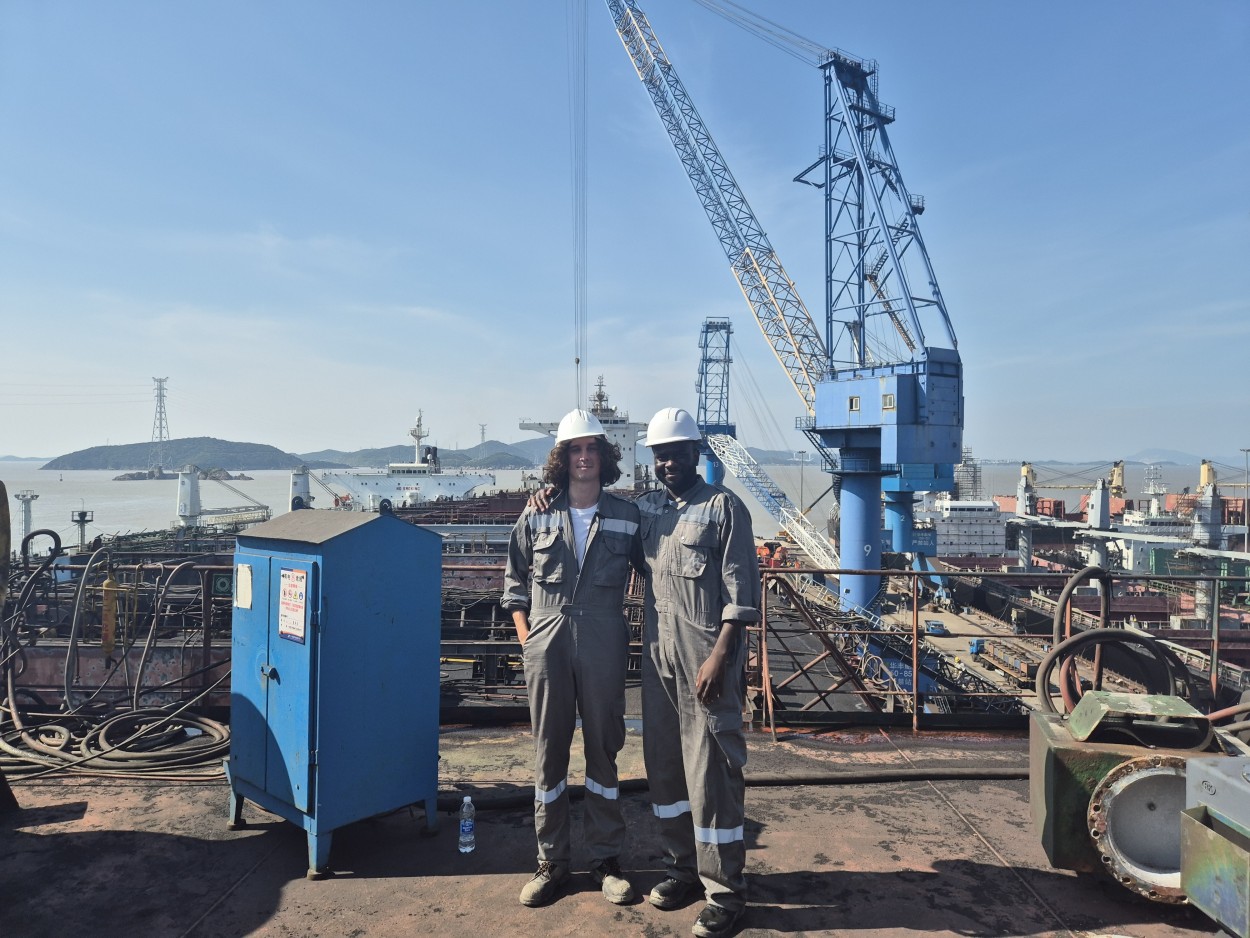
In this reshaping landscape, some startups embody this return to the tangible better than others. BlueNose is a striking example.
The story began in 2020, when the IMO 2020 regulation forced shipowners to drastically reduce their sulfur dioxide emissions. For container ship operators, whose margins are structurally thin, this regulatory constraint immediately doubled as an economic headache: the new, less polluting VLSFO fuel was also far more expensive. The equation was simple and brutal: they had to consume less.
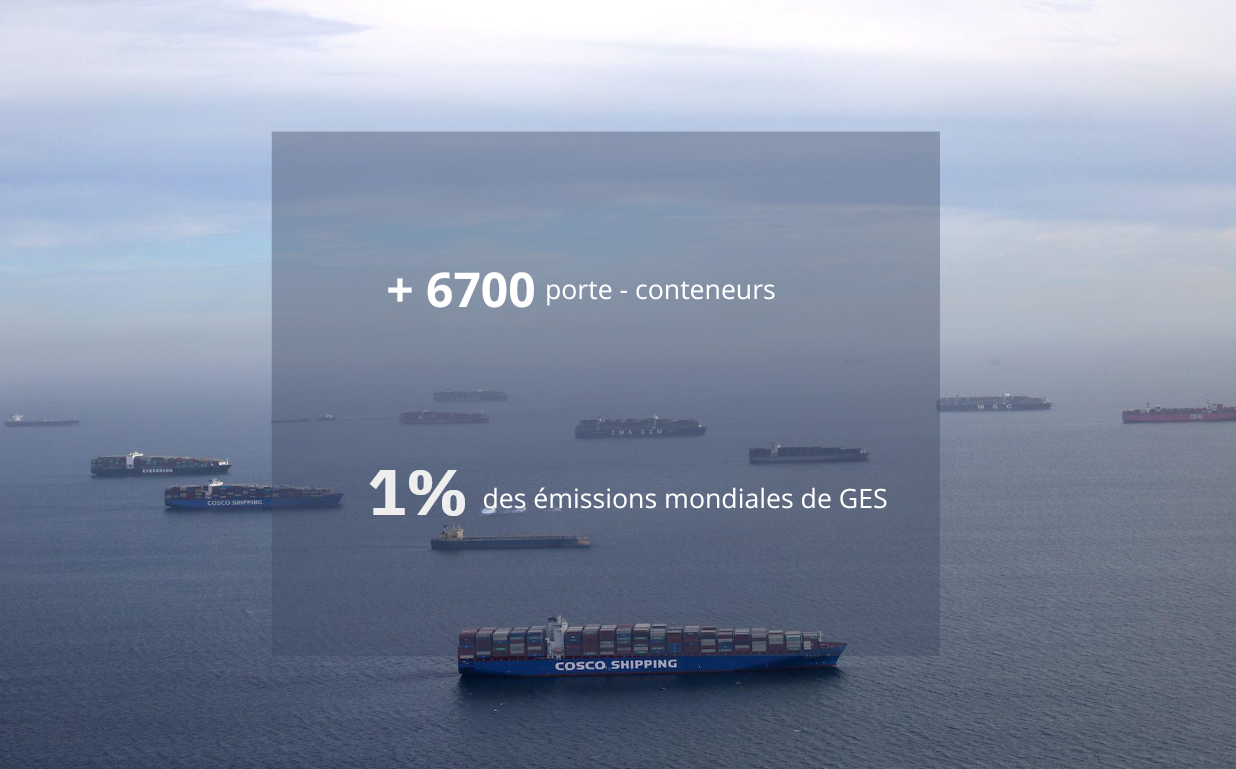
This is the exact challenge that Joë Sangar and Léon Grillet, co-founders of BlueNose, chose to tackle. Their solution is not a carbon offset algorithm or an ESG reporting app. It consists of physical, modular structures designed to be retrofitted onto existing cargo vessels, such as container ships, bulk carriers, or tankers. Powered by an iterative simulation algorithm, BlueNose generates custom geometries that reduce the vessel’s aerodynamic drag, cutting fuel consumption by up to 5% on major shipping routes. With the global container fleet counting roughly 6,700 ships and accounting for 1% of worldwide $CO 2$ emissions, the potential impact at scale is massive.
Incubated at X-UP first in the Create program to structure and validate the concept, then in the Scale program to launch the commercialization phase, BlueNose has since hit major milestones. In November 2025, the startup secured £350,000 through the UK government’s clean maritime demonstration competition (CMDC6), in collaboration with Lomar Labs, to develop its inflatable and deployable aerodynamic modules. This is a strong signal: a foreign government recognizing a technology that is mature, testable, and scalable.
BlueNose is not a lab-bound promise. It is hardware, fluid dynamics, and a quantified addressable market. Exactly the type of project the deeptech ecosystem is calling for.
The implications for greenTech entrepreneurs
The message from markets and institutions is converging around the same core idea: greenTech now rewards technological depth. Purely software-based impact projects or carbon reporting apps no longer command the same conviction they did three years ago. On the other hand, breakthrough innovations, those involving patents, physical prototypes, and real technical barriers are benefiting from a structurally favorable financing environment, even for early-stage rounds.
According to Pollutec, out of the 150 Cleantech deals recorded by France Invest in 2024, 129 were seed rounds or venture capital. In other words, money continues to flow into nascent projects led by entrepreneurs willing to play the long game.
And it is precisely to these entrepreneurs that X-UP, the École polytechnique incubator, is tailored. Located at the heart of the Palaiseau campus within the Drahi-X Novation Center, X-UP has been supporting deepTech projects in GreenTech, healthcare, the industry of the future, and education since 2015. The 10-month Create program, which guides startups from proof of concept to initial commercial traction, provides access to the X-FAB prototyping space, a network of experts and mentors, and the broader Institut Polytechnique de Paris ecosystem. The Scale program then takes over for established startups entering their acceleration phase.
The assessment is clear: capital is repositioning, and hard tech is returning to the forefront. GreenTech is no longer trying to charm; it is trying to go the distance. There has rarely been a better time to build something that lasts.
The École polytechnique’s X-UP incubator is launching its call for applications for cohort #22.
Applications are open until June 21, 2026, on the Agorize platform.
Sources
• France Invest / GreenUnivers / EY | Cleantech barometer 2024, March 2025
• Bpifrance | Deeptech plan: 6-Year Review, March 2025
• KPMG | Tech insights 2025, January 2026
• L'Usine Digitale | French Deeptech in 2025: €4.1 Billion Raised, March 2026
• Pollutec Learn & Connect | Entrepreneurship in greenTech, November 2025
• École polytechnique | BlueNose / X-UP News, 2023–2025
• CFNEWS | Cleantech Investments Continue to Decline, February 2026
• UK Department for transport / Innovate UK | CMDC6, November 2025
See also