Support l'X
 L’X cohosts the summit of U7+, an official engagement group of the G7 2026
Higher education institutions play a vital role in building and sharing reliable knowledge and in promoting reasoned, constructive debate — an increasingly critical mission at a time of growing societal polarization and the spread of disinformation, amplified by the rise of AI tools and algorithms. The international alliance of university presidents, U7+, of which École Polytechnique is a founding member, therefore placed their 2026 annual summit under the theme: “The Social Role of Universities in a Changing World”.
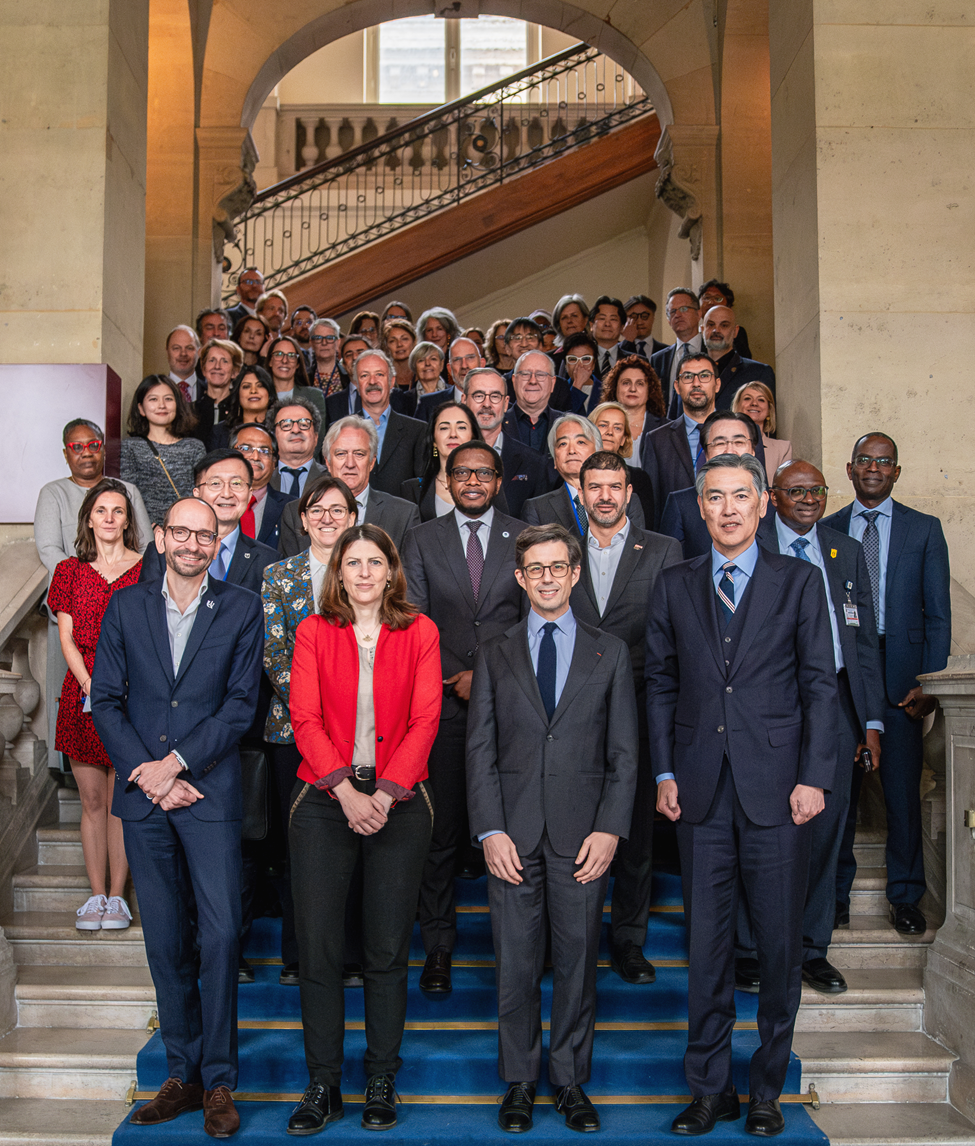
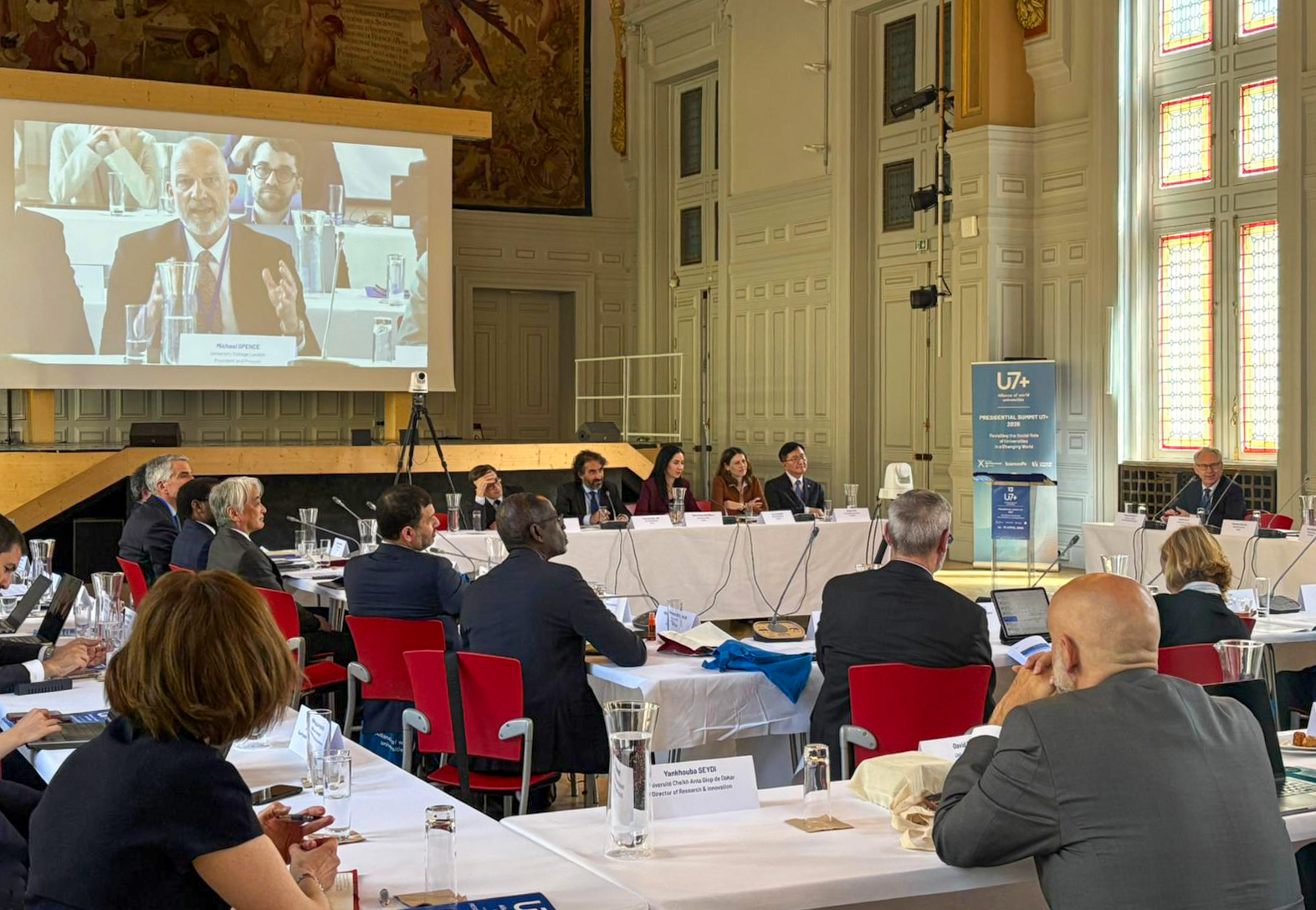
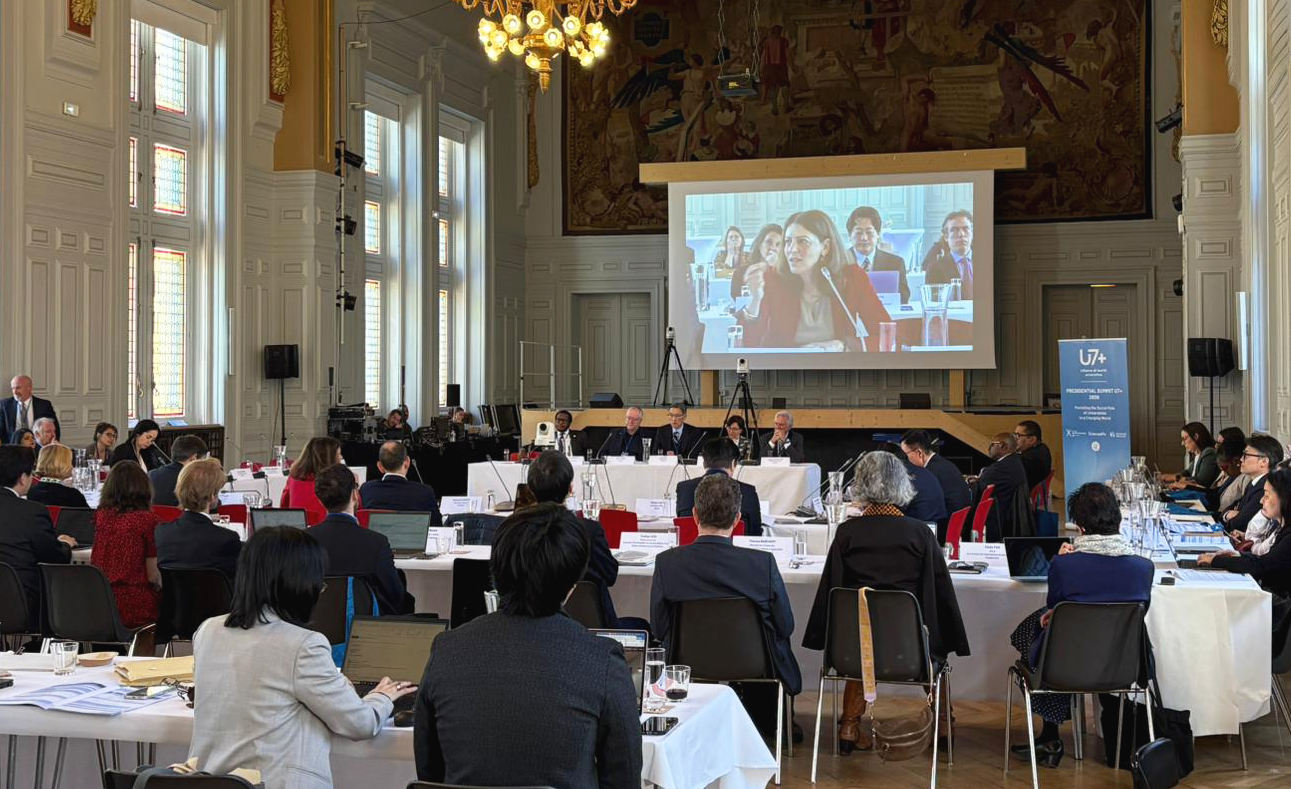
École Polytechnique co-hosted the summit with Sciences Po and Université Paris Cité on April 14–15, 2026, in Paris. Organized in France in alignment with this year’s G7 Summit, scheduled to take place in Évian in June 2026, the U7+ Presidential Summit 2026 brought together 37 university presidents from 14 countries.
Underscoring the high relevance of the alliance’s contribution to the multilateral agenda, the U7+ alliance becomes for the first time an official engagement group of the G7 under France’s G7 Presidency in 2026.
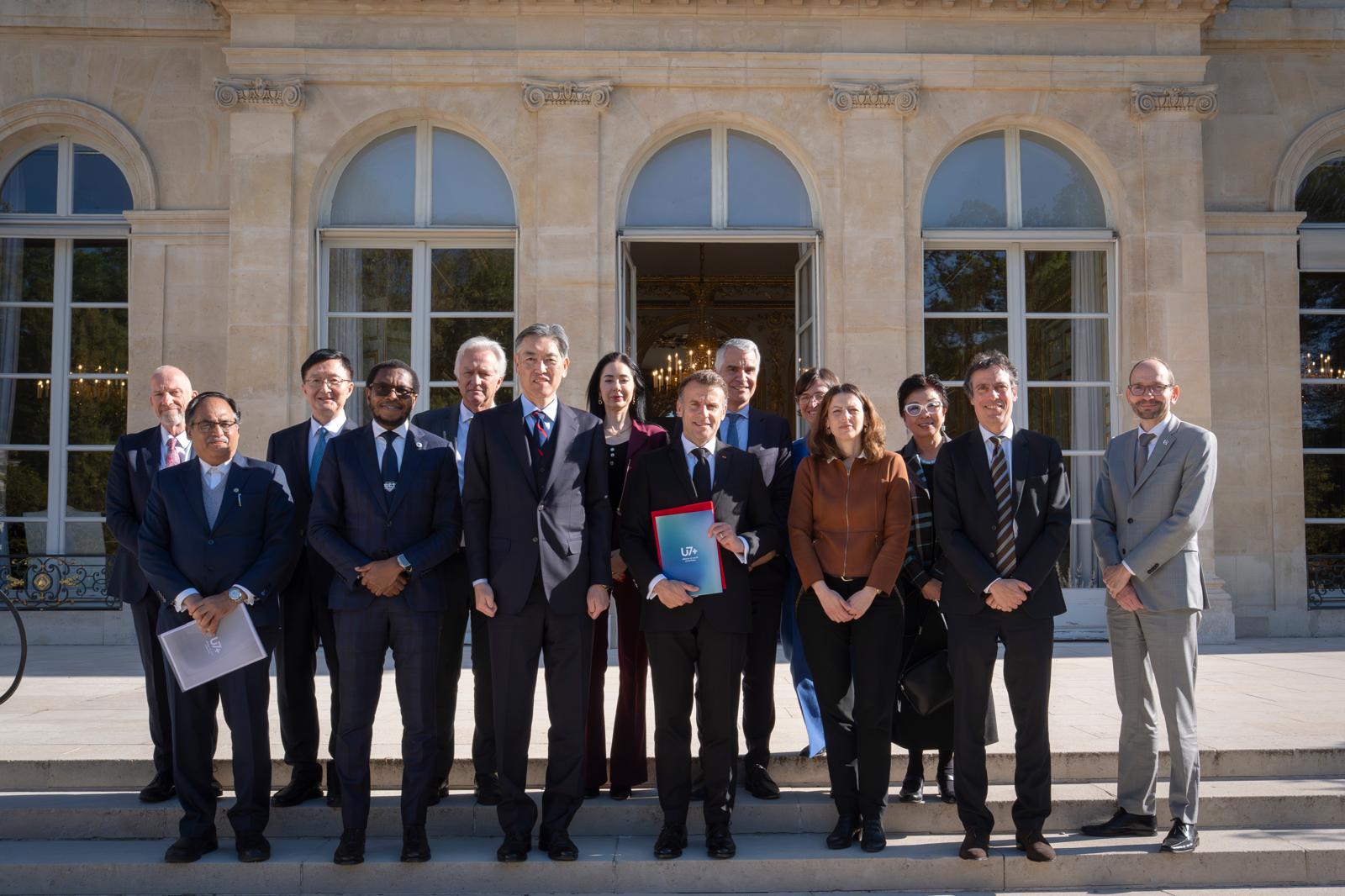
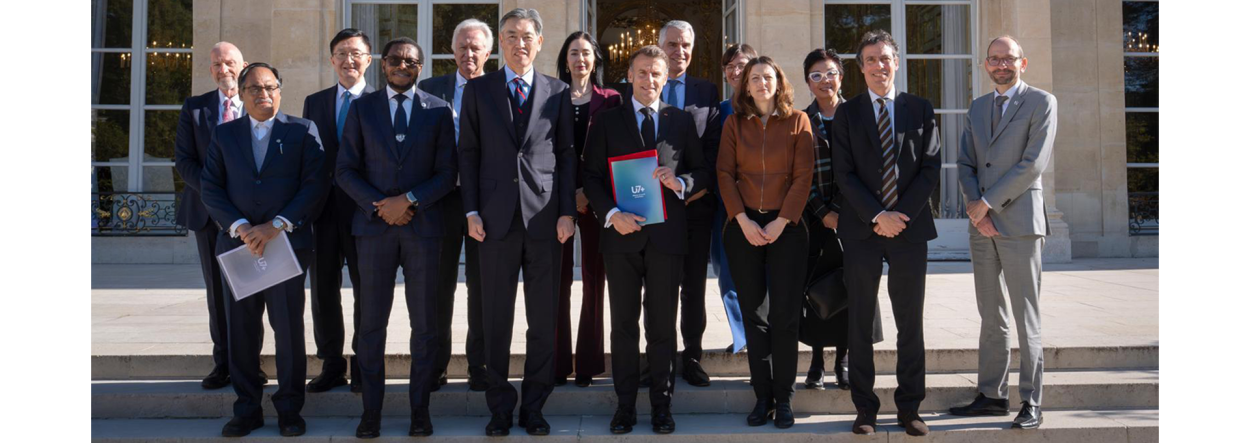
Led by Laura Chaubard, President of École Polytechnique, a delegation of university presidents of the U7+ alliance had been invited by the French President, Emmanuel Macron, for a meeting at the Élysée on April 14, 2026, preceding the summit.
A precious opportunity to express their reflections and proposals to the Head of State, the U7+ delegation also presented the Alliance’s commitments regarding the social role of universities, along with its recommendations to the G7 and other governments. These commitments were formally handed over by Kohei Ito, President of Keio University and elected Chair of the Alliance’s governing bodies since 2025.
Highlighting the social responsibility of universities, these official commitments reflect a year of work and dialogue within the U7+ Alliance on how to address technological, democratic, climatic, and geopolitical disruptions. In an era marked by the rise of social media, shifting news consumption habits, and the emergence of generative AI and deepfake images and videos, the U7+ higher education institutions remain firmly committed to critical thinking and free scientific inquiry as core social values.
“Universities have a particularly central role to play in combating the social mistrust and digital manipulation that threaten our democracies. Science sits at the heart of our democratic societies and is more than ever relevant to public policy choices, making a close cooperation of Higher Education institutions with the G7 essential”, emphasizes Laura Chaubard, President of École Polytechnique.
A program structured around four themes
Reflecting the Alliance’s different working groups, the U7+ Summit 2026 was structured around four main themes: the societal role of universities — particularly with regards to disinformation, open science, and academic freedom; climate change and sustainable development; dual-use research; and the impact of artificial intelligence on professional and academic training, as well as on research activities.
Split into four panel discussions, each presented by five university presidents from across the world, the event provided a unique setting to explore these topics—confronting perspectives, sharing visions, and identifying avenues for collective action.
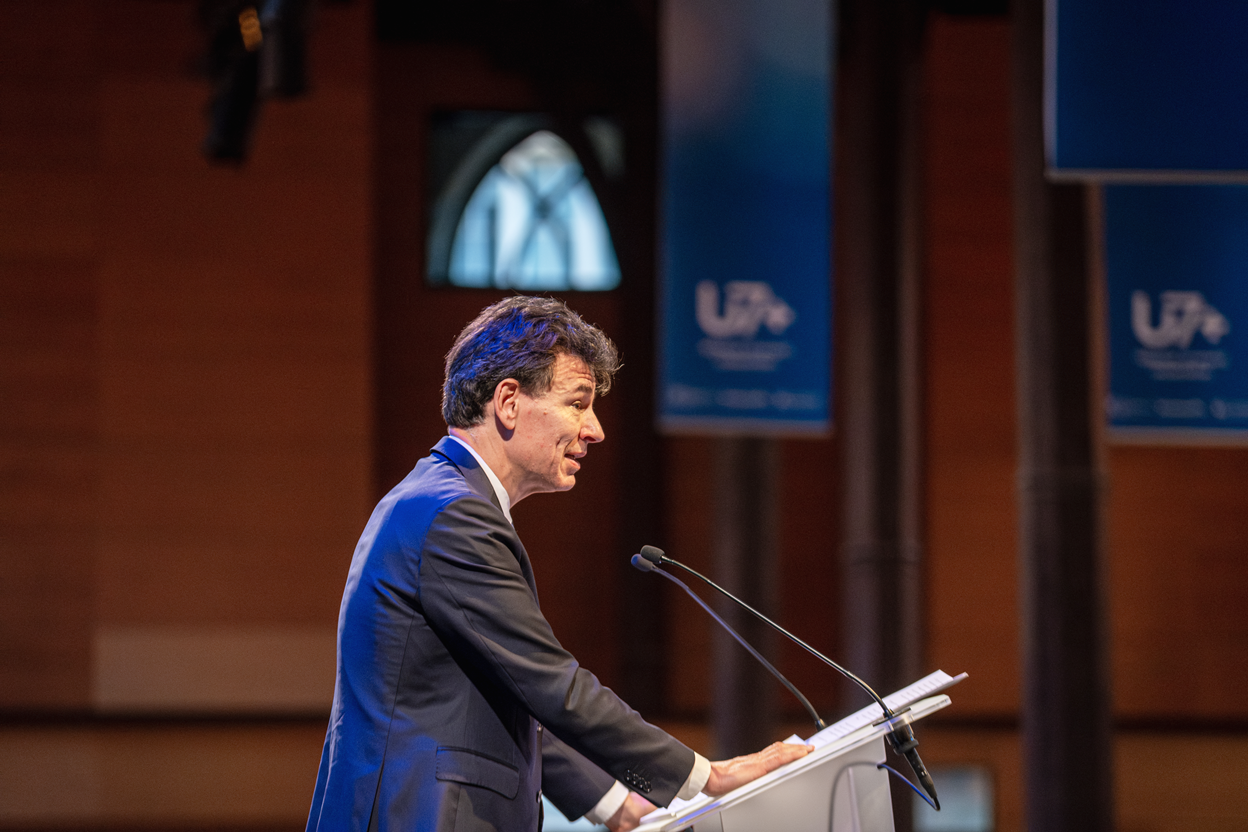
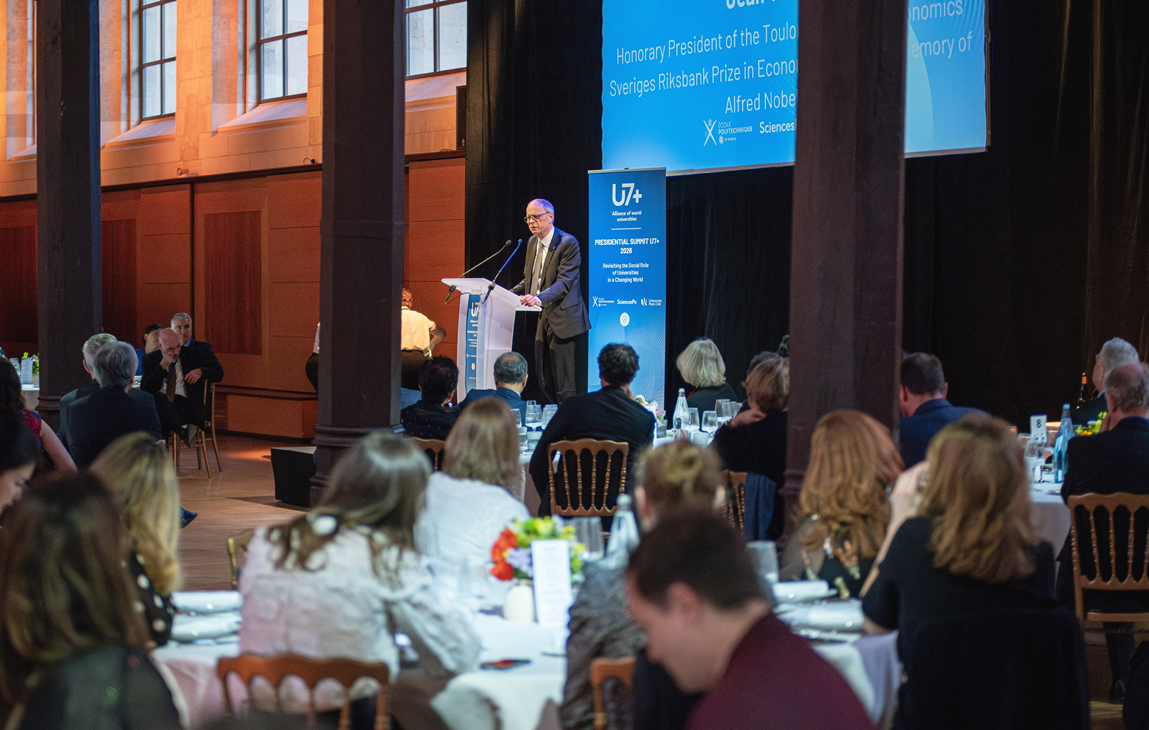
In addition, two eminent guests honoured the participants with speeches at the evening event held on the first day of the summit: Philippe Baptiste, French Minister of Higher Education, Research and Space, former director of École Polytechnique’s Computer Science laboratory, and Nobel Prize winner Jean Tirole (X73), Honorary President of the Toulouse School of Economics. The annual summit U7+ 2027 will be hosted by Tohoku University in Japan.