 Support l'X
 L’X reinforces its academic and scientific collaborations in Japan
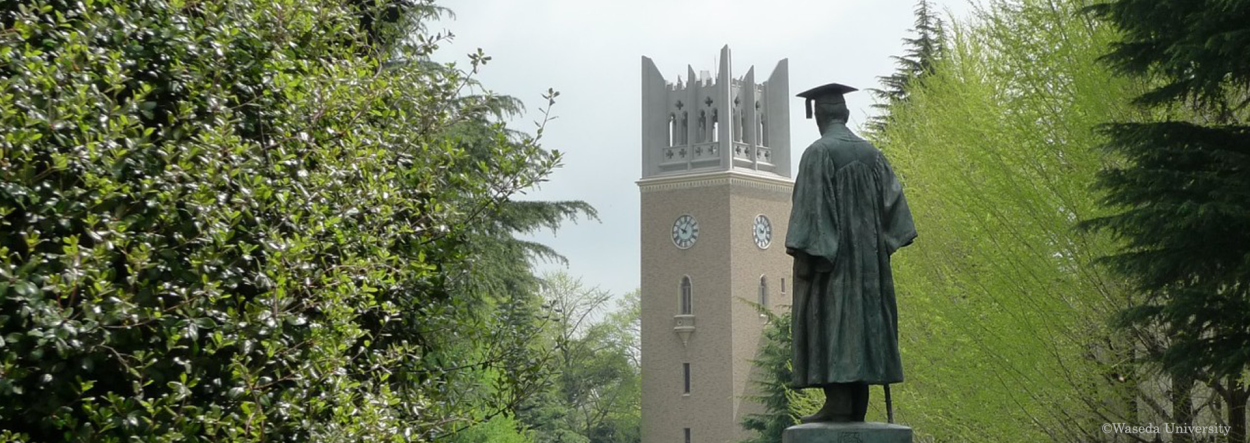
A new academic exchange agreement, signed on 22 January 2026 between École Polytechnique and Japan’s Waseda University, enables students to spend an exchange semester at the respective partner institution in France or Japan.
Scientists from Waseda University have been conducting joint research projects with researchers from École Polytechnique’s Center for Applied Mathematics (CMAP)1 and the Center for Research in Economics and Statistics (CREST)2 for more than a decade, forging close ties in the process. This ongoing collaboration has included regular visits by Waseda faculty, who participate in workshops hosted on École Polytechnique’s campus. Open to researchers and students, these events create opportunities to engage directly with top Japanese experts, who provide valuable new perspectives in their fields.
A network of prestigious partners in Japan
École Polytechnique has cultivated strong academic and scientific collaborations in Japan since 1994. Its network of Japanese partners includes leading institutions renowned for their excellence, such as the University of Tokyo, Keio University, Kyoto University, Institute of Science Tokyo, Osaka University, and the Nara Institute of Science and Technology (NAIST).
The geographical distance between France and Japan has never been a barrier for brilliant scientific minds. Indeed, collaborations between École Polytechnique researchers and their Japanese counterparts date back to the 19th century. Historical records from École Polytechnique’s historical museum reveal that, between 1871 and 1918, ten Japanese students ranked third among foreign students at the school, following only those from Romania and Greece3.
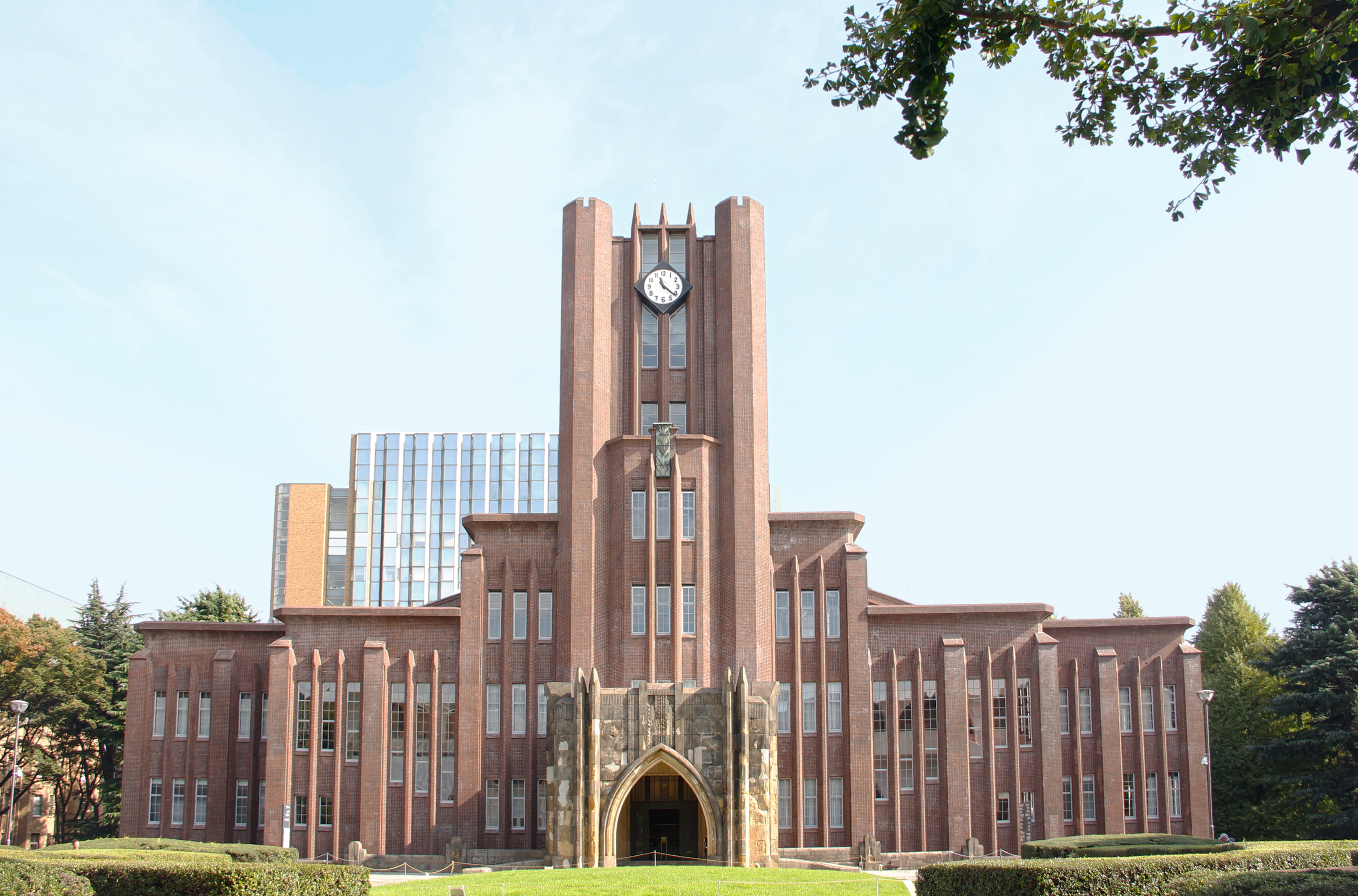
The framework agreement between École Polytechnique and the University of Tokyo, Japan’s top-ranked university4, dates back to 1994. This partnership was further strengthened in 2011 with an academic exchange agreement, enabling students from both institutions to spend a semester abroad at the respective partner university.
Since then, numerous research collaborations in physics, mathematics, energy, and economics have brought together researchers from l’X and the University of Tokyo.
The close ties between the two institutions are particularly evident through the involvement of École Polytechnique researchers in the joint CNRS international laboratory ILANCE (International Laboratory for Astrophysics, Neutrino and Cosmology Experiments).
Co-directed by Michel Gonin, an exceptional-class CNRS research director and professor at both École Polytechnique and the University of Tokyo, ILANCE hosts several École Polytechnique students each year for their third-year research experience, introducing them to scientific research methods.
Another key area of collaboration is the cooperation between the University of Tokyo’s Research Center for Advanced Science and Technology (RCAST) and the Île-de-France Photovoltaics Institute (IPVF), led by Jean-François Guillemoles, a CNRS researcher and professor at École Polytechnique.
Thomas Vezin (X2015) is currently pursuing his postdoctoral research at RCAST. As part of the collaboration between IPVF and RCAST on photovoltaics, he had already interacted with Professor Okada’s team at RCAST. After earning his PhD from École Polytechnique in 2024, and eager to enrich his academic journey with international experience, Thomas Vezin sensed that this research environment would be a perfect fit.
“I have access to a broad range of cutting-edge equipment to conduct my research, which provides me with the opportunity to quickly master various techniques”, he emphasizes.
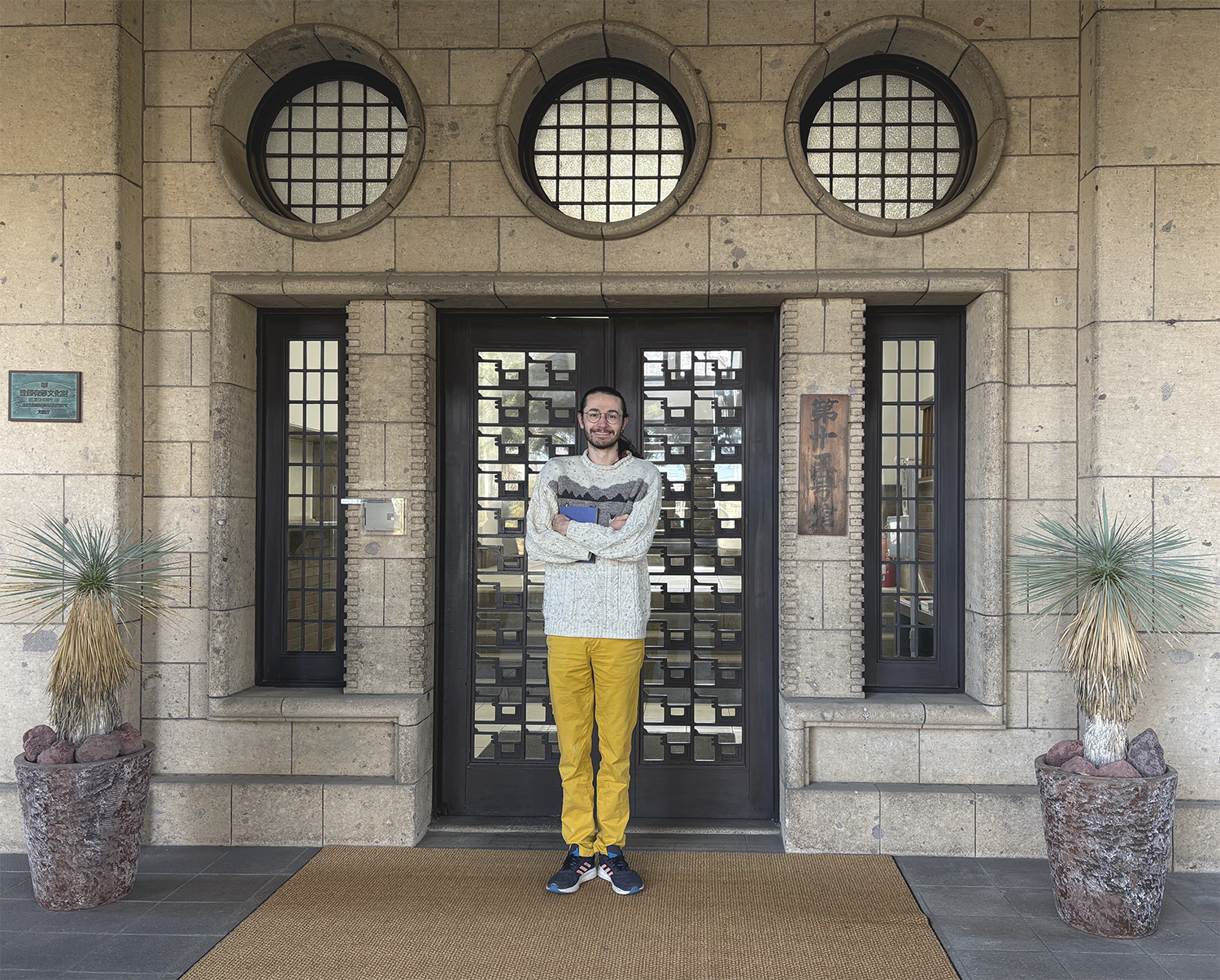
École Polytechnique alumni on Tokyo campuses
Thomas Vezin is not the only École Polytechnique alumnus one can meet on the University of Tokyo’s campus. Thimothée Mouterde (X2009) currently teaches in the university’s Department of Mechanical Engineering. Yukio Koriyama (X1997), a professor in École Polytechnique’s Economics Department and academic advisor for the mathematics-economics double major in the Bachelor of Science program, maintains strong research ties with the University of Tokyo - his second alma mater.
As a researcher at École Polytechnique’s Center for Research in Economics and Statistics (CREST), Koriyama’s deep understanding of both Japanese and French academic cultures allows him to bridge the scientific environments in France and Japan with ease. His unique perspective has made him a driving force behind the development of numerous collaborations between the two institutions.
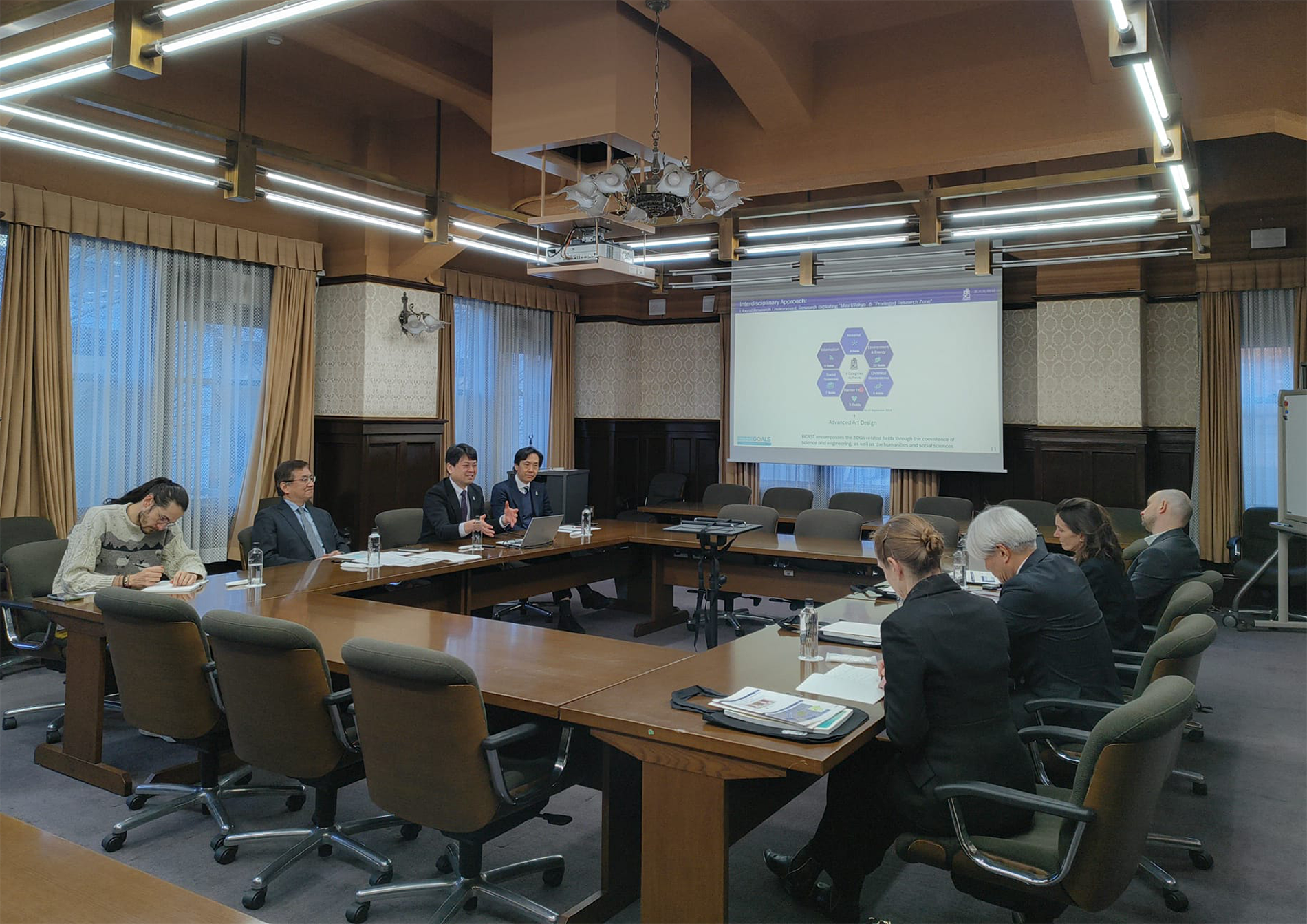
During their visit to Tokyo in January, a delegation from École Polytechnique, led by the Director of International Relations Gaëlle Le Goff, met with representatives from partner institutions in Tokyo to strengthen existing ties and explore new avenues for collaboration. The meetings included the University of Tokyo, RCAST, Waseda University, Keio University, and the RIKEN AIP (Advanced Intelligence Project).
For Jill-Jênn Vie, a lecturer at École Polytechnique and researcher at Inria, who was part of the delegation, visiting RIKEN AIP felt like a homecoming - he had completed his postdoctoral research there. This coincidence once again highlights the deep and enduring connections between the partner institutions and their scientific communities.
1 CMAP: a joint research unit CNRS, École Polytechnique - Institut Polytechnique de Paris
2 CREST: a joint research unit CNRS, ENSAE Paris, École Polytechnique - Institut Polytechnique de Paris, GENES
3 Anousheh Karvar, « Le formation des élites scientifiques et techniques à l’École polytechnique française aux 19e et 20e siècles », Ph.D. thesis, University Paris VII, 1997
4 THE World University Ranking 2026