 Support l'X
 The Optics and Biosciences Laboratory Celebrates Its 25th Anniversary
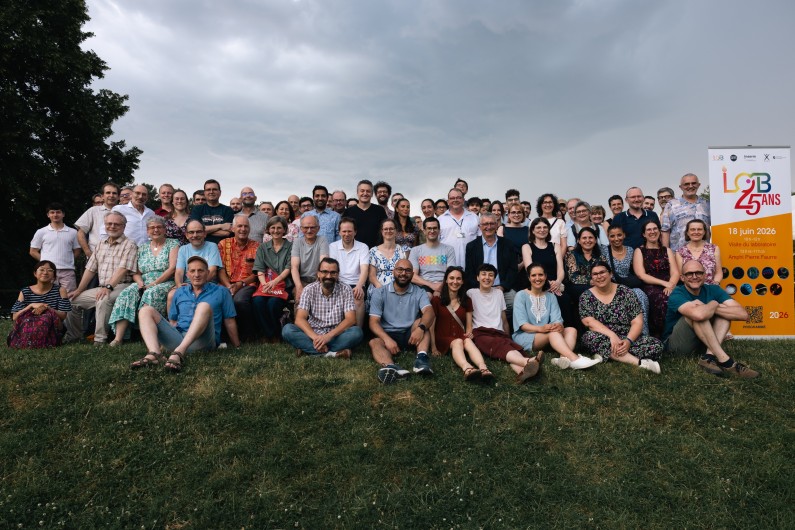 The LOB staff, June 18, 2026
By bringing together specialists in optics and biology within the same laboratory, the LOB stands out among research laboratories. This unique setup was established 25 years ago, spearheaded by Jean-Louis Martin, who was then leading a team using lasers for biological applications at the Applied Optics Laboratory (LOA).
The LOB was formed through the merger of this team with part of the former Laboratory of Quantum Optics at École Polytechnique, which included researchers in nonlinear optics and physical chemistry. The idea was to foster genuine interactions between physicists and biologists, rather than merely ad hoc collaborations between several laboratories, which was no easy feat, as each group was unfamiliar with the other’s field. But the initiative proved to be a success.
Biology, microscopy, and spectroscopy
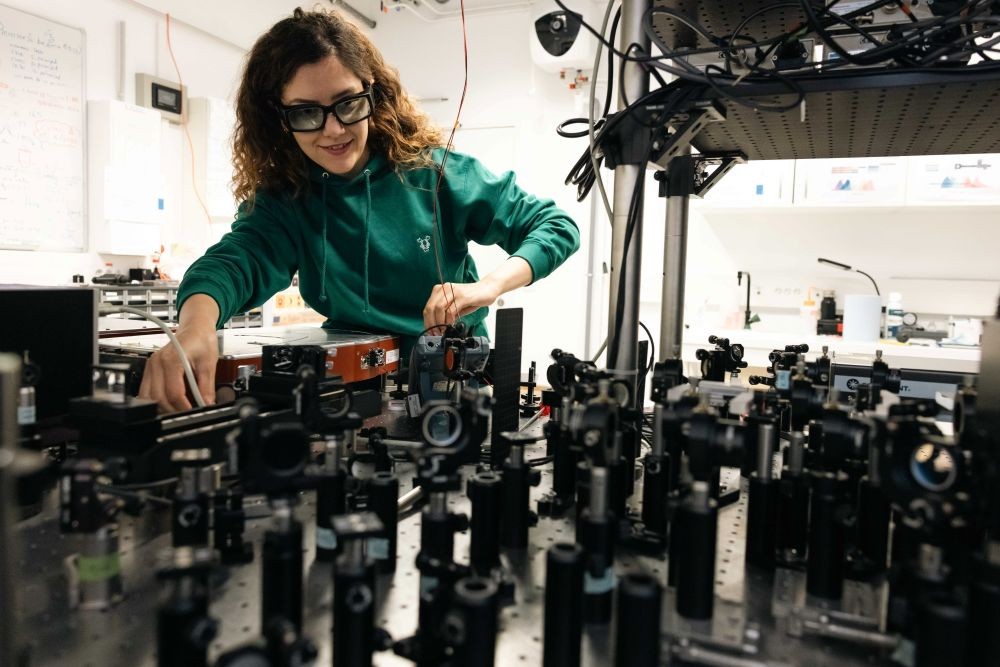
In 2001, ultrafast femtosecond lasers (10-15 seconds) were beginning to be used in biology to study mechanisms at the molecular level. For example, scientists had discovered that these lasers could force oxygen to detach from hemoglobin, making it possible to simulate its physiological activity. These mechanisms occur on timescales of the order of a picosecond (10-12seconds). Since femtosecond lasers are even faster, they are an ideal tool for observing them.
But the LOB does more than simply apply optical techniques to biology: it is also a driving force behind advancements in the field, whether in microscopy (using adaptive optics or nonlinear microscopy to observe deeper into tissues) or in spectroscopy. This includes, in particular, the development of laser synchronization techniques on time scales ranging from picoseconds to milliseconds, in order to study biological processes over their entire duration. These technological advancements contribute to the laboratory’s high level of international recognition and are made available to the scientific community through the Morphoscope and Ultrafast platforms.
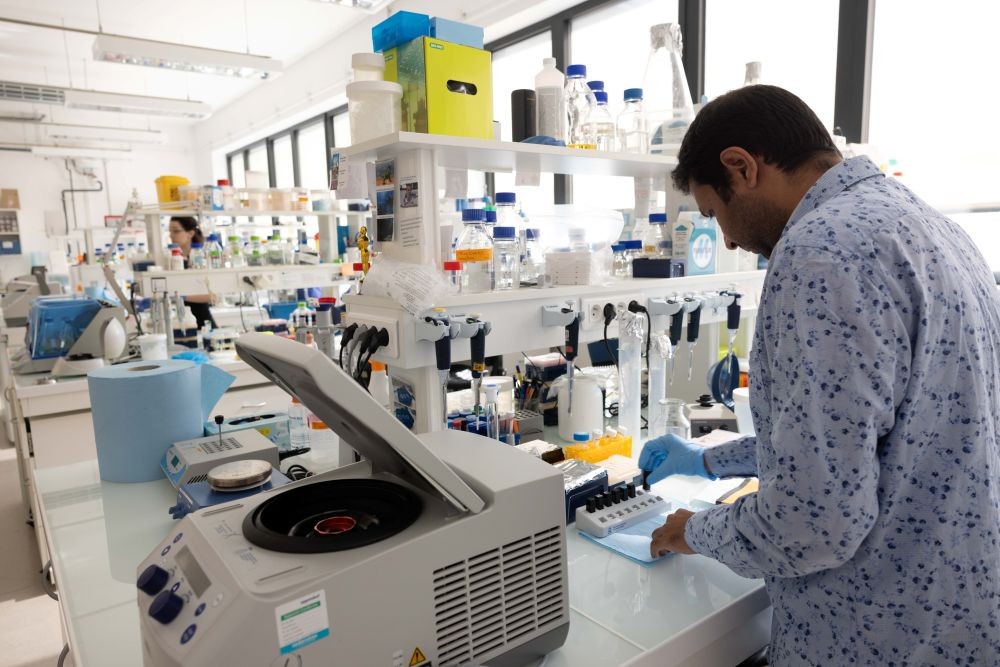
Beyond molecular biology, the laboratory’s biologists study cellular processes, DNA replication and repair, and embryogenesis, always in collaboration with physicists. Another area of research, in collaboration with the Laboratory of Condensed Matter for Physics, involves labeling and tracking proteins within cells using fluorescent nanoparticles. In addition to its value for basic research, this opens up the possibility of developing highly sensitive and rapid diagnostic tests for detecting pathogens.
Attended by representatives from CNRS, Inserm, and École Polytechnique, the anniversary celebration brought together the laboratory’s staff, including Jean-Louis Martin, François Hache, and Marie-Claire Schanne-Klein—who have served as its successive directors—as well as former laboratory members who shared their stories.
*LOB: a joint research unit CNRS, Inserm, École Polytechnique, Institut Polytechnique de Paris, 91120 Palaiseau, France