 Support l'X
 Two winners of the innovation competition i-PhD from École Polytechnique’s laboratories
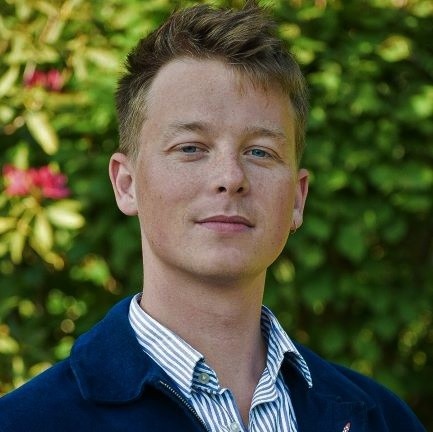
Gwendal Hénaff, Grand Prix Souveraineté
Better Predicting Solar Flares
Gwendal Hénaff defended his dissertation at the LPP in 2024. During his research, he developed an innovative instrument: a miniaturized plasma camera for space missions. Called 3DCAM, this instrument measures the flux of charged particles in space. Working with a team of engineers specializing in electronics and mechanics, the young researcher is now developing a flight model that could be deployed on future space exploration missions.
But he is also targeting opportunities in industry, specifically in the field of space weather: anticipating the impacts of solar flares on human infrastructure. Indeed, these flares emit accelerated charged particles that can cause damage to power plants, among other things, as well as to satellites. This therefore poses a significant challenge to national sovereignty.
“These events are currently poorly predicted, particularly because we lack precise data to feed into the forecasting models. 3DCAM will be able to measure, from low Earth orbit, the density, energy, and direction of low-energy particles falling towards Earth,” explains Gwendal Hénaff. “The idea is to develop a highly reliable early-warning system capable of alerting operators to incidents involving their satellites within a few hours.”
3DCAM has been selected by CNES for a demonstration flight in 2028.
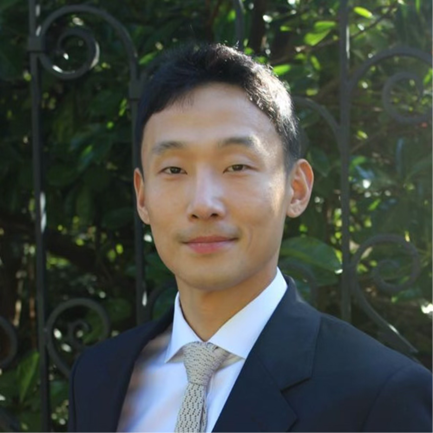
Sooyong Chae, i-PhD award winner
Polarimetric Imaging for Surgery
Sooyong Chae is a second-year PhD student at LPCIM, under the supervision of Tatiana Novikova. His tool: polarimetric imaging. This is a technique for creating images by utilizing a property of light, namely its polarization. Its advantage is that it allows for a higher-contrast and more precise visualization of certain biological tissues. The AOPOLAR project aims to make this technology useful for surgeons performing brain tumor surgeries.
“Together with Théotim Lucas, a postdoctoral researcher at LPCIM, we are currently developing a real-time approach aimed at reconstructing and visualizing the orientation of white matter fiber tracts directly from polarimetric imaging and without any labeling,” explains Sooyong Chae.
“We are developing a compact and fast Mueller polarimeter, coupled with algorithms that map the tumor area and white matter tracts within the surgical field, without any labeling,” explains Sooyong Chae. “We are also seeking partners in France, particularly in the medical, hospital, and research sectors, to continue the development and validation of this technology.”
In addition to the i-PhD Award, he has been recognized by the French Foundation for Medical Research, and he will represent France at the Falling Walls Lab science communication competition, which will take place in Berlin in November.
*LPP: a joint research unit CNRS, Observatoire de Paris-PSL, Sorbonne Université, Université Paris-Saclay, École Polytechnique, Institut Polytechnique de Paris, 91120 Palaiseau, France
LPICM: a joint research unit CNRS, École Polytechnique, Institut Polytechnique de Paris, 91120 Palaiseau, France