 Support l'X
 When science makes its mark on the international stage with the ‘Data Science & Industrial Processes’ Chair
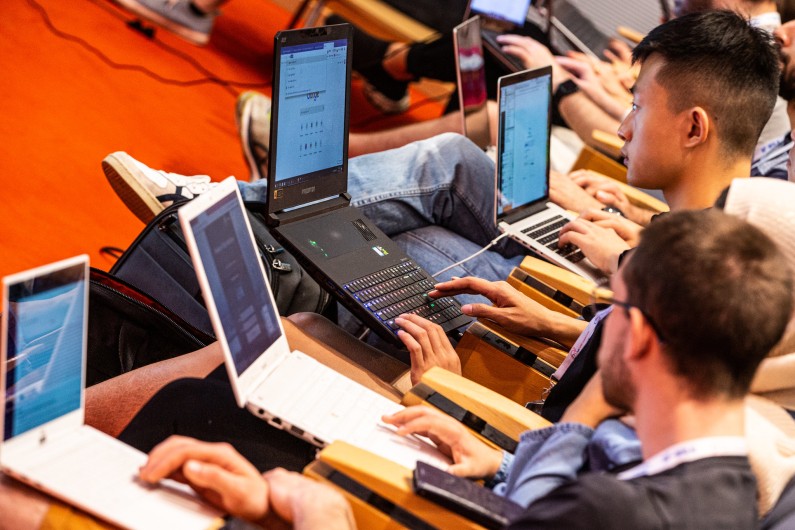
From 23 to 25 March 2026, the ‘AI for Impact’ Spring School, focusing on data science and artificial intelligence, will take place in Ben Guérir, Morocco. Jointly organised by École Polytechnique and Mohammed VI Polytechnic University (UM6P), academic partners of the “Data Science and Industrial Processes” Chair supported by the OCP Group and the Fondation de l’X, as well as by the Moroccan School of Engineering Sciences (EMSI), this initiative brings together several hundred students, researchers and professionals from around the world.
In just a few years, the event has established itself as a leading gathering at the crossroads of education, research and industry: a space where learning is fuelled as much by academic excellence as by the richness of informal exchanges.
The ‘Data Science & Industrial Processes’ Chair, established as part of a collaboration between École Polytechnique and Mohammed VI Polytechnic University, and involving, in particular, Éric Moulines (Founder of the Chair, professor at École Polytechnique and the CMAP*), Nicolas Cheimanoff (Director of the School of Industrial Management (EMINES)) and Alain Durmus (current Chair holder, professor at CMAP*), plays a key role in the organisation and promotion of this spring school.
A Spring School that has grown in scale
For Eric Moulines, founder of the DSPI Chair, the Spring School has really come into its own: “It has gradually grown in two key areas. In terms of content, it now covers a broader spectrum, with a clearer link between emerging scientific themes (generative models, AI for decision-making, large-scale learning, etc.) and applications, with workshops designed to facilitate the transition to practical application. In terms of reach, the event is attracting more international participants and speakers, which increases the diversity of perspectives and enhances the visibility of the Chair and its partners. This growth has taken place whilst retaining the ‘school’ DNA: accessibility, teaching, and interaction.”
Mohammed El Rhabi, professor and co-organiser (EMSI), confirms: “Interest is growing with each edition. The 2025 edition brought together 430 participants from 13 countries and four continents, with 43 universities represented, 71 professionals and 44 companies. The Spring School is no longer just a local or regional academic event. It is becoming a credible forum for international scientific dialogue, rooted in Morocco but open to the world.”
This progress is not limited to the figures: the diversity of speakers and participants enriches the exchanges and enhances the scientific quality of the discussions. “The synergy between the organisers, and between scientific and institutional roles, has been essential,” explains Mohammed.
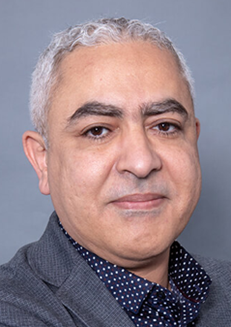
Enhanced influence thanks to the complementary nature of the teams
“The Spring School is gaining international reach thanks to the diversity of the profiles, institutions and countries represented. This diversity facilitates deeper and more intensive exchanges, enhancing the scientific quality of the event. This dynamic also relies on the complementary roles of the organisers (EMINES – UM6P, École Polytechnique, EMSI). Eric Moulines, Nicolas Cheimanoff and I have different but closely interlinked roles, which has been crucial to the scientific and institutional planning of the Spring School. Beyond a strong concept, this project is built on mutual trust and a shared commitment to excellence, which are the driving forces behind its success.” – Mohammed El Rhabi
Three days of intense activity and meetings
In practical terms, what do participants experience over these three days? Eric Moulines sums it up: “Three aspects stand out: firstly, the in-depth lectures delivered by leading experts; secondly, the informal exchanges – discussions after the sessions, workshops – and finally, the group dynamic: spending three intense days with international participants who share the same curiosity and high standards.”
The hands-on workshops enable participants to actively engage with the concepts, whilst spontaneous, sometimes unexpected discussions often prove to be the most memorable moments: “A question from a student or a conversation after a lecture can completely shift one’s perspective on a subject,” adds Mohammed El Rhabi. “That is where the true strength of this school lies: it is a place for intellectual exchange and scientific development.”
A formative experience for students
Beyond the academic content, the Spring School offers an experience that transforms participants’ career paths. “Students learn to engage with senior researchers, to formulate questions on specialist topics, and – for the most advanced – to envisage ambitious scientific careers,” explains Eric Moulines.
Mohammed El-Rahbi adds: “They discover new ways of framing problems and linking theory with practice, and come to understand that major scientific questions are shaped through the exchange of ideas and methods.”
International diversity plays a key role here: it exposes participants to different perspectives, international standards and a variety of approaches, whilst enabling them to build a strong scientific and professional network.
A bridge between research and industry
The Spring School is not just an academic forum. It also builds bridges with the business world. This year, workshops led by industry professionals and two panel discussions – one of which focuses on ‘Industry at Scale’ – provide an opportunity to explore practical applications of AI and launch collaborative projects.
Mohammed El-Rahbi emphasises: “These meetings help to establish shared working practices and networks of trust, which are essential for bringing about projects that would not otherwise have seen the light of day.”
Towards the ideal Spring School
Eric Moulines’s hope is that the school will become even more integrated: “Challenging courses, more supervised and hands-on projects, to quickly bridge the gap between theory and practice. Strengthening links with the industrial ecosystem and building a sustainable community of alumni and ongoing collaborations. ”
Mohammed El-Rabi adds: “A place where, in the morning, you hear from leading researchers, work on real-world problems in the afternoon, and experience the interplay between fundamental research, technology and practical challenges. The aim: to strike a new balance between education, research and innovation, with an international outlook.”
Motivation driven by the human impact
For Eric Moulines, the event’s energy stems from its human and scientific impact: “Seeing students make progress, become more ambitious and set their sights on challenging career paths is incredibly inspiring. The Spring School builds bridges between disciplines, institutions, countries, research and industry. ”
Mohammed El Rhabi concludes: “On a young continent like ours, offering students the chance to meet leading researchers, explore challenging ideas and embark on a scientific adventure means fostering vocations, building confidence and, at times, bringing about real changes in direction.”
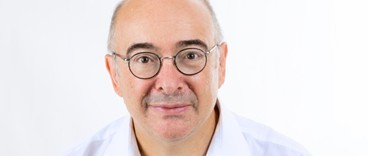
The DSPI Chair: a catalyst for Morocco’s scientific and industrial ecosystem
“The Chair acts as a ‘catalyst’: it creates a space where industry representatives and researchers can work together to identify the right questions, and then engage highly trained students to prototype, test, and sometimes transfer solutions. Beyond the projects themselves, this dynamic fosters relationships of trust, which are essential for the emergence of sustainable partnerships. The Chair supports the rapid structuring of the data and AI ecosystem in Morocco, which is developing very quickly across many sectors.” – Eric Moulines

Looking to the future: the key priorities and challenges facing the DSPI Chair
“Looking ahead to the coming years, scientific priorities will be guided by Morocco’s economic and societal needs, particularly in agriculture, energy and ecology. Simulation and inference methods for physical models, reinforcement learning and uncertainty quantification appear to be particularly relevant.In terms of teaching, the Chair will focus on training in the major current paradigms of artificial intelligence. This includes, in particular, generative artificial intelligence, reinforcement learning, and new methods for managing uncertainty. The aim will be to train students capable of combining mathematical rigour, an understanding of practical challenges, and mastery of modern AI tools.
The main challenge for the Chair will be to support students in a context where artificial intelligence is undergoing extremely rapid scientific and methodological developments. Paradigms, tools and applications are undergoing profound changes within the space of a few years, or even a few months. In this context, it is not merely a question of imparting knowledge, but also of nurturing minds capable of adapting, taking a step back and continually integrating new concepts. The Chair will therefore need to strike the right balance between solid theoretical foundations and exposure to the latest developments in AI, in order to prepare students to thrive in a constantly changing scientific environment.” – Alain Durmus
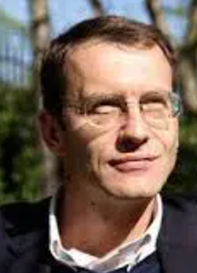
Training, structuring, raising the profile: a Chair that delivers on its promises
“The Chair continues to fulfil its remit effectively: supporting the development of the partner institution in Morocco, training qualified trainers with a firm grasp of the realities on the ground, and offering Moroccan students promising career prospects, both nationally and internationally. The teaching programmes are well established, research is dynamic, and the annual Spring School actively contributes to the Chair’s visibility and recognition.” – Nicolas Cheimanoff
CMAP*: CMAP: a joint research unit of the CNRS, Inria, École Polytechnique and Institut Polytechnique de Paris, 91120 Palaiseau, France