Support l'X
 - Home
- Innovation
- DeepTech and Innovation At École Polytechnique
DeepTech and Innovation at École Polytechnique
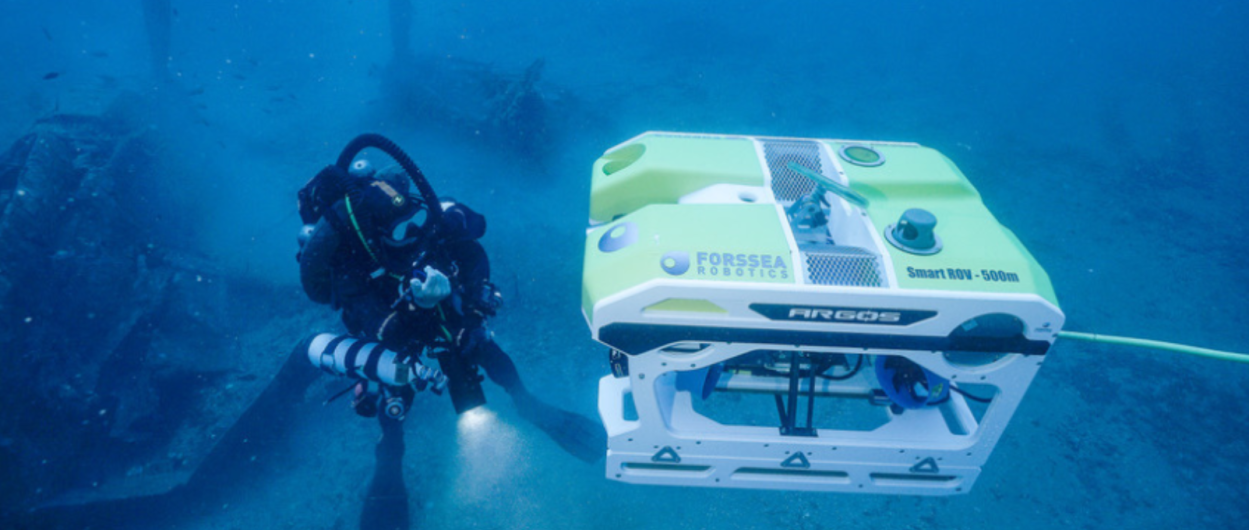 Forssea Robotics Start-up | X-UP Create Batch #3 Smart, remote-controlled underwater ROV systems.
What is DeepTech?
Definition and key features
DeepTech refers to the spectrum of breakthrough innovations stemming from scientific and technological research. These innovations are characterized by their high technological density, inherent complexity, and their potential for market disruption.
DeepTech startups rely on extended R&D cycles and robust patent protection; they require significant capital investment to transition from proof of concept to large-scale industrialization.
Positioned at the intersection of academic research and industry, these ventures deliver a profound societal, economic, and environmental impact.
DeepTech spans a wide range of applications:
Biotech / MedTech • Artificial Intelligence • GreenTech • Quantum Computing • EdTech • Robotics • Advanced Materials / Nanotechnologies • Neurotechnologies • Industry 4.0 • Energy • Aerospace • Defense & Security
The issues and challenges are manifold
They concern reindustrialization through innovation, involving the creation of new markets, the offshoring of technological production, and the enhancement of global competitiveness.
It is also a matter of technological sovereignty, aimed at reducing dependence on foreign technologies.
The advancement of DeepTech for our future needs is essential, provided it serves a sustainable ecological and energy transition for the common good.
Key drivers for DeepTech development
These drivers lie in research commercialization, the protection of innovation through patents, and access to tailored funding. Success also depends on a structured support ecosystem that fosters sustained collaboration between public research, industry, and startups, powered by a talent pool combining scientific, entrepreneurial, and industrial expertise.
Scaling Deep Tech also requires effective risk management, the anticipation of lengthy development cycles leading to industrialization, and strict adherence to regulatory and ethical frameworks, as well as the ability to compete on a global scale.
Public funding schemes and private equity
DeepTech startups can leverage public support mechanisms such as Bpifrance grants, European funding programs (Horizon Europe, ERDF, EIT), and subsidies specifically dedicated to breakthrough innovation. These instruments support R&D, intellectual property protection, and scaling up.
Access to private investment remains vital. Specialized Venture Capital (VC) funds, business angels, and corporate venture capital (CVC) play a pivotal role in financing seed and growth stages. Furthermore, integration into investor networks serves as a catalyst for accelerating both development and commercialization.
The Polytechnique DeepTech ecosystem
Incubation and acceleration programs
École Polytechnique offers bespoke support to DeepTech startups through its X-UP incubator. Project founders benefit from an ecosystem of excellence, featuring a network of experts, specialized support mechanisms tailored to the complexities of Deep Tech, close proximity to research laboratories, and a state-of-the-art prototyping space, X-FAB. This includes a dedicated bio-engineering facility: the LivinLab, part of the Interdisciplinary Center "Engineering for Health" at the Institut Polytechnique de Paris.
DeepTech success stories
Numerous Deep Tech startups have emerged from the École Polytechnique ecosystem, illustrating the diversity and impact of the institution's innovations—particularly in AI, energy, healthcare, biotechnology, cybersecurity, space, environment, advanced materials, and defense.
Discover the full range of startups supported by the school's programs (X-UP Incubator, Polytechnique Ventures, Jean-Louis Gerondeau - Safran Prize, Pivin Prize).





Partnerships and networks
École Polytechnique draws on a dense network of partners: the Institut Polytechnique de Paris—specifically its 45 research laboratories, research chairs, and interdisciplinary centers—SATTs (Technology Transfer Offices), investment funds such as Polytechnique Ventures, as well as public institutions (Bpifrance, CNRS, INRIA, etc.) and private sector players. These collaborations facilitate access to funding, industry expertise, and the international scale-up of DeepTech projects.





Key terms in DeepTech entrepreneurship
✔︎ DeepTech: Breakthrough innovation stemming from scientific research.
✔︎ R&D: Research and Development.
✔︎ R&D cycles – TRL: Technology Readiness Level (a scale of 1 to 9).
✔︎ Patent: Legal protection for an invention.
✔︎ TTO (Technology Transfer Office): The international equivalent of a SATT (Technology Transfer Accelerator Company).
✔︎ Spin-off: A startup created from a laboratory or an existing company to commercialize a specific technology.
✔︎ Deep Tech Startup: A company leveraging advanced technology, typically protected by patents.
✔︎ Technology transfer: The process of moving an innovation from the laboratory to the market.
Take the next step
Join the École Polytechnique DeepTech ecosystem
Learn more about our X-UP support programs to bring your innovation project to life and help develop high-impact breakthrough technologies that transform the way we live.
Get in touch with the X-UP incubator team via our contact form.
Stay updated with the latest DeepTech news.
See also