 Support l'X
 From sustainable mobility to environmental health: interdisciplinarity at work in the Sustainable Development Chair
 © Jérémy Barande
A pioneer among the École Polytechnique's sponsored chairs, the Sustainable Development Chair was established in 2003 with the support of EDF to mobilise the École Polytechnique's teaching and research departments around sustainable development issues. Through its work, it promotes the breaking down of barriers between economics and social sciences, natural sciences and engineering, bringing together a variety of approaches to respond to environmental and societal challenges.
Over the years, the Chair has supported numerous research projects in a wide range of fields and has enriched teaching by offering engineering students programmes that enable them to deepen their knowledge of environmental issues.
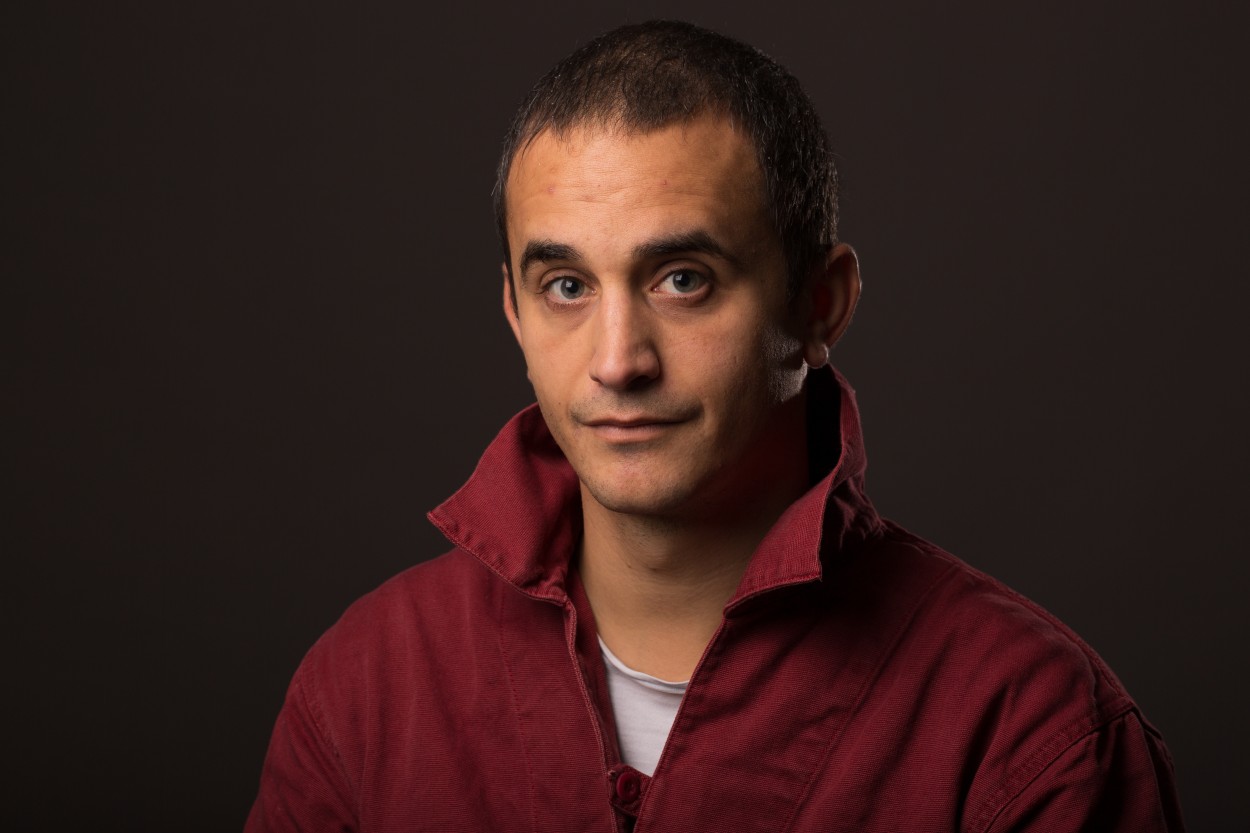
Now led by Benoît Schmutz-Bloch, a specialist in urban economics, associate professor in the Department of Economics at École Polytechnique, member of the Centre for Research in Economics and Statistics (CREST*) and the Institute for Public Policy, and holder of the Jean Marjoulet professorial chair, the Chair continues to serve as a bridge between research and innovation by accompanying and supporting innovative projects.
Throughout its rich history, the DDX Chair has enabled the full deployment of the theme of sustainable development within the École Polytechnique, and later the Institut Polytechnique de Paris. In 2025, it supported around ten medium-sized research projects that were too large for the departments' own funds but generally too small to justify external funding. Its agility and responsiveness are particularly appreciated by researchers. Its interdisciplinary DNA is proving very useful in encouraging dialogue between departments and the development of innovative courses on this major societal issue.
Examining the conditions for a successful transition to electric mobility
Among the projects currently supported is a study conducted by Clément Malgouyres, a CNRS researcher at CREST and the Institute for Public Policy, focusing on the greening of the French vehicle fleet.
In a context where private vehicles account for more than half of transport emissions in France, this project aims to better understand the real effects of public policies encouraging the adoption of electric vehicles.
A central element of the project is the collection of new data on consumers' ‘second choices’ in order to better measure substitutions between vehicle types. This approach will make it possible to estimate more accurately the impact of public measures on CO₂ emissions and market dynamics.
Better understanding frost formation to improve the resilience of energy infrastructure
The Chair also supports a LadHyX* project led by Caroline Cohen and Christophe Josserand, both professors in the Department of Mechanics at École Polytechnique, dedicated to the formation of ice on solid surfaces.
This physical phenomenon, which is still not fully understood under dynamic conditions, can have significant consequences for energy systems. For example, ice accumulation on wind turbine blades or power lines can lead to efficiency losses, operational shutdowns or structural risks.
The project aims to experimentally characterise ice formation based on the properties of droplets, the environment and the geometry of structures. The results will be used to develop ice growth models and, ultimately, to improve the prediction and prevention of these phenomena.
Exploring the health impacts of environmental nanoparticles
The Chair also supports research in biology and environmental health conducted at the BIOC* laboratory by the team led by Benoît Schneider, CNRS research director.
This project studies the potential impact of nanoparticles from air pollution, industrial nanomaterials, and nanoplastics on Alzheimer's disease. Preliminary work has shown that some of these nanoparticles can interact with cellular mechanisms involved in the production of neurotoxic peptides.
By combining experimental approaches, advanced microscopy and human cell models, the team is seeking to better assess the health risks associated with nanoparticle exposure.
Ultimately, this research could help guide policies for preventing and reducing environmental exposure.
A Chair at the crossroads of disciplines
Through these projects, the Sustainable Development Chair illustrates the structuring role of academic research in supporting transitions. By bringing together economists, physicists, biologists, chemists, researchers in the humanities and social sciences, and mechanics, it promotes integrated approaches capable of linking industrial, environmental and health issues.
After 23 years of existence, the Chair continues to pursue its mission: to produce knowledge that is useful for public decision-making and industrial strategies, while forming a solid scientific foundation for meeting the challenges of sustainable development.
*BIOC: a joint research unit of the CNRS, École Polytechnique, Institut Polytechnique de Paris, 91120 Palaiseau, France
*CREST: a joint research unit of the CNRS, École Polytechnique, GENES, ENSAE Paris, Institut Polytechnique de Paris, 91120 Palaiseau, France
*LadHyX: a joint research unit of the CNRS, École Polytechnique, Institut Polytechnique de Paris, 91120 Palaiseau, France