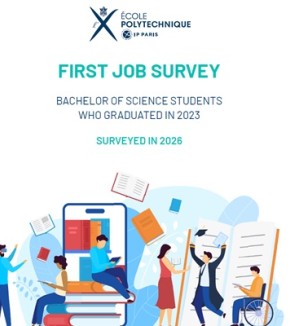
École Polytechnique’s Bachelor of Science program combines highly selective admissions with a strong international outlook. The results of the 2026 First Employment Survey of the Bachelor Class of 2023 show that these characteristics are reflected in graduates’ paths after completing the program. Nearly 30 months after graduation, 45% of respondents are employed and 46% are pursuing further studies, either in doctoral programs or in other degree programs.
On École Polytechnique’s campus, scientists at the Energy4Climate (E4C) Center at the Institut Polytechnique de Paris are analyzing the electricity consumption of data centers, the number of which is on the rise. This research project, which aims to reconcile digital technology with the ecological transition, is supported by the École Polytechnique Foundation, primarily through sponsorship from Revaia.
As part of the 10th edition of the Erasmus Days celebrated worldwide, a dedicated 'Erasmus Day' brought together students, professors, researchers and staff on 15 October 2026 around the many international mobility opportunities offered at École Polytechnique and supported by the Erasmus+ program. The event also highlighted the program’s priorities: Inclusion and diversity, environmental protection and the fight against climate change, commitment to democratic debate, civic engagement, and digital transformation.
The Research Network on Innovation awarded two thesis prizes to Juliette Keohane. Darina Bulatova, a doctoral student, received an award for a paper presented at the Innovation and Product Development Management Conference.
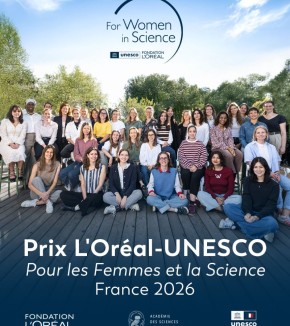
The Ecole Polytechnique is proud to have three female researchers among the 35 winners of the 2026 edition: Kate Sorg, PhD student at the Laboratory...
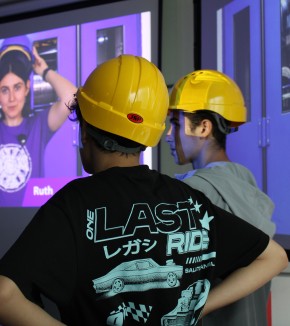
For the European Researchers’ Night on Friday, September 25, high school students from the “Cordées de la réussite” program in Saint-Denis and Argenteuil were invited to tour the laboratories at École Polytechnique. The program included an escape game dedicated to the Higgs boson at the Leprince-Ringuet Laboratory, a sneak peek at the XSeaO2 floating platform, and discussions with researchers from the Molecular Chemistry Laboratory, providing a unique immersion in cutting-edge research.
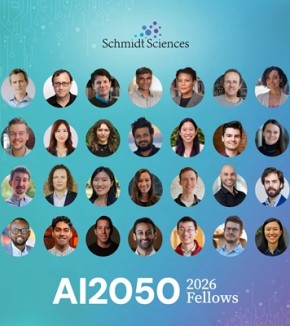
Francis Bach (X1994), a research director at Inria, and Romain Lopez (X2013), a professor at New York University, are among the researchers in the Class of 2026 of the Schmidt Sciences AI2050 program. The first has been named a Senior Fellow, while the second is joining the program as an Early Career Fellow. Both will focus their work on research issues related to the development of safe and beneficial artificial intelligence.
Fields Medalist Hugo Duminil-Copin visited École Polytechnique to share his perspective on learning and practicing mathematics, drawing on his book De l’autre côté du tableau noir – Les mathématiques à visage humain (On the Other Side of the Blackboard – Mathematics with a Human Face). The event also provided an opportunity to highlight the central role mathematics has played throughout École Polytechnique’s history and in shaping its scientific identity.
Gwendal Hénaff, from the Plasma Physics Laboratory (LPP*), and Sooyong Chae, from the Laboratory of Physics of Interface and Thin Film (LPICM*), were recognized at the i-PhD 2026 competition for their doctoral research. They will receive support for developing their entrepreneurial projects. This demonstrates how research that begins as basic science can become the driving force behind practical applications.
Étienne Minvielle, Professor and CNRS Research Director at the École Polytechnique’s Center for Management Research (i3-CRG, jointly administered with...
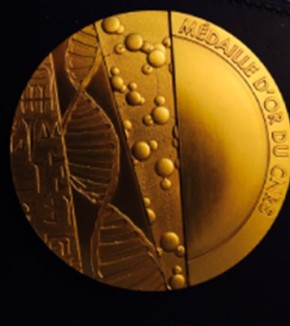
This award recognizes a career dedicated to the study of quantum phenomena and the development of new experimental approaches in physics. Jacqueline Bloch, a CNRS research director at the Center for Nanoscience and Nanotechnology (C2N)—a joint CNRS-Université Paris-Saclay unit—is also a member of the French Academy of Sciences.
 Support l'X