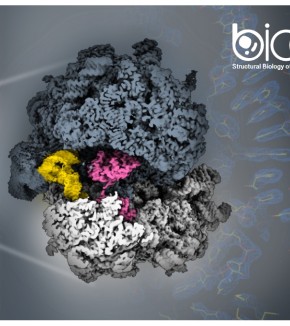
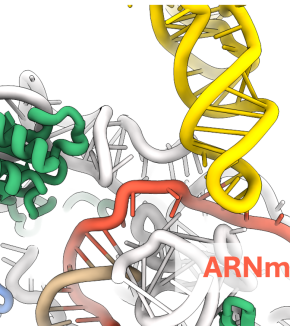
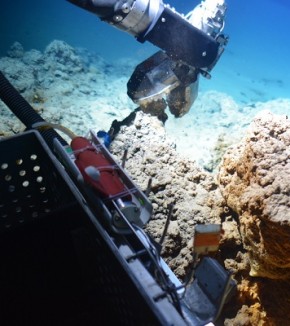
The Structural Biology of the Cell Laboratory (BIOC*), in collaboration with Ifremer in Brest, the CBI in Toulouse, and Institut Pasteur, has identified a molecule in archaea capable of putting the ribosome, a cellular machinery essential to cells, into a state of dormancy. This “hibernation factor” binds to the ribosome when external conditions are unfavorable.
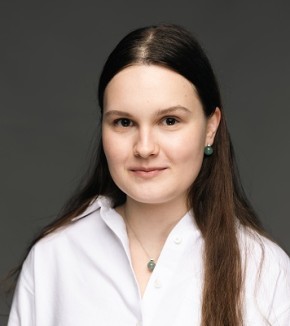
Ekaterina Kukhtenko's start-up, VAir, aims to make respiratory infection diagnosis easier using a portable, ultra-fast device that analyses patients' exhaled air directly. Born out of the Covid-19 pandemic, this idea has the potential to help millions of people around the world, particularly in developing countries. It has been brought to fruition with the support of the École Polytechnique incubator.
Since 2003, the École Polytechnique's Sustainable Development Chair has been supporting large-scale teaching programmes and interdisciplinary research projects aimed at shedding light on major environmental, economic and societal changes. Now led by Benoît Schmutz-Bloch, it supports several École Polytechnique teams working on a variety of topics, ranging from mobility and energy to environmental health, climate science and materials science.
Entrepreneurship, Corporate relations, Innovation, Sustainable Development
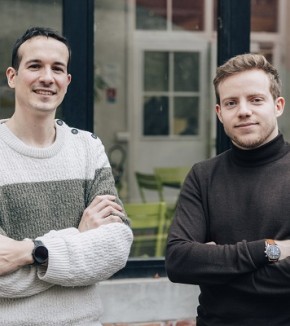
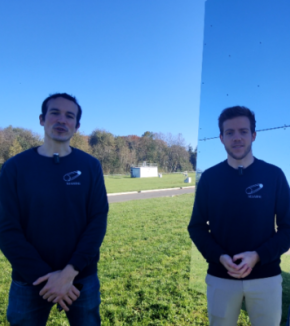
Radiant is a rapidly growing green tech start-up that specialises in producing carbon-free heat for industrial use. It won first prize in the European Stage Two competition, representing École Polytechnique, and successfully raised funds at the end of last year. Meet its two founders: Thomas Delhon, an aerospace engineer, and Alexandre Meurisse, a former PhD student at the German Aerospace Center (DLR) laboratories. They received support from École Polytechnique's X-UP incubator, which provided a springboard for their success.
The Biomedical Engineering (BME) Seed Grant sponsorship programme, led by Abdul Barakat and supported by the Bettencourt Schueller Foundation and École Polytechnique and its Foundation, will come to an end in late 2025, after nearly seven years dedicated to innovation in biomedical engineering. On 20 November, during the 4th annual forum of the Engineering for Health (E4H) Interdisciplinary Centre, a dedicated session honoured the 11 winning projects, celebrated the advances they have enabled and highlighted the scientific and human impact of this structuring programme.
From 27 to 31 October, the Equal Opportunities Unit organised a 'CPGE Boost' course for 30 scholarship students in their first year of scientific preparatory classes, hailing from all corners of France. This edition took place on the École Polytechnique campus for the first time, enabling these young people to envisage themselves in excellence-driven scientific training programmes and to benefit from the ecosystem of a leading engineering school.
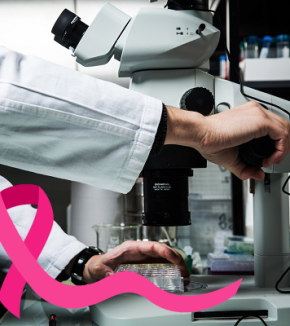
Through its biomedical research, the École is advancing the fight against breast cancer by analysing tumour formation mechanisms. This momentum is reinforced by initiatives such as sponsored chairs, which bring together researchers, students from École Polytechnique and industrial partners to promote health through research and innovation.
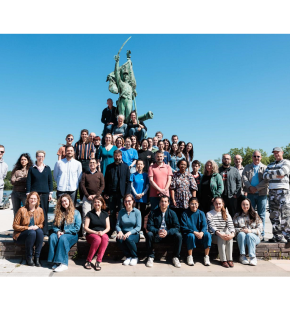
The Structural Biology of the Cell Laboratory (BIOC*) is celebrating its fiftieth year. From its beginnings as a biochemical laboratory, it now deals with biological issues on many different scales: atomic, molecular and cellular.
A study by a team from the Structural Biology of the Cell Laboratory (BIOC*), with the participation of the Molecular Chemistry Laboratory (LCM*), published in Nature communications, reveals the mechanisms that initiate translation of the genetic code into proteins in an archaea. This result supports the hypothesis that eukaryotes emerged from the archaeal domain during evolution.
X2009 and a PhD in biophysics from the Hydrodynamics Laboratory (LadHyX*), Olga Chashchina is co-founder and CTO of Metyos, a start-up that designs connected biomedical sensors.
Discovered in the late 1970s, archaea are unicellular organisms with characteristics of both bacteria and more complex organisms. Once cast aside, advances in molecular biology and genomics have brought them back into the spotlight. In the laboratories of École Polytechnique, several research teams are exploring the scientific potential of these microorganisms.
THE ENTREPRENEUR AND THE START-UP. Philippe Le Borgne, co-founder and CEO of RunBlind, has a multi entrepreneurial background in different fields such...
 Support l'X