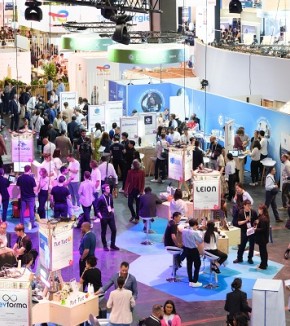
Philippe Hazet, head of the École Polytechnique X-UP incubator, outlines the key considerations behind our participation in the 2026 edition of the Viva Technology trade fair. This major global event for innovation and new technologies will take place from 17 to 20 June at the Porte de Versailles in Paris.
Nadir Soucha, a third-year doctoral student in management sciences at L' X Interdisciplinary Laboratory (LINX*) and the automotive supplier Valeo, is conducting a comparative study of emissions from industrial production in France and India.
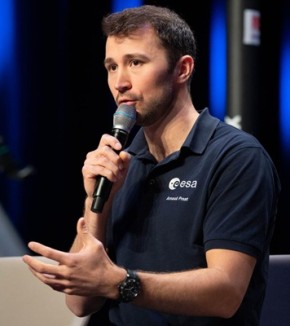
Arnaud Prost (X2012) is set to embark on his first space mission aboard Haven-1, the first commercial space station developed by the American startup Vast, for a test flight. Arnaud Prost will thus become the eleventh French citizen and the third École Polytechnique graduate to have flown in space.
Entrepreneurship, Innovation, Sustainable Development
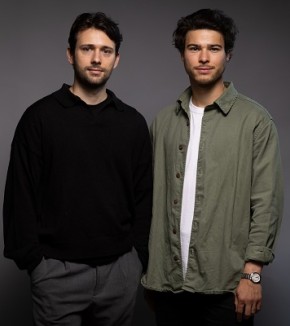
When they founded the start-up Jane in 2023, Simon Heurtebise and Nathan Bouldoires wanted to be part of an increasingly significant initiative: collective self-consumption. With their software, they simplify the administrative management of these complex projects and thus contribute to the green transition by promoting the sharing of renewable energy, particularly solar power. In 2024–2025, they received support from École polytechnique’s incubator, X-UP, which enabled them to bring their idea to fruition. This support demonstrates the importance École polytechnique places on supporting projects that are meaningful and beneficial to society.
In May, Micah Goldblum, an assistant professor of electrical engineering at Columbia University, spent four weeks at l’X as an Alliance Visiting Professor. His stay at the Center for Applied Mathematics (CMAP) enabled him and El Mahdi El Mhamdi, a professor at École Polytechnique, to advance their international scientific collaboration, which also involves PhD students from both institutions.
École Polytechnique is expanding its artificial intelligence curriculum with a new mandatory AI course for all second-year students in the Cycle Ingénieur Polytechnicien program. Set to launch in September 2026, this new course aims to ensure that every future graduate of the Cycle Ingénieur Polytechnicien program possesses the essential skills to understand, apply, and critically evaluate a technology that is already redefining the boundaries of knowledge.
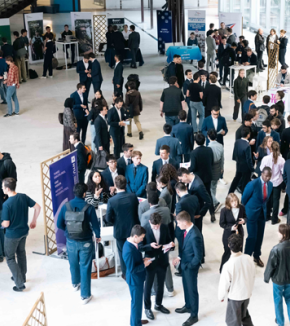
École Polytechnique gathered representatives from over 40 international and French universities, as well as several government bodies, at the University Fair on May 13, 2026. The event invited students to explore a wide range of professional and academic paths, identify those that suit them best, and refine their choices.
Entrepreneurship, Corporate relations, Innovation, Sustainable Development
There is something paradoxical about the current state of green technologies. Investment figures are down. The number of new GreenTech startups, after flirting with record highs, has leveled off. And yet, in laboratories, prototyping workshops, and DeepTech incubators, the buzz is palpable. Perhaps even more intense than ever. GreenTech isn't running out of steam; it's mutating
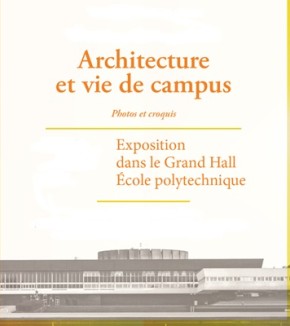
A photography exhibition titled “Architecture and Campus Life,” featuring photos taken by students, faculty, and staff of École Polytechnique of the iconic buildings and locations that are part of their daily lives, will be on display from May 5 to 22 in the School’s main building, ahead of the launch of a major renovation program scheduled to run through 2029.
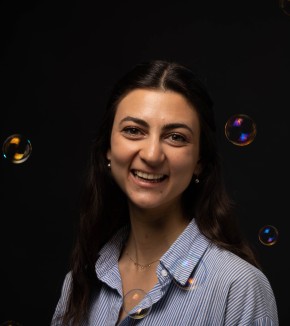
Interview with Margherita Castellano, a doctoral student at the Center for Applied Mathematics (CMAP), who has qualified for the national finals of the science communication competition “My Thesis in 180 Seconds" (MT180*). She is seeking to better understand the role played by small molecules called surfactants when two immiscible fluids interact, as in the case of air and water in soap bubbles.
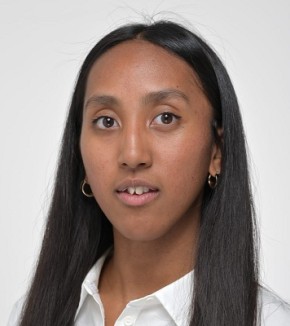
Lauren Ramanantsoa, a Master of Science & Technology student at École Polytechnique specialising in artificial intelligence and computer vision, developed a passion for science – and mathematics in particular – at a very early age. This interest has fuelled her creativity and her desire to build connections between students from different programmes at École Polytechnique (engineering, bachelor’s and master’s). This led to the creation of ‘X’s Got Talent’, an inclusive event that allows them to come together and showcase the full range of their artistic talents.
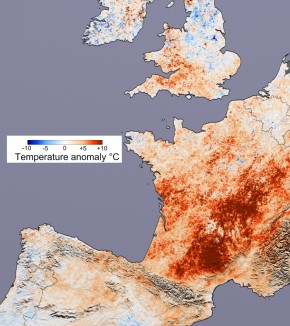
X2019, Amaury Lancelin is conducting his doctoral research at the Dynamic Meteorology Laboratory (LMD*), in partnership with RTE (Réseau de transport d’électricité). The goal is to improve the study of heat waves, cold waves, intense precipitation, and other extreme weather events.
 Support l'X